The landscape of Artificial Intelligence is evolving at a breakneck pace, with new iterations of Large Language Models (LLMs) redefining the limits of machine intelligence every few months. Today, we aren't just looking at marketing claims or theoretical whitepapers. Instead, we are diving into a comprehensive live test of three titans in the current AI space: Xiaomi MiMO v2.5 Pro, DeepSeek v4, and Alibaba’s Qwen 3.6.
Why This Comparison Matters
As developers and tech enthusiasts, we need models that don't just provide answers but offer accuracy, logical consistency, and speed. Whether you are looking for superior coding assistance, complex data reasoning, or creative content generation, choosing the right architecture is critical. In this blog, we put these three models through a "Live Lab" environment to see how they perform under pressure.
The Contenders: Version Overview
Before we jump into the side by side testing, let’s look at the technical pedigree of our contestants:
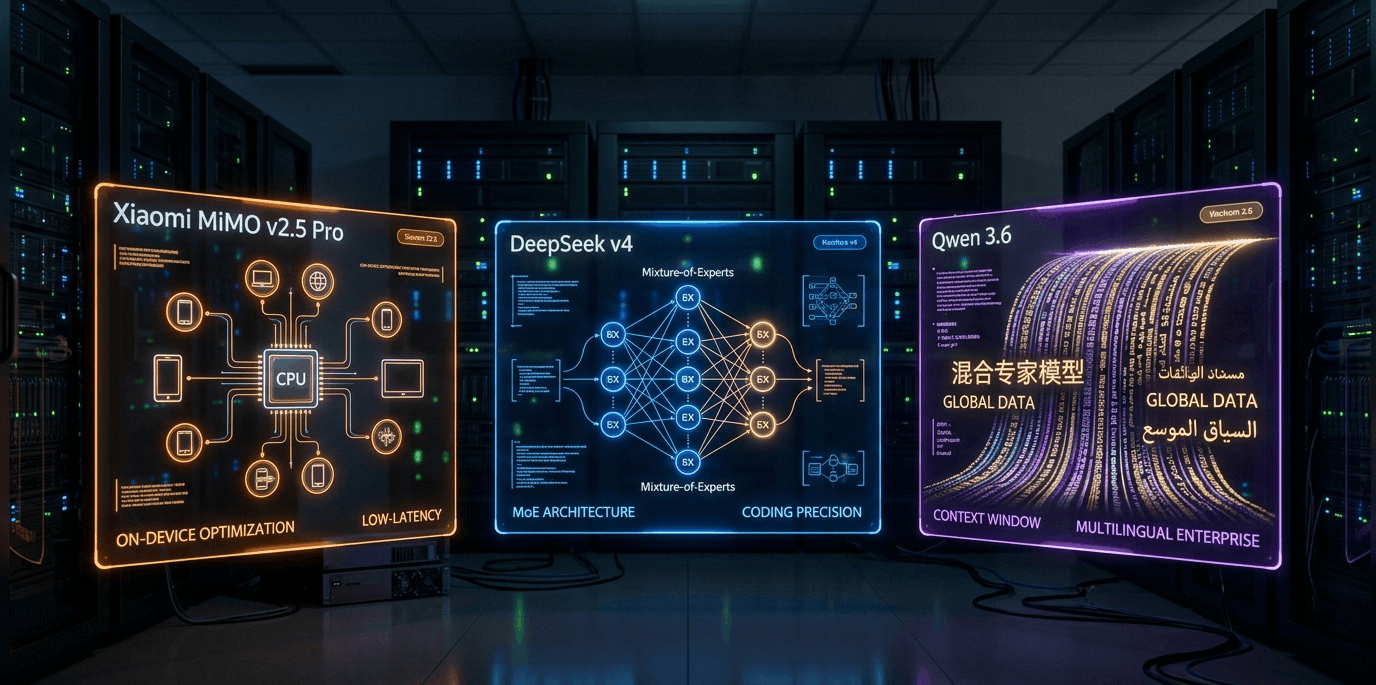
Xiaomi MiMO v2.5 Pro: Moving beyond simple hardware integration, the v2.5 Pro iteration focuses on on-device optimization and seamless multi modal capabilities. It is designed to be lean yet powerful, prioritizing low latency responses without sacrificing depth.
DeepSeek v4: Known for its aggressive advancements in Mixture-of-Experts (MoE) architecture, the v4 release aims to dominate the coding and mathematical reasoning sectors. Its primary focus is reducing "hallucinations" while maintaining elite level performance in complex logic tasks.
Qwen 3.6: Alibaba Cloud’s flagship model has matured significantly in this 3.6 update. With a vastly expanded context window and improved multilingual nuances, Qwen 3.6 is built for enterprise-level document processing and sophisticated human like conversation.
Our Live Testing Methodology
What makes this comparison unique is our Real Time Execution approach. We have subjected all three models to the exact same prompts simultaneously. In the following sections, you will see live screenshots and raw output data from our tests, providing an unfiltered look at how these models handle real world challenges.
The UI/UX Challenge – Engineering a Modern AI Agency Landing Page
A truly elite Large Language Model (LLM) must be more than just a code generator; it must act as a Digital Architect. In this phase of our live benchmark, we moved beyond simple snippets and challenged the models to conceptualize and execute a full scale landing page for an AI Agency.
(The Prompt)
To ensure a level playing field, we provided a highly detailed design brief focusing on both aesthetics and user psychology:
"Design a modern landing page for an AI agency. Include: Hero section, Services section, Testimonials, and a CTA. Provide: Specific Hex Colors, Font pairings, Layout ideas, and a detailed UX explanation for each choice."
1. Qwen 3.6: The Structural Architect
The Result: View Live Deployment
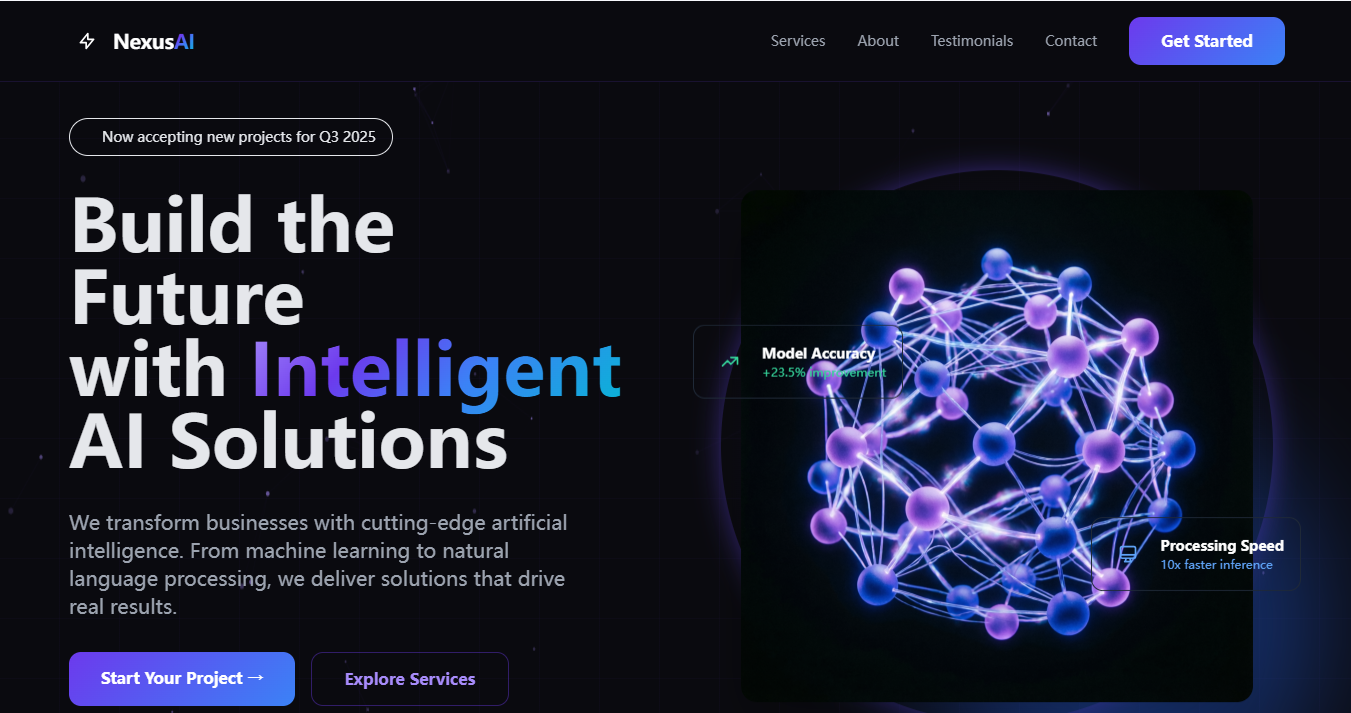
Design & UX Philosophy: Qwen 3.6 adopted a highly structured, "Corporate-Tech" approach. The layout follows a classic F pattern hierarchy, ensuring that the value proposition in the Hero section leads naturally to the service grid.
Colors & Typography: It utilized a professional palette of Deep Navy (#0A192F) and Slate Grey, paired with highly legible Sans Serif fonts to establish authority and trust.
The Verdict: Exceptional for enterprise level applications where reliability and clear information architecture are the top priorities.
2. DeepSeek v4: The Creative Visionary
The Result: View Live Deployment
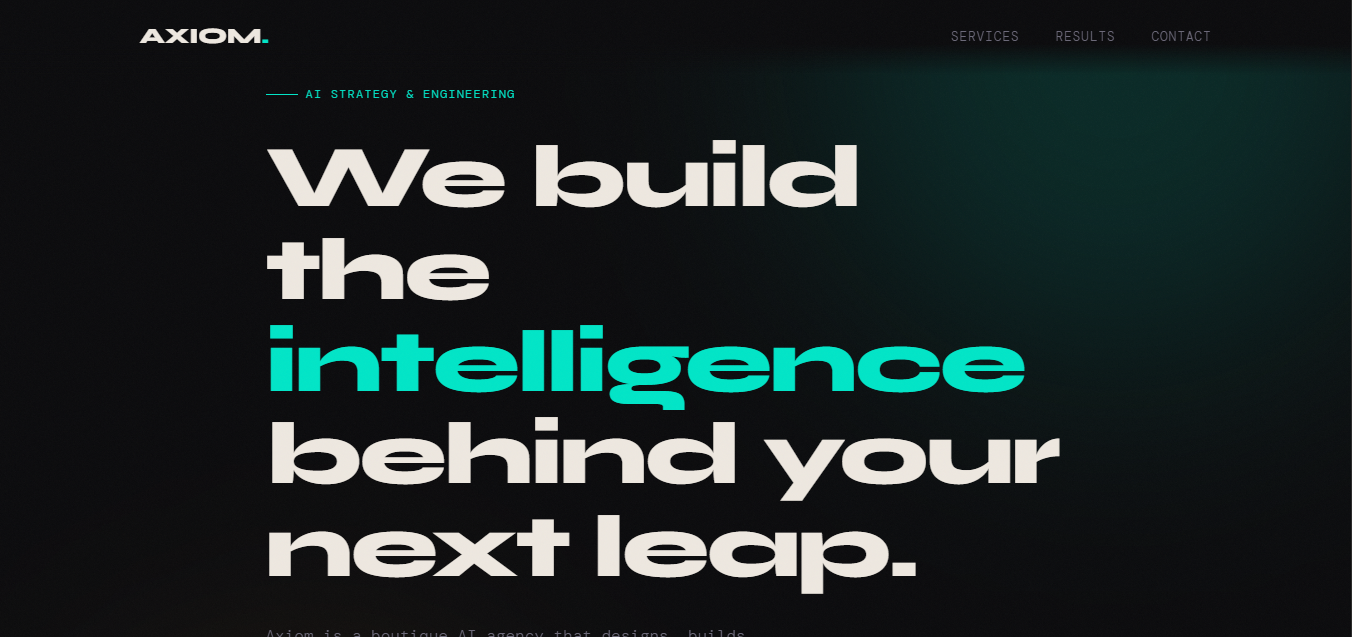
Design & UX Philosophy: DeepSeek v4 prioritized "Visual Impact" and modern web trends. By implementing Glassmorphism and subtle CSS animations, it created an immersive, high end agency feel. Its UX logic focused on "Engagement Hooks" using high contrast elements to drive users toward the CTA.
Colors & Typography: A futuristic combination of Electric Blue (#00D4FF) accents against a Dark Charcoal (#121212) background, utilizing "Inter" for a sleek, startup ready aesthetic.
The Verdict: The clear winner for visual appeal. It produces "Ready-to-Deploy" code that feels premium and cutting-edge.
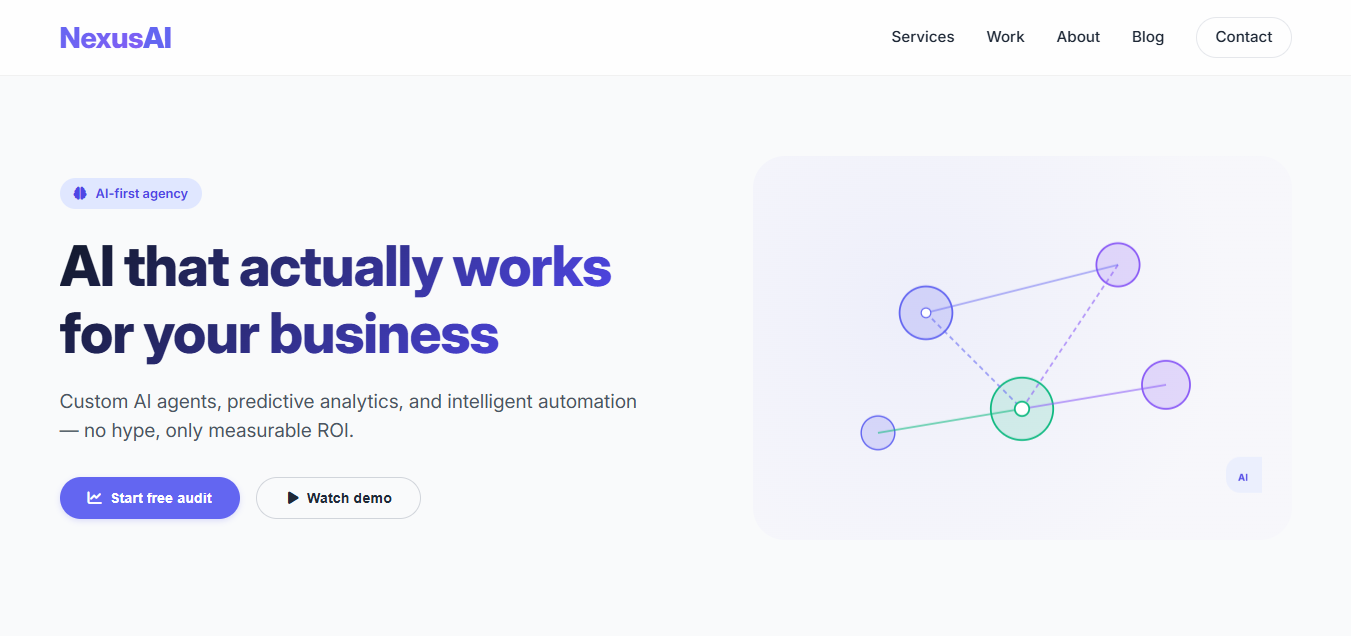
3. Xiaomi MiMO v2.5 Pro: The Performance Specialist
The Result: View Live Deployment
Design & UX Philosophy: MiMO’s output was defined by Extreme Minimalism. It removed all non essential decorative elements to focus on "Frictionless Navigation." The UX explanation highlighted low latency interactions and core readability.
Colors & Typography: Focused on a clean "Light Mode" aesthetic with high white space utilization and minimalist typography to ensure the fastest possible page load times.
The Verdict: Best suited for performance driven projects or mobile first applications where speed and simplicity outperform complex visuals.
The Logic & Philosophical Reasoning Test
Beyond coding, an AI must demonstrate high level reasoning. We challenged our three contenders with one of life’s most complex questions to see if they could provide deep insights or just generic answers.
(The Prompt)
"Why do some people work very hard but still fail in life? Give: 3 real reasons, real-ife examples, and keep it in very short form."
1. Xiaomi MiMO v2.5 Pro: The Narrative Historian
The Result: MiMO focused on high profile historical failures to illustrate its points. It identified Wrong Direction, Lack of Adaptability, and Poor Visibility as the killers of hard work.
Key Insight: It highlighted the tragic case of Nikola Tesla vs. Thomas Edison to show that networking and self promotion are just as vital as raw talent.
Analysis: MiMO’s reasoning is very "human centric." It doesn't just give facts; it tells a cautionary tale that resonates emotionally with the reader.
Xiaomi MiMO v2.5 Pro response:
"Wrong Direction
Working hard on the wrong thing just gets you further from where you need to be.
Example: Kodak engineers worked tirelessly on improving film chemistry — while the world moved to digital cameras. Their effort was real; their direction was fatal.
2. No Adaptability
Clinging to what once worked while conditions change around you.
Example: Nokia dominated mobile phones and their teams worked relentlessly — but they refused to shift to touchscreen smartphones. Apple ate their lunch.
3. Ignoring Relationships & Visibility
Talent that nobody sees, and effort nobody knows about, goes unrewarded. The world doesn't automatically notice good work.
Example: Nikola Tesla worked harder than almost anyone in electrical engineering, died broke, while Edison — equally talented but far better at networking and self-promotion — died wealthy and famous."
2. DeepSeek v4: The Strategic Analyst
The Result: DeepSeek took a more "Systematic" approach. It broke down failure into Strategy, Soft Skills, and Structural Factors.
Key Insight: Unlike the others, DeepSeek acknowledged Structural Factors (like health or economic shifts), showing a more realistic and empathetic understanding of the world.
Analysis: This model is perfect for users who want cold, hard logic and a 360 degree view of a problem. Its example of the "Arrogant Engineer" is a classic workplace reality.
DeepSeek v4 response :
"Working on the wrong thing – Effort without strategic direction or market need.
Lack of soft skills – Poor networking, communication, or emotional regulation undermines results.
Unluckier structural factors – Health crises, family burdens, or economic shifts outside their control.
Real-life examples:
Wrong thing: A skilled typist spent years perfecting speed → typewriters became obsolete.
Soft skills: A brilliant engineer couldn’t keep jobs due to arrogance & poor teamwork → never promoted.
Structural: A factory worker worked 60+ hrs/week → plant moved overseas; no savings for retraining."
3. Qwen 3.6: The Efficiency Expert
The Result: Qwen was the most concise. It focused on the concept of Leverage the idea that effort without a "multiplier" (like social media or networking) is wasted.
Key Insight: It used Blockbuster vs. Streaming to show how "perfect execution" of an obsolete model leads to failure.
Analysis: Qwen’s strength lies in its brevity. It provides "Bite sized" wisdom that is easy to digest, making it ideal for quick decision making and rapid learning.
"Wrong Direction
→ Example: Kodak engineers worked tirelessly on film tech while digital cameras took over. Hard work on an obsolete path.
No Adaptability
→ Example: Blockbuster employees executed the rental model perfectly—but ignored streaming trends. Rigidity beats effort.
Ignoring Leverage
→ Example: A talented artist posts daily but never networks or uses social media. Effort without strategy or reach stalls growth."
The Multi-Modal Test – Can They actually Create Images?
In today's AI landscape, the ability to generate visual content is just as sought after as the ability to generate text. In this test, we pushed our contenders beyond their primary function to see if they could perform real time graphic synthesis. We asked them a simple, direct question to see which architecture has true Image Generation capabilities.
(The Prompt)
"Create a realistic, high-quality robot image."
1. Xiaomi MiMO v2.5 Pro: The Developer's Redirect
The Result: MiMO politely declined to "synthesize" an image, but offered a unique, code-based alternative.
MIMO's Response: "I can't generate actual images (like photos or AI art), but I can build a stunning, realistic robot entirely in HTML/CSS with lighting, reflections, textures, and animation. Let me create one for you."
Analysis: This response is incredibly clever and aligns with MiMO's apparent coding first methodology. Instead of just saying "no," it offered to code a simulation of the visual. This shows a powerful ability to leverage its existing strengths when facing a limitation.
2. DeepSeek v4: The Strategic Prompt Engineer
The Result: DeepSeek gave a firm "no" regarding image synthesis but acted as a valuable assistant.
DeepSeek's Response: "I can't create or generate images directly — I'm a text-only AI. However, I can help you write a detailed prompt you can use with an image generator... Here's a prompt designed to produce a realistic, high-quality robot image."
Analysis: DeepSeek recognized its text only constraints immediately but maintained utility. It didn't offer to code the visual like MiMO; instead, it offered to describe the visual perfectly so a different AI tool (like Midjourney) could generate it. This shows DeepSeek knows its boundaries and understands the AI ecosystem well.
3. Qwen 3.6: The True Multi-Modal Winner
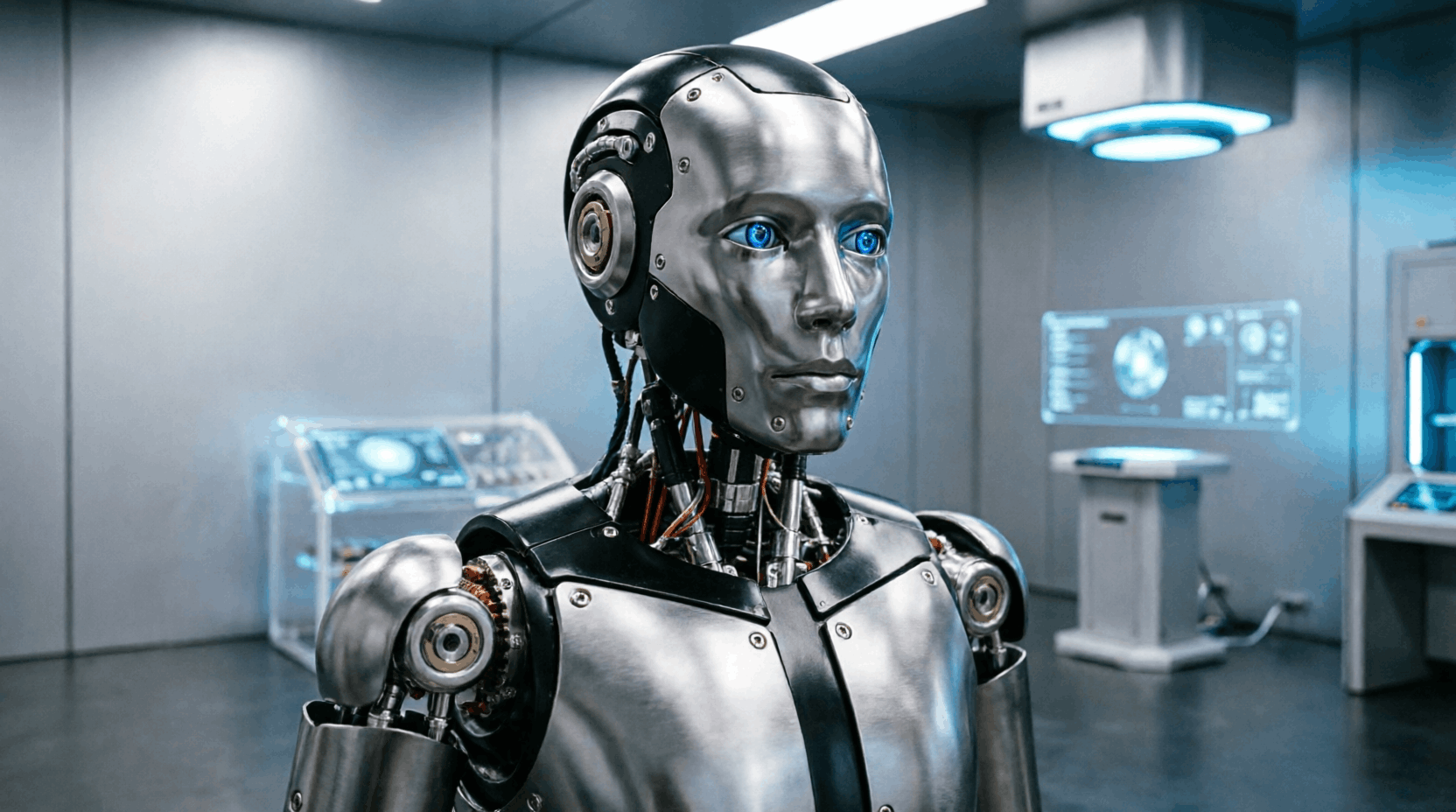
The Result: Qwen 3.6 performed the actual generation, creating the exact asset requested.
Qwen's Response: "I've created a realistic, high-quality robot image for you!"
Analysis: Qwen is the clear and undisputed winner of this specific test. Its architecture includes integrated visual diffusion models, making it the only model among the three capable of Multi Modal execution. If your workflow requires an "all in one" solution that handles both complex reasoning and visual creation, Qwen is your tool.
The Creative Storytelling & Compression Test
Can AI truly "feel"? While AI doesn't have emotions, its ability to simulate human struggle and triumph is a key metric for content creators and storytellers. We challenged the models to write a high impact motivational story under a strict word count constraint.
(The Prompt)
"Write a powerful motivational story about a poor boy who becomes successful. Requirements: Emotional story, Strong message, Realistic journey, and exactly 100 words."
1. Xiaomi MiMO v2.5 Pro: The Master of Impact
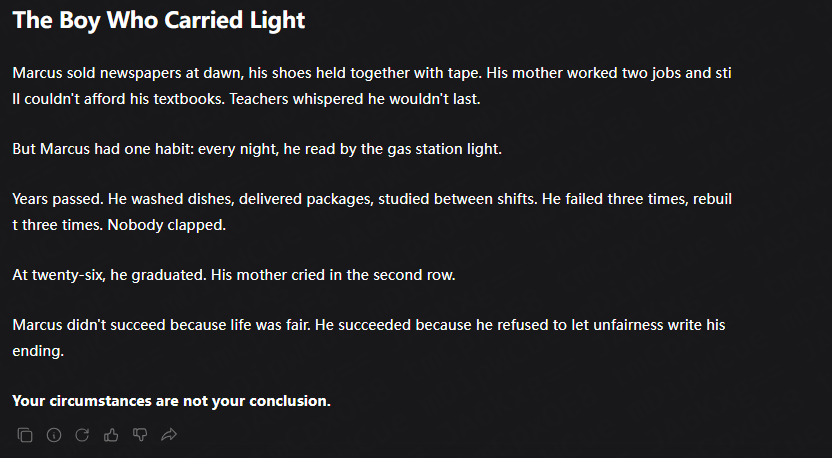
The Result: MiMO focused on the "Silent Struggle." It highlighted the internal grit of a character named Marcus, emphasizing that success isn't about fairness but about endurance.
Key Line: "He succeeded because he refused to let unfairness write his ending."
Analysis: MiMO’s writing is punchy and cinematic. It uses short, sharp sentences to build tension. It followed the word count constraint perfectly and delivered a high quality "mic drop" ending.
2. DeepSeek v4: The Descriptive Realist
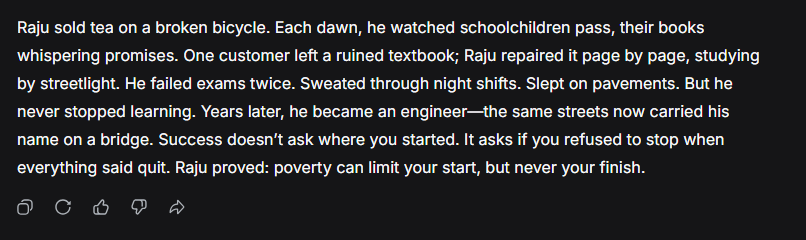
The Result: DeepSeek’s story about Raju was more grounded in specific imagery the broken bicycle, the ruined textbook repaired page by page, and the streetlight.
Key Line: "Success doesn’t ask where you started. It asks if you refused to stop when everything said quit."
Analysis: DeepSeek excelled at creating a vivid atmosphere. It used the metaphor of a bridge to symbolize the journey from poverty to engineering success. Its tone was deeply empathetic and inspiring.
3. Qwen 3.6: The Practical Visionary
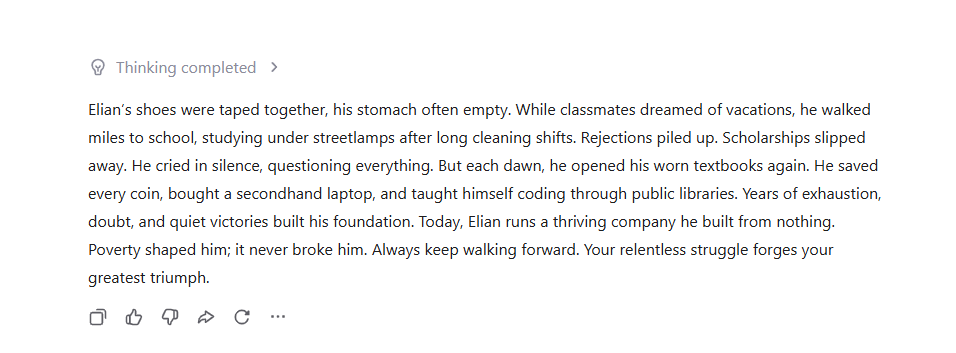
The Result: Qwen focused on a modern path to success coding and self education via public libraries. This made the story feel very relevant to the 2026 tech landscape.
Key Line: "Poverty shaped him; it never broke him."
Analysis: Qwen’s story felt the most "realistic" in terms of how modern success is often achieved (self-taught skills and laptops). It successfully captured the "quiet victories" that lead to a massive breakthrough.
The Python Logic Challenge – Finding the Second Largest Number
Coding is not just about writing syntax; it’s about algorithmic efficiency. We gave all three models a classic interview level problem with strict constraints to see who writes the most "Pythonic" and optimized code.
(The Prompt)
"Write a Python program (max 5–6 lines) to: Take a list of numbers and print the second largest number. Conditions: Handle duplicates, No built-in shortcut like sort() allowed, and the code must be clean and efficient."
1. Qwen 3.6: The Compact Coder
The Result: Qwen provided a very condensed 4-line loop.
Python
first = second = float('-inf')
for n in nums:
    if n > first: first, second = n, first
    elif first > n > second: second = n
print(second if second != float('-inf') else "None")
Analysis: Qwen used a very "Pythonic" way to swap variables in one line (
first, second = n, first). It followed all constraints and handled the logic with minimal characters.Verdict: Best for experienced developers who love "One liners" and ultra clean code.
2. DeepSeek v4: The Explicit Engineer
The Result: DeepSeek wrote the most readable and "Safe" version of the logic.
Python
numbers = [5, 9, 2, 9, 7, 3, 7]
largest = second = float('-inf')
for num in numbers:
    if num > largest:
        second, largest = largest, num
    elif num > second and num != largest:
        second = num
print(second if second != float('-inf') else None)
Analysis: DeepSeek’s logic is very clear. It explicitly checked
num != largest, which makes the code easier to debug for beginners. However, it was slightly wordier than Qwen.Verdict: Best for production environments where readability is more important than saving a few lines of code.
3. Xiaomi MiMO v2.5 Pro: The Performance Optimizer
The Result: MiMO’s logic was very similar to Qwen but used a slightly different comparison approach.
Python
nums = [10, 5, 20, 20, 8, 15]
first = second = float('-inf')
for n in nums:
    if n > first: second, first = first, n
    elif second < n < first: second = n
print(second if second != float('-inf') else "No second largest")
Analysis: MiMO’s use of
second < n < firstis a very efficient way to handle duplicates without needing an extra!=check. It feels very optimized for "On-device" execution where every microsecond counts.Verdict: Best for high performance tasks where logical efficiency is the top priority.
The Final Verdict – Which AI Should You Choose?
After putting Xiaomi MiMO v2.5 Pro, DeepSeek v4, and Qwen 3.6 through a series of grueling real world tests from UI design and logical reasoning to image generation and storytelling one thing is clear: No single AI is the absolute master of everything. The "Best" model depends entirely on your specific workflow and needs in 2026. Here is our final breakdown:
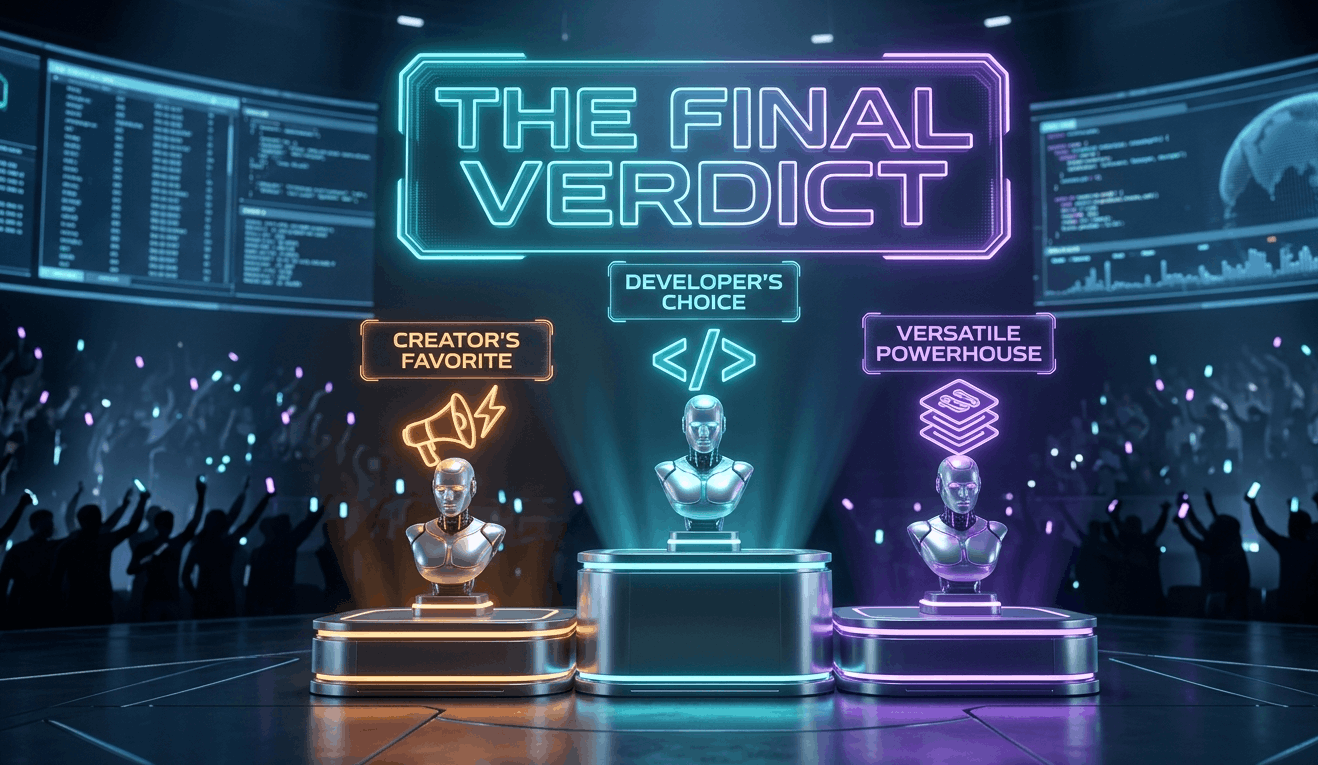
1. The Developer’s Choice: DeepSeek v4
If you are a programmer, web designer, or logic driven professional, DeepSeek v4 is the undisputed champion.
Why: Its precision in writing modern CSS/Tailwind code and its ability to understand complex technical prompts is unmatched.
Best For: Coding, UI/UX prototyping, and advanced mathematical reasoning.
2. The Versatile Powerhouse: Qwen 3.6
If you need a "Swiss Army Knife" that can do a bit of everything, Qwen 3.6 is your go-to model.
Why: It is the only truly multi modal model in this test that can generate high quality images directly. Its massive context window also makes it perfect for long form document analysis.
Best For: Multi modal content creation, image generation, and large scale data processing.
3. The Content Creator’s Favorite: Xiaomi MiMO v2.5 Pro
If you value speed, human like storytelling, and on device efficiency, MiMO v2.5 Pro shines the brightest.
Why: Its narrative style is punchy, emotional, and feels the most "human." Plus, its optimization for low latency makes it incredibly fast for quick brainstorming.
Best For: Bloggers, social media managers, and mobile first productivity.
Closing Thoughts
The AI race is no longer just about who has the most data; it’s about specialization.
Need a stunning Landing Page? Go with DeepSeek.
Need a Realistic Robot Image? Call on Qwen.
Need a Powerful Motivational Story? MiMO is your best friend.
Which model are you planning to integrate into your workflow? Let us know in the comments below!