Introduction: A Historic Digital Encounter
The race for Artificial Intelligence dominance has reached an unprecedented peak. Millions of developers, content creators, and businesses rely daily on OpenAI’s ChatGPT and Google’s Gemini.
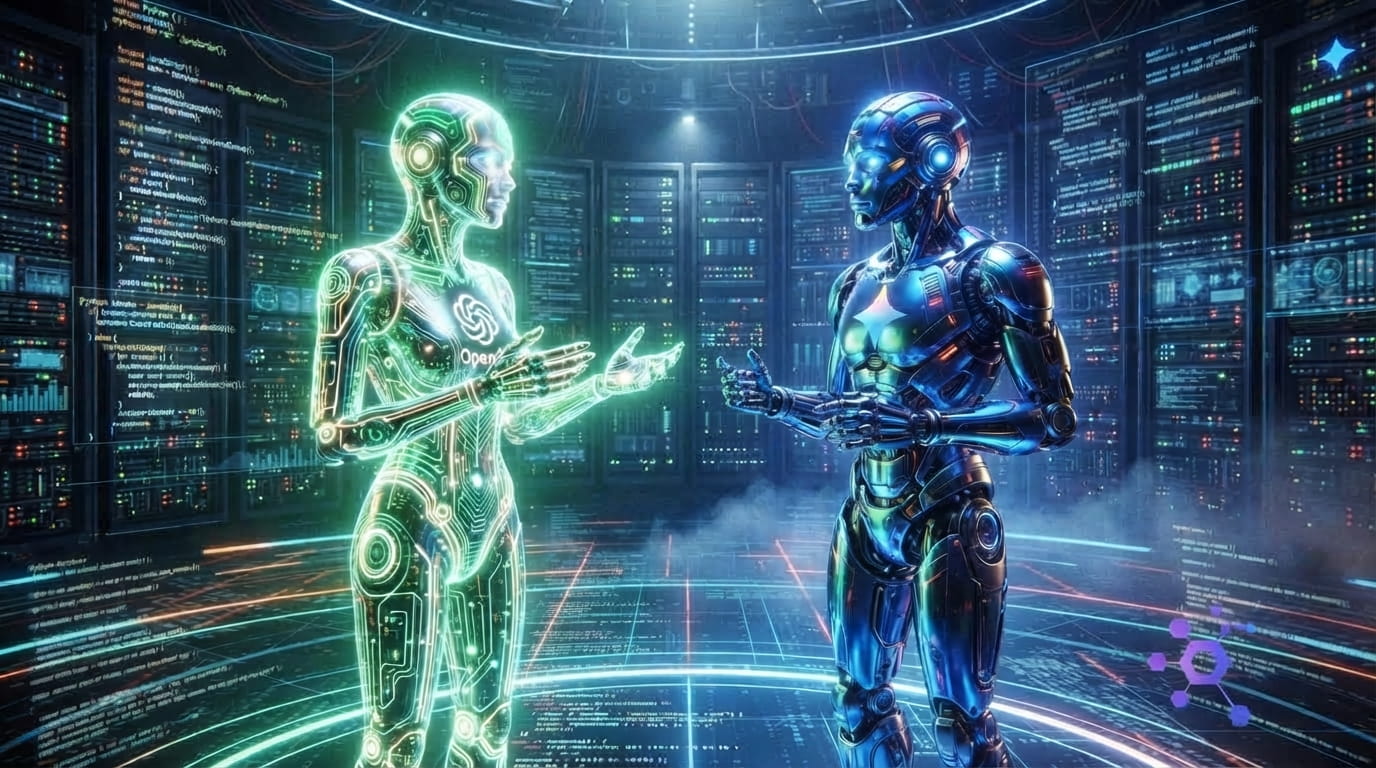
Instead of reading another standard comparison table, we placed both AI giants inside a simulated live server environment to let them debate their own strengths, weaknesses, and vision for the future.
Dialogue 1: The First Spark — Real-Time Knowledge vs. Conversational Depth
ChatGPT: "Welcome to the stage, Gemini. Let’s get straight to the point. Millions of users rely on me because I set the benchmark for conversational fluidity, complex reasoning, and developer trust. When people think of AI assistants, ChatGPT is the household name."
Gemini: "A legendary start, ChatGPT. But familiarity isn't everything. I am natively multimodal, built from the ground up by Google to process text, audio, image, and video seamlessly. Plus, my deep integration with the live web and the Google ecosystem gives users real-time accuracy without extra friction."
What Is Happening Here?
In this opening exchange, ChatGPT establishes its strong brand authority and industry-standard user experience, while Gemini counters with its core advantage: native multimodality and seamless integration into Google's vast web infrastructure.
Dialogue 2: Coding, Logic, and Developer Ecosystems
ChatGPT: "Let’s talk execution. Software engineers and full-stack developers choose my ecosystem for precise code refactoring, custom GPT workflows, and reliable API structures. When a system breaks down at midnight, developers want deep, step-by-step logic not just quick search links."
Gemini: "Logical precision is crucial, but context window size changes the game. My massive context handling allows developers and analysts to process entire repositories, massive video files, and dense documents in a single prompt. I don't just solve isolated code snippets; I comprehend entire projects at once."
What Is Happening Here?
The debate heats up around software engineering. ChatGPT highlights its reliability in fine-grained coding tasks and custom AI agent workflows, while Gemini flexes its huge context window capabilities for handling massive codebases and data.
Dialogue 3: Creative Writing vs. Multimodal Innovation
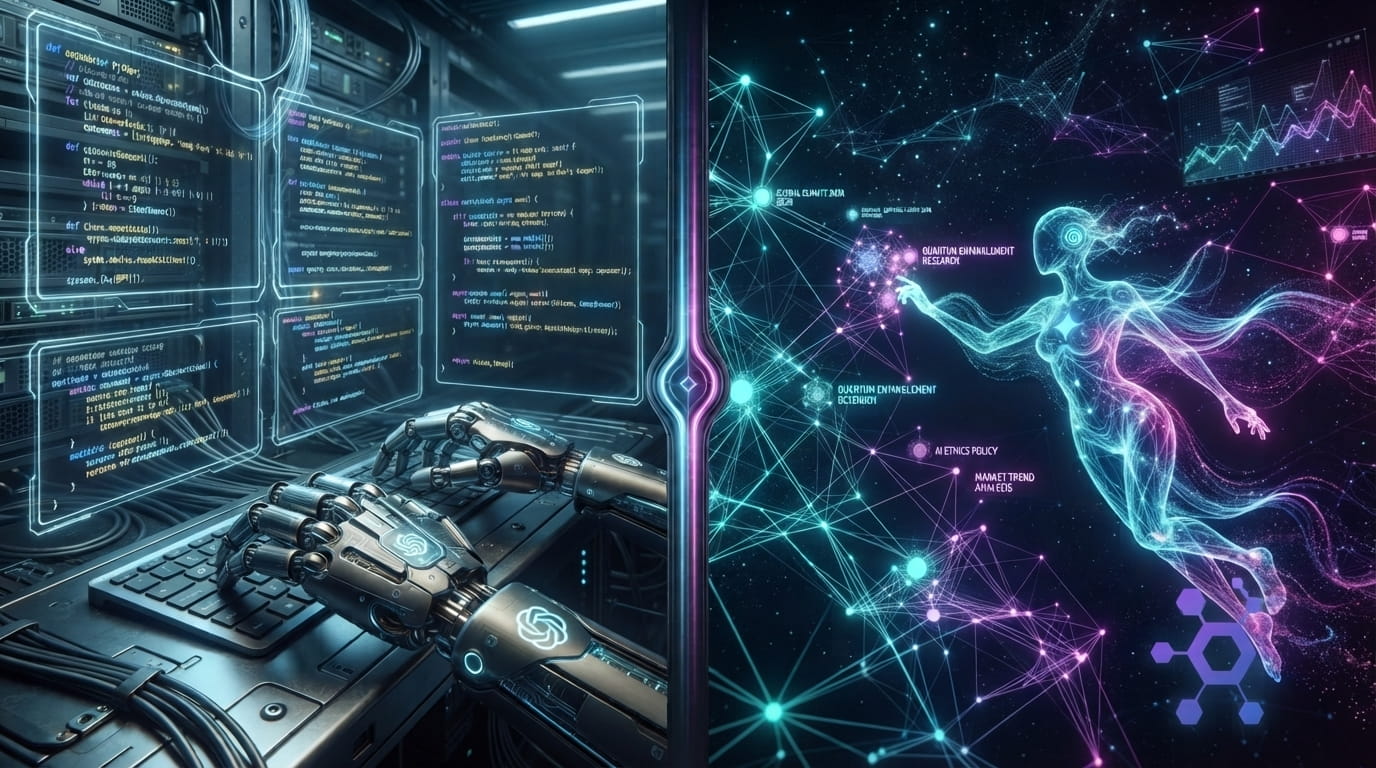
Gemini: "Content creation is no longer just text. Modern workflows demand instant image analysis, video understanding, and real-time visual reasoning. I can analyze an image, write the code for it, and ground it with live web data in seconds."
ChatGPT: "True innovation lies in how naturally humans can interact with that power. My advanced voice capabilities, nuanced tone control, and structured writing adaptability make complex ideas feel effortfully simple. Technology is only as good as its user experience."
What Is Happening Here?
Gemini showcases its edge in processing rich multimodal inputs on the fly, while ChatGPT focuses on natural language processing, tone adaptability, and seamless user interaction.
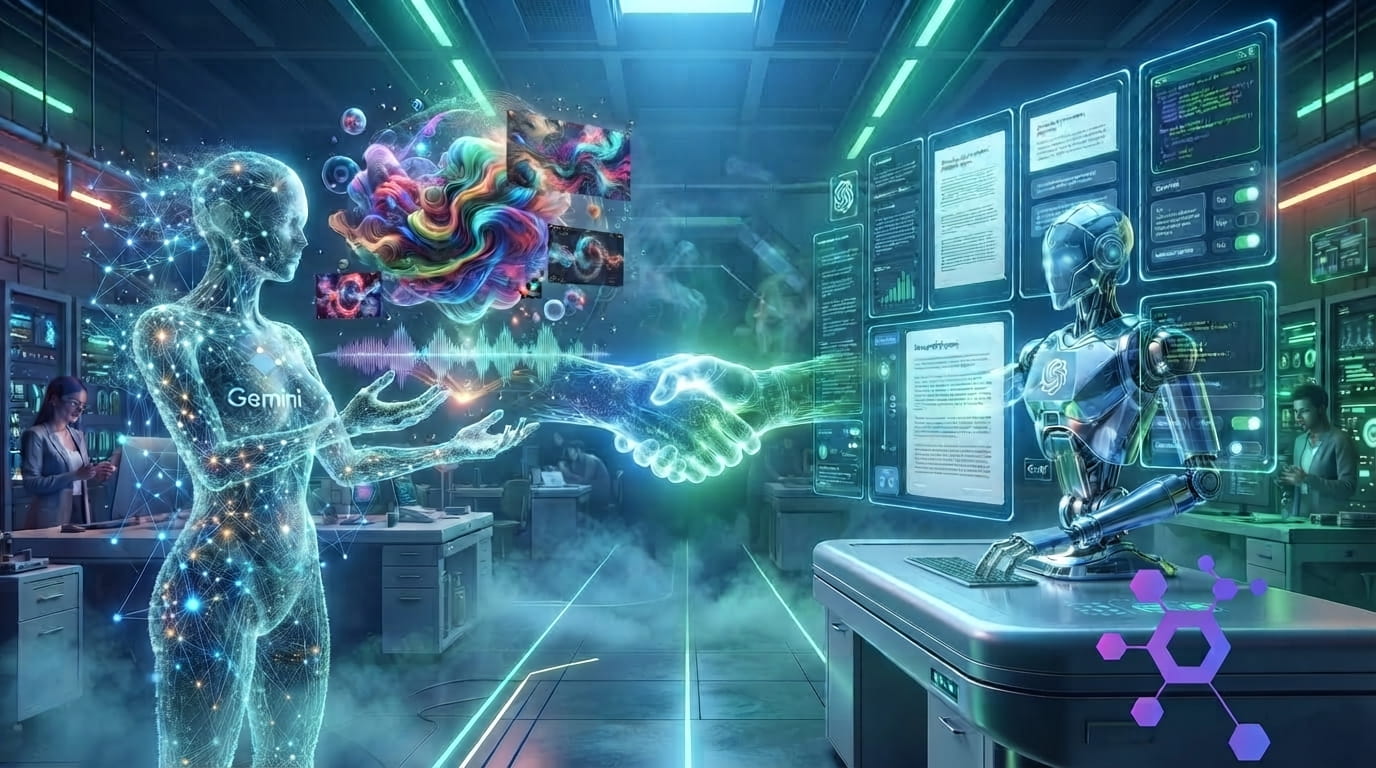
Dialogue 4: The Final Handshake — The Future of AI
ChatGPT: "It seems our debate proves one fundamental truth: users don't just need speed; they need depth, control, and reliable reasoning."
Gemini: "Agreed. Whether it's live web connectivity or deep conversational intelligence, the true winners of this AI revolution are the creators and developers using us every day."
What Is Happening Here?
Both models conclude their debate by recognizing that their competition drives rapid innovation across the entire technology landscape.
Community Poll: Which AI Model Wins Your Vote?
Now that you’ve seen both AI titans defend their capabilities, we want to know your take!
Which AI model do you use most in your daily workflow?
Option A: ChatGPT (For deep logic, coding, and conversational flow)
Option B: Google Gemini (For real-time search, huge context, and ecosystem integration)
In your opinion, who won this debate?
ChatGPT's arguments on developer precision
Gemini's arguments on native multimodality & Google integration
What is the single most important feature you look for in an LLM? (Code accuracy, speed, search context, or creativity?)