

Graphic design has never been a static profession. From hand-drawn layouts and printed advertisements to Photoshop, Figma, social media graphics, and now generative AI, the way designers create visual content has changed dramatically.
Today, graphic designers are standing at another major turning point. Artificial intelligence is changing how ideas are generated, how concepts are explored, and how repetitive design tasks are completed. But this does not simply mean that graphic designers are disappearing. Instead, the role of the designer is evolving.
The real question is no longer whether technology will change graphic design. It already has.
The bigger question is: What will graphic designers do next?
The Early Days of Graphic Design
Before modern digital design software became widely available, graphic designers relied heavily on manual techniques. Layouts, typography, illustrations, photographs, and advertisements often required physical materials and considerable production time.
Creating a single visual concept could involve sketching, cutting, arranging, photographing, printing, and revising physical materials.
The arrival of desktop publishing and digital design software changed this process significantly.
Tools such as Adobe Photoshop and Illustrator gave designers the ability to experiment, edit, duplicate, resize, and refine visual concepts much faster than before.
This transformation did not eliminate creativity. Instead, it gave designers more control over the creative process.
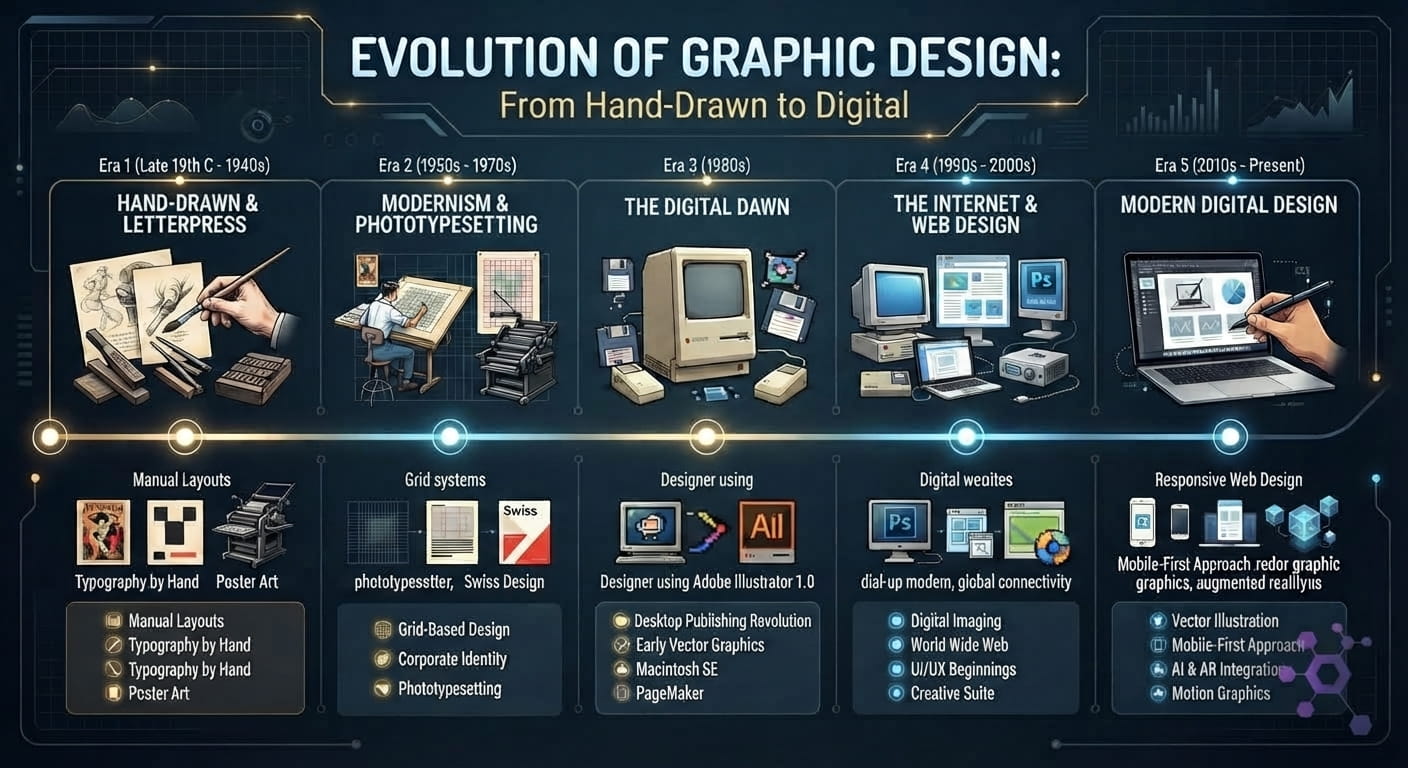
How Graphic Design Changed With the Internet
The growth of the internet created an entirely new demand for visual content.
Businesses needed:
Website graphics
Digital advertisements
Social media posts
Brand identities
Email graphics
YouTube thumbnails
App interfaces
Product images
Digital presentations
Marketing materials
Graphic designers were no longer working primarily for newspapers, magazines, packaging, and printed advertisements. Digital platforms created thousands of new opportunities for visual communication.
The rise of social media accelerated this change even further.
Businesses began producing visual content every day instead of occasionally launching a traditional advertising campaign. As a result, speed, consistency, branding, and digital design skills became increasingly important.
Graphic Designers Today: A More Competitive Industry
The graphic design industry in 2026 looks very different from the industry of previous decades.
Designers now have access to powerful software, online resources, templates, collaboration platforms, stock libraries, and AI-powered creative tools.
At the same time, competition has increased.
A business can now find designers from almost anywhere in the world. Freelance platforms have made it easier for clients to work with international talent, while social media has allowed designers to build public portfolios and personal brands.
This has created both opportunities and challenges.
According to the U.S. Bureau of Labor Statistics, graphic designer employment is projected to decline by 2% between 2025 and 2035 in the United States. However, the same data projects approximately 16,000 graphic designer openings per year on average during that period, primarily because workers leave or change occupations.
That means the situation is more complicated than simply saying "graphic design is dead."
Graphic design continues to be used across advertising, branding, publishing, digital products, marketing, and online businesses.
Artificial Intelligence Is Changing Graphic Design
Artificial intelligence is one of the biggest changes the creative industry has experienced in recent years.
AI tools can help designers brainstorm concepts, generate visual ideas, explore different styles, remove backgrounds, create variations, resize content, and speed up repetitive production tasks.
This can dramatically reduce the time required for certain parts of a design workflow.
The U.S. Bureau of Labor Statistics specifically notes that automated design tools, including AI, can increase designer productivity while potentially reducing demand for some traditional design tasks. At the same time, businesses still need designers for layouts, branding, and visual communication.
Adobe's 2026 research also points toward a shift in creative work rather than a simple replacement of creative professionals. Its research found that AI skills are becoming more visible in creative job requirements, while creative professionals are incorporating AI into specific parts of their workflows.
This creates an important distinction:
AI can generate visual output, but professional graphic design involves much more than generating an image.
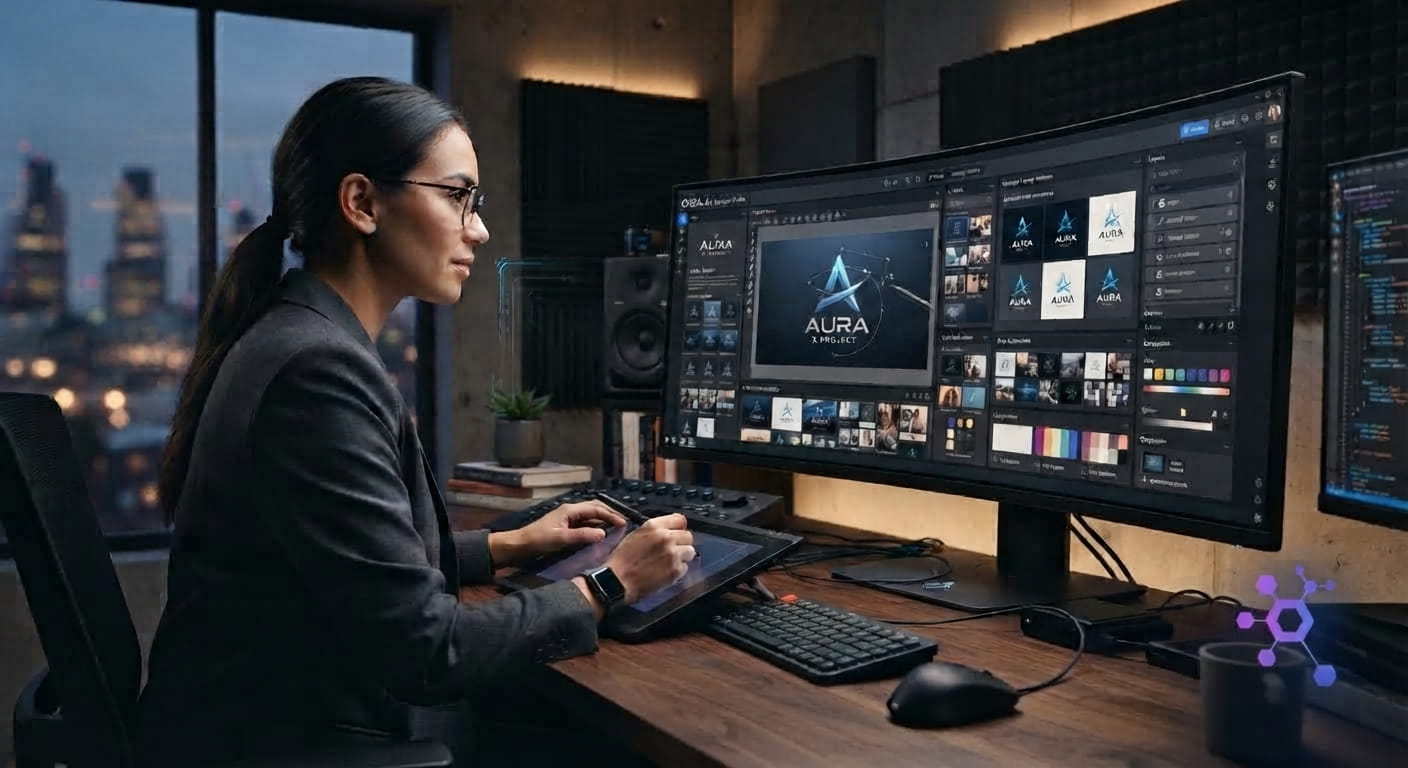
Why Human Creativity Still Matters
A professional designer does not simply produce a picture.
A designer needs to understand:
The target audience
Brand identity
Typography
Color psychology
Visual hierarchy
Composition
Communication goals
Marketing objectives
User experience
Cultural context
Client requirements
For example, an AI tool might generate ten logo concepts in seconds. But deciding which concept actually represents a company's identity requires human judgment.
Similarly, an AI system may produce an attractive social media graphic, but a designer still needs to determine whether the design communicates the intended message clearly.
This is where creative direction becomes increasingly valuable.
The Graphic Designer of the Future Will Look Different
The future graphic designer may not spend most of the day manually creating every element from scratch.
Instead, designers may increasingly work as creative directors, visual problem-solvers, brand specialists, and AI-assisted creators.
A future workflow could look something like this:
Idea → AI-assisted exploration → Human selection → Design refinement → Brand alignment → Quality control → Final delivery
AI can accelerate the exploration stage, while human expertise remains important throughout the decision-making process.
Adobe's 2026 creative research similarly describes a shift toward creatives directing, evaluating, and taking ownership of AI-assisted work rather than simply treating AI as an independent replacement for creative professionals.
New Skills Graphic Designers Should Develop
Graphic designers who want to remain competitive should consider expanding beyond traditional design software.
Important skills may include:
1. AI-Assisted Design
Understanding how to use AI tools for brainstorming, concept development, image generation, editing, and repetitive tasks can make a designer's workflow more efficient.
2. Branding
Brand identity remains an important area because companies need consistent visual systems across websites, social media, advertisements, packaging, and other communication channels.
3. UI/UX Design
Digital products need designers who understand interfaces, usability, user journeys, and visual systems.
4. Motion Graphics
Short videos, animations, advertisements, and social media content continue to increase the demand for motion-based visual communication.
5. Marketing Knowledge
A designer who understands marketing can create visuals based on business objectives rather than aesthetics alone.
6. Creative Direction
As AI makes visual production faster, the ability to decide what should be created and why can become increasingly valuable.
7. Communication and Problem Solving
Clients do not always know exactly what they need. A strong designer needs to understand the problem before creating the solution.
Will AI Replace Graphic Designers?
The answer is not as simple as yes or no.
AI is already automating certain tasks that designers previously performed manually. That change is real.
However, current evidence does not support the idea that every graphic designer will simply disappear.
The U.S. BLS continues to describe graphic designers as an occupation with ongoing employment and annual openings, while also acknowledging that AI and automated tools can affect demand.
Adobe's 2026 research found another important pattern: AI skills are increasingly appearing in creative job requirements, suggesting that some employers are looking for creatives who can work with AI rather than simply avoiding it.
So the more useful question may be:
Will AI replace graphic designers, or will graphic designers who use AI become more productive than those who do not?
The answer will vary by role, company, market, and type of design work.
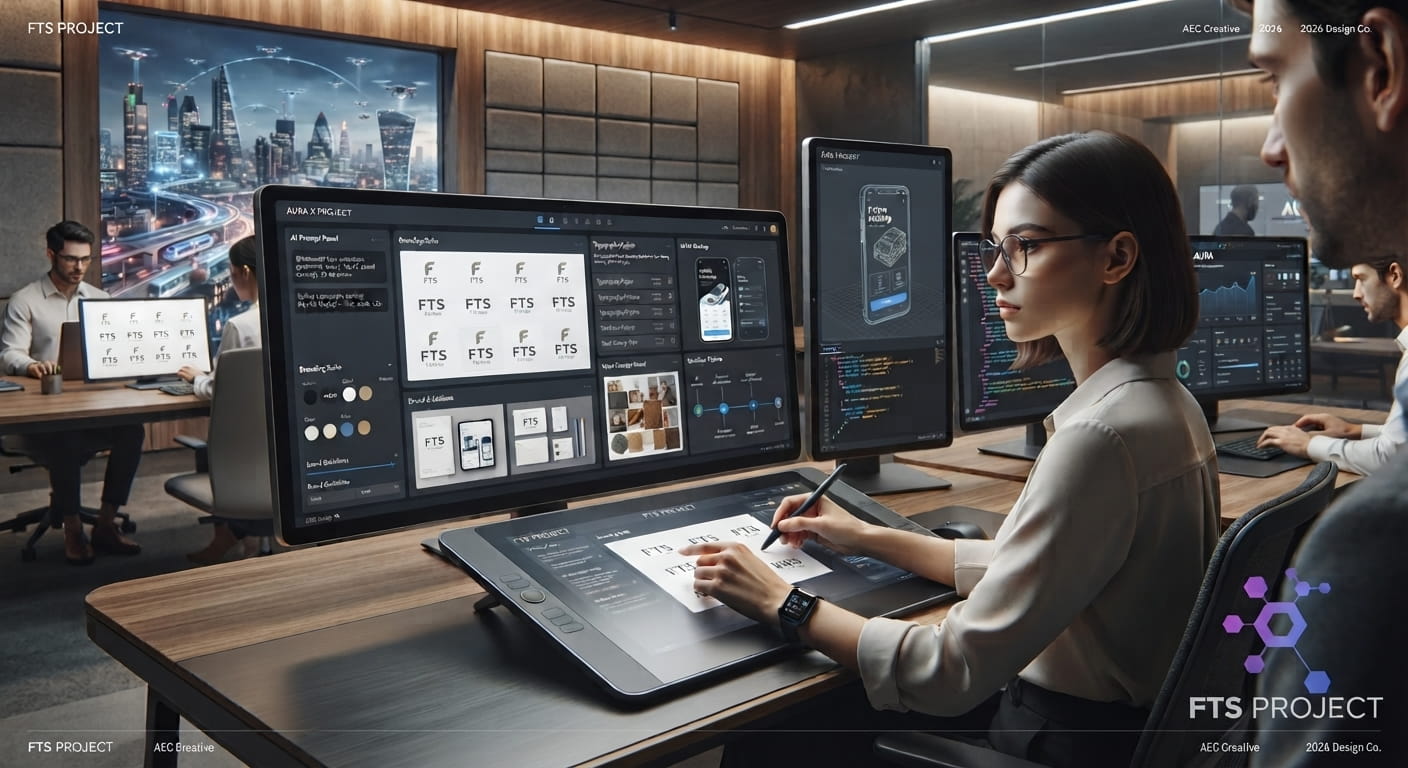
What Happened Before AI — and What Is Happening Now?
Every major technological change has reshaped graphic design.
Traditional era:
Designers relied heavily on manual production.
Digital era:
Software made editing and production dramatically faster.
Internet era:
Websites and digital marketing created new design requirements.
Social media era:
Businesses needed large amounts of visual content at high speed.
AI era:
Designers can explore concepts, automate repetitive work, and produce variations much faster.
The pattern is clear: technology keeps changing the workflow.
The profession evolves with it.
What Could Happen to Graphic Design in the Future?
The future of graphic design will likely involve a combination of human creativity and increasingly capable technology.
Designers may spend less time performing repetitive production tasks and more time on:
Creative strategy
Brand development
Art direction
User experience
Visual storytelling
Campaign concepts
Client communication
Quality control
AI-assisted creative workflows
This does not mean every traditional design skill will become irrelevant.
Typography, composition, color, layout, branding, visual hierarchy, and communication principles can remain useful regardless of which tools are used to implement them.
Adobe's 2026 Creative Trends report also highlights a growing emphasis on authenticity, emotional connection, cultural relevance, and new AI-supported creative possibilities.
That suggests an important direction for the industry: technology may make creation faster, but meaningful creative decisions still matter.
The Biggest Opportunity for Future Graphic Designers
One of the biggest opportunities may belong to designers who combine multiple skills.
Instead of being only a traditional graphic designer, a professional might become:
Graphic Designer + AI Specialist + Brand Designer + UI/UX Designer + Content Creator
This combination can create a broader professional skill set.
A designer who understands both creative principles and modern technology can potentially work across websites, social media, advertising, branding, digital products, and AI-assisted content workflows.
The future may therefore favor adaptability rather than a single fixed toolset.
Final Thoughts
Graphic design has changed many times before, and it is changing again.
The industry has moved from manual production to desktop software, from desktop software to web and social media, and now toward AI-assisted creative workflows.
AI will undoubtedly automate some design tasks. Some traditional workflows may become less valuable, while new skills and opportunities emerge.
But creativity, communication, brand understanding, visual judgment, and problem-solving remain central to effective design.
For aspiring designers, the goal should not simply be to compete against AI.
It may be more useful to learn how to work with technology while developing the human skills that technology cannot easily replace.
The graphic designer of the future may not be the person who creates everything manually.
It may be the person who knows what to create, why it matters, how to direct the tools, and how to turn an idea into meaningful visual communication.
And that means the story of graphic design is not ending.