Introduction
Telecommunications networks handle millions of calls every day, making call monitoring, caller identification, and network security essential for modern telecom operations. However, unidentified call traffic, grey routes, and suspicious calling activities can create serious challenges for telecom operators.
Grey-route calls are associated with call routing practices that may bypass authorized telecommunications interconnections. These activities can affect revenue assurance, call transparency, and network monitoring. Identifying suspicious traffic requires reliable monitoring systems, automated analysis, and timely alerts.
To address these challenges, Fusion Trail Solutions developed a Grey Caller ID Detection System — a standalone platform designed to identify grey-route calls, monitor suspicious caller activity, and improve telecommunications security through automated call analysis.
This case study explores the project's development process, technical architecture, key features, challenges, and business value.
1. Understanding the Project Requirements
The main objective was to develop an advanced caller identification and suspicious call detection platform that could help telecom operations monitor call traffic and identify potentially fraudulent activities.
Traditional manual telecom analysis can make it difficult to maintain consistent visibility across large volumes of call activity. A centralized system was needed to organize monitoring information and support faster operational responses.
The project focused on several important requirements:
Monitor telecommunications call traffic.
Identify and analyze caller ID information.
Detect suspicious calling activities.
Generate alerts for important events.
Provide analytics and reporting capabilities.
Maintain automated activity logs.
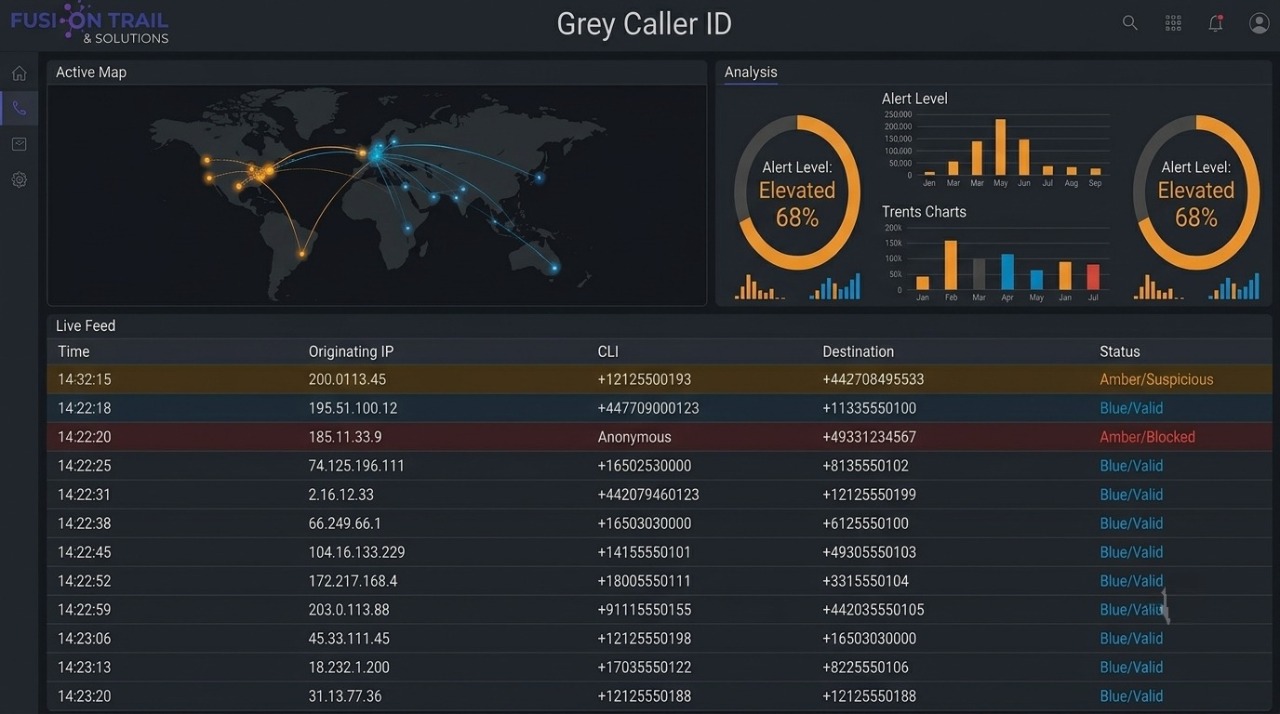
Present monitoring information through a centralized dashboard.
The goal was to create a practical monitoring platform that improves visibility and supports more efficient telecom security operations.
2. Key Challenges in Telecom Fraud Detection
Telecom fraud detection requires continuous monitoring and the ability to identify unusual patterns in call activity. During the project, several important challenges were addressed.
Unidentified Grey-Route Calls
Grey-route calls can create difficulties for telecom operators because certain call-routing practices may bypass authorized channels. Identifying these activities requires dedicated monitoring and caller identification capabilities.
Limited Call Monitoring Visibility
When call traffic information is not available through a centralized monitoring environment, understanding overall activity becomes more difficult.
The platform needed a unified dashboard to make monitoring information easier to access and review.
Delayed Fraud Detection
Delays in identifying suspicious calling activity can affect operational response. An automated analysis and alert mechanism was required to help teams become aware of potentially problematic events sooner.
Manual Telecommunications Analysis
Manual analysis can consume operational resources and make it harder to maintain consistent monitoring.
The solution needed automated call analysis and logging capabilities to support more organized telecom operations.
3. Our Solution: An Automated Caller ID Detection Platform
Fusion Trail Solutions developed a standalone caller ID detection system focused on automated call analysis, suspicious activity monitoring, and real-time alerts.
The platform brings together backend analytics, call traffic monitoring, and a centralized dashboard to provide a more organized approach to telecommunications security.
Caller ID Detection
The system includes caller identification functionality to support the identification and monitoring of call-related information.
Automated Call Analysis
Automated call analysis helps reduce dependence on manual telecom analysis and supports a more structured monitoring process.
Suspicious Activity Monitoring
The platform provides monitoring capabilities designed to help identify potentially suspicious call activity and improve visibility into telecom operations.
Real-Time Alert System
An alert mechanism helps communicate important monitoring events, supporting faster awareness and operational response.
Together, these capabilities create a centralized environment for telecom call monitoring and suspicious activity detection.
4. Core Features of the System
The Grey Caller ID Detection System includes six major capabilities.
1. Call Traffic Monitoring
Provides monitoring functionality for telecommunications call traffic, helping operators maintain better visibility into call activity.
2. Caller ID Detection
Supports caller identification and monitoring as part of the system's telecom analytics workflow.
3. Suspicious Activity Alerts
Helps highlight potentially suspicious calling activities through an alert-based monitoring approach.
4. Analytics Reporting
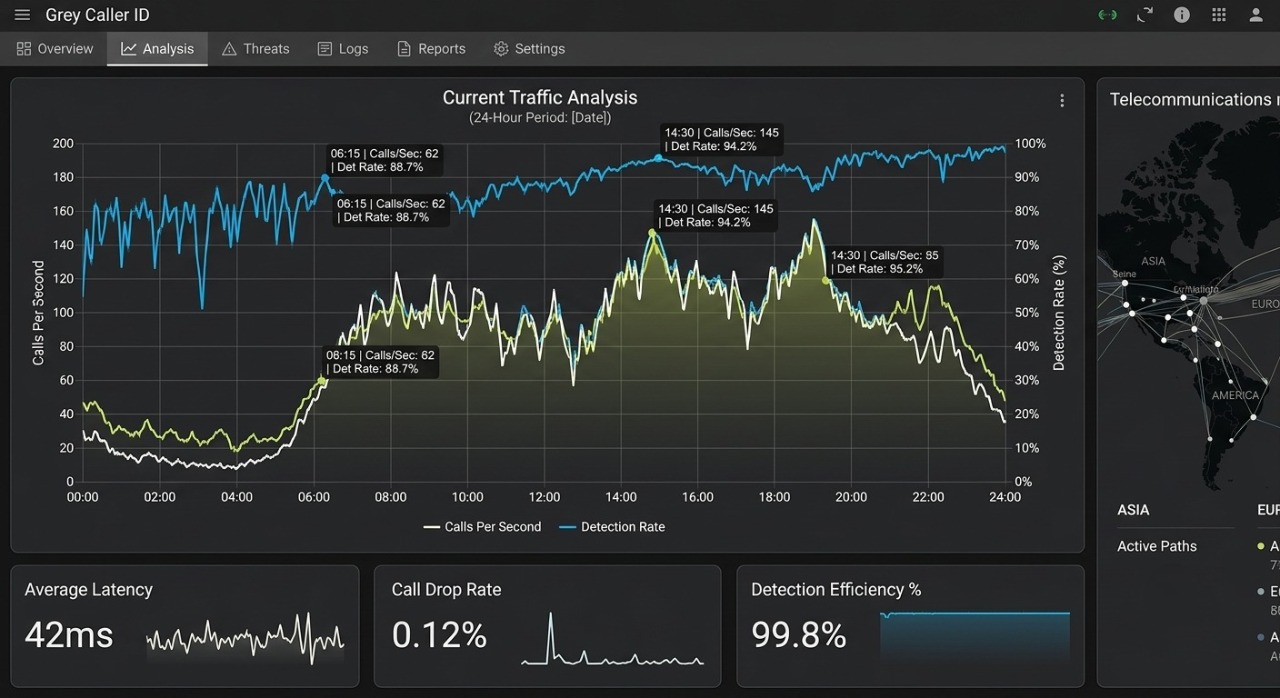
Organizes relevant monitoring information into reporting capabilities that support operational analysis.
5. Dashboard Visualization
Provides a centralized frontend dashboard where users can access monitoring information and view relevant analytics.
6. Automated Logging
Supports automated logging of system activities, helping maintain organized monitoring records.
These features work together to improve telecom monitoring visibility and support more efficient fraud detection workflows.
5. Technology Stack and System Architecture
A telecom monitoring platform requires a backend architecture capable of processing application data, supporting analytics workflows, and delivering information to users through a responsive interface.
For this project, Fusion Trail Solutions used a modern technology stack consisting of:
Python: Used for backend development and application logic.
FastAPI: Supports backend API development and communication.
PostgreSQL: Provides structured database management.
Docker: Supports application containerization.
React: Powers the frontend monitoring dashboard.
AWS: Provides the cloud-hosted infrastructure.
How the System Architecture Works
The system was organized around four main architectural components.
1. Frontend Monitoring Dashboard
React provides the user interface for accessing call monitoring information, dashboard visualizations, and analytics reporting.
2. Telecom Analytics Backend
Python and FastAPI support backend functionality and telecom analytics integration, connecting the application's different components.
3. Real-Time Data Processing
The architecture includes a real-time data processing layer to support the monitoring workflow and timely handling of relevant call information.
4. Cloud-Hosted Infrastructure
AWS-based cloud infrastructure provides the hosting environment, while Docker supports containerized application deployment.
This architecture brings together monitoring interfaces, backend services, data processing, and cloud infrastructure within one standalone platform.
6. Development Process and Quality Considerations
Building a caller ID detection platform requires careful planning across multiple technical areas. The monitoring dashboard, backend analytics, data management, and alert functionality must work together as a connected system.
Our development approach focused on the following areas:
Requirement Analysis: Understanding telecom monitoring requirements, grey-route call identification challenges, and suspicious activity detection needs.
Backend Development: Building backend services using Python and FastAPI to support application functionality and telecom analytics integration.
Database Integration: Using PostgreSQL to manage structured application information.
Frontend Development: Creating a centralized monitoring dashboard using React.
Data Processing: Organizing the real-time data processing architecture to support monitoring workflows.
Deployment Architecture: Incorporating AWS and Docker into the cloud-hosted application environment.
By focusing on these areas, the project established a structured technical foundation for centralized telecom monitoring.
7. Project Results and Business Value
The completed Grey Caller ID Detection System introduced a more organized and automated approach to telecommunications monitoring.
The key project outcomes included:
Improved telecom fraud detection.
Faster operational response.
Better monitoring accuracy.
Enhanced telecom analytics.
These outcomes demonstrate the value of combining caller identification, automated analysis, suspicious activity monitoring, and dashboard-based reporting in a dedicated telecom security platform.
Rather than depending entirely on manual analysis, telecom teams can use centralized monitoring capabilities to improve operational visibility and support more informed responses.
8. Project Overview
Project Name: Grey Caller ID Detection System
Industry: Telecommunications
Our Role: Backend System Development and Telecom Analytics Integration
Development Timeline: 5 Months
Key Result: Improved Telecom Fraud Detection
Technology Stack: Python, FastAPI, PostgreSQL, Docker, React, AWS
Project Type: Standalone Caller ID Detection and Telecom Monitoring Platform
Conclusion
Telecommunications security depends on the ability to monitor call traffic, identify suspicious activities, and respond to potential threats efficiently.
The Grey Caller ID Detection System demonstrates how a dedicated software platform can support these requirements through caller identification, automated call analysis, suspicious activity alerts, analytics reporting, and centralized dashboard visualization.
Over five months of development, Fusion Trail Solutions brought together Python, FastAPI, PostgreSQL, React, Docker, and AWS to build a standalone telecom monitoring solution.
At Fusion Trail Solutions, we focus on developing custom software platforms that address real business challenges through modern engineering, structured architecture, and practical digital solutions.
Looking to develop a custom telecom monitoring or fraud detection platform?
Explore how Fusion Trail Solutions can help transform your requirements into a modern, reliable software solution.
Ready to discuss your project? Visit Fusion Trail Solutions and get in touch with our team.