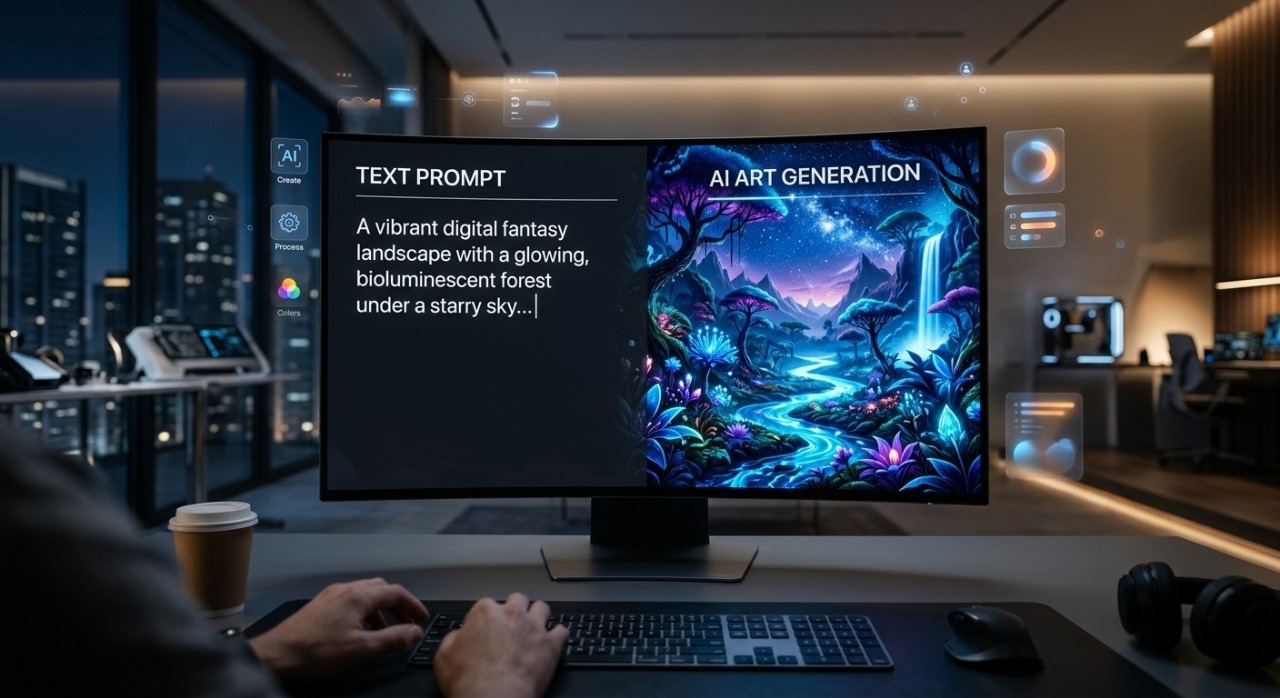
Artificial Intelligence (AI) has completely revolutionized the landscape of digital creativity, web production, and asset design. Not long ago, producing high fidelity visuals or bespoke graphic assets required dozens of hours, steep licensing fees, and advanced mastery of complex editing suites. Today, neural networks can translate a single line of descriptive text into a production ready visual asset within seconds.
For modern creators, developers, and digital marketers, integrating AI image generation isn't just about automation it is about scaling creative workflows tenfold. This comprehensive guide breaks down how AI engines interpret creative intent, the advantages and challenges of the medium, tactical workflows for implementation, and the top platforms driving the industry forward.
1. The Technology Behind AI Image Generation
AI image generation does not operate on simple collage or database stitching mechanics. Instead, it relies on complex deep learning models trained on vast datasets consisting of billions of image text pairs. Through this training, the system learns the foundational relationships between semantic words and visual characteristics understanding not just what an object looks like, but how light, texture, perspective, and style interact with it.
Modern engines primarily utilize two core architectural frameworks:
Diffusion Models: Technologies powering engines like Midjourney and Stable Diffusion work by intentionally introducing mathematical "noise" (pure digital static) to an image during training. When generating an image from your prompt, the AI starts with a blank canvas of random noise and reverses the process. It systematically subtracts the static step-by-step, shaping the pixels until a sharp, coherent visual matching the prompt emerges.
Generative Adversarial Networks (GANs): This framework pits two neural networks against each other. The Generator creates raw images, while the Discriminator evaluates them against real world data to check for authenticity. This continuous feedback loop forces the AI to refine textures, lighting, and geometric accuracy to hyper-realistic standards.
Beyond creating brand-new imagery from scratch ("Text-to-Image"), these models excel at Styling and Redesigning existing assets ("Image-to-Image"). By uploading a baseline image, users can instruct the AI to alter its structural style such as transforming a standard product photograph into a stylized vector illustration, or rendering a flat layout concept into an advanced 3D claymation aesthetic while maintaining the core composition.
2. Commercial Applications & Practical Use Cases
The utility of AI image generation extends far beyond casual experimentation. Across various tech and creative domains, it has become a core component of fast paced production pipelines:
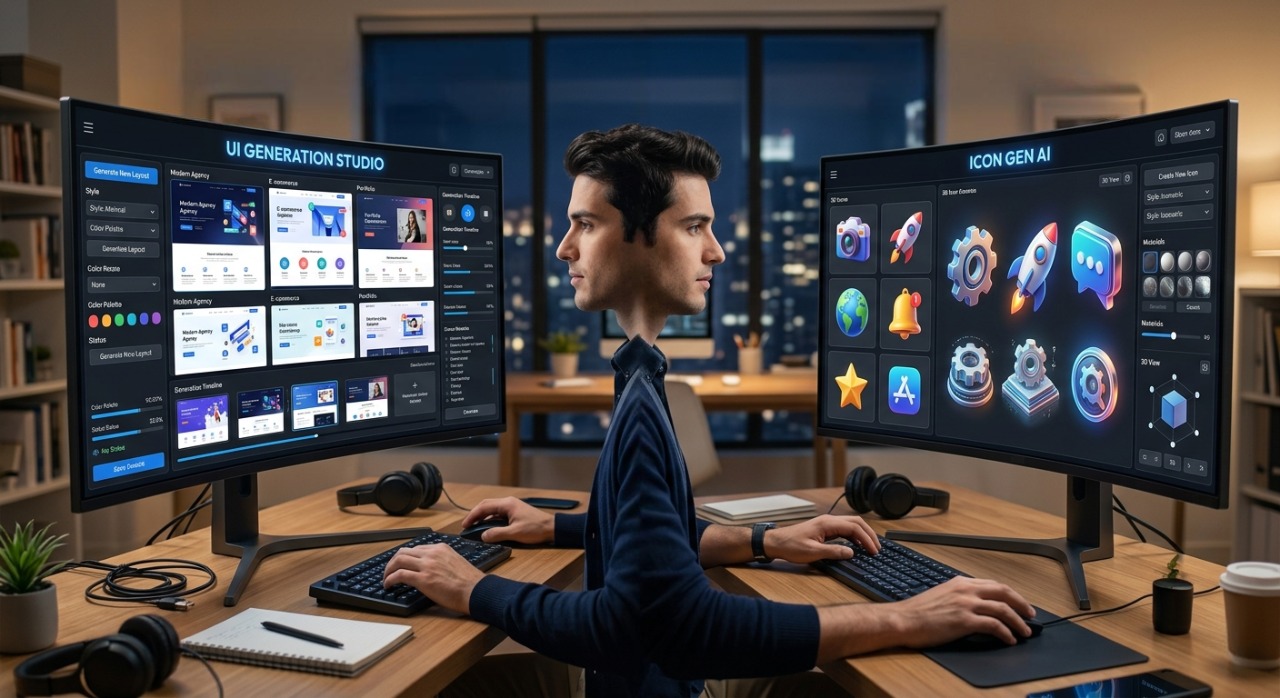
UI/UX Concepting & Rapid Prototyping: Designers use AI to generate rich mood boards, color palettes, custom background textures, and stylistic components. Instead of spending days drawing custom isometric icons or placeholder graphics for a new web template, developers can instantly render production ready theme assets that perfectly align with their CSS frameworks.
Custom Web Illustrations & Vector Assets: Blogs and web platforms require continuous streams of original visual content to rank well on search engines and engage users. AI allows creators to generate highly specific, context appropriate editorial illustrations that bypass the generic look of traditional stock photography.
E-Commerce Mockups & Adaptive Marketing: For product-centric businesses, AI can completely eliminate the overhead of physical staging. Uploading a clean cutout of a product allows creators to dynamically swap backgrounds, simulate professional studio lighting setups, or place the item into highly specific lifestyle environments tailored to localized target demographics.
3. The Pros and Cons of AI Visual Workflows
Deploying AI systems into production environments requires a balanced understanding of their structural advantages and processing bottlenecks.
✅ The Advantages
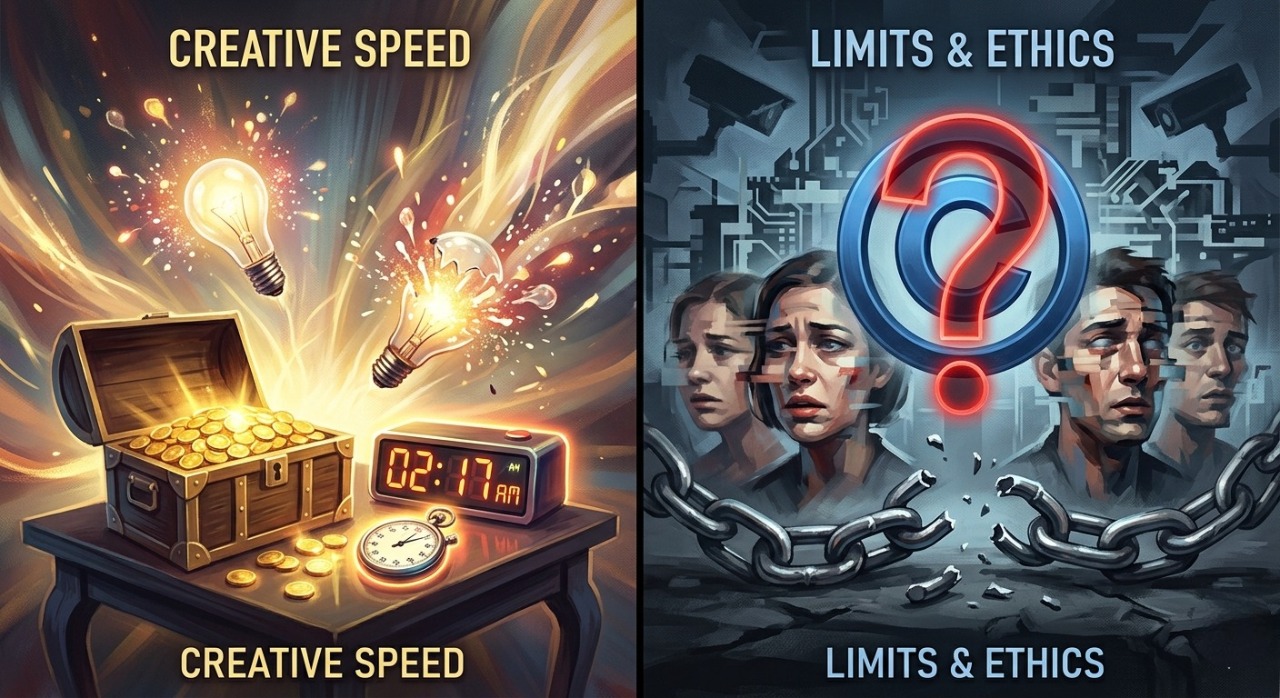
Exponential Velocity: The most immediate benefit is raw speed. A highly detailed illustration that would typically take an agency days to sketch, refine, color, and polish can be rendered, upscaled, and exported within 30 seconds.
Drastic Cost Reduction: Standard asset acquisition is heavily constrained by stock subscriptions, font licenses, and design retainers. AI gives teams the flexibility to iterate infinitely without incurring scaling costs per asset variation.
Limitless Creative Iteration: AI serves as an ultimate brainstorming partner. It allows creators to smash contrasting styles together such as combining "cyberpunk architecture" with "19th century oil painting aesthetics" yielding highly original concepts that break through creative block.
❌ The Disadvantages & Limitations
Anatomical & Text Fluency Errors: While neural networks are highly sophisticated, they frequently struggle with spatial logic and fine micro details. Common artifacts include distorted human limbs, impossible geometry, and garbled, unreadable text within rendered signs or labels.
Copyright & Legal Ambiguities: Because public AI models are trained on scraped open-web data, the underlying ownership of AI-generated art remains an evolving legal battleground. It can be difficult to claim exclusive intellectual property rights over a completely raw AI output.
Absence of True Intentionality: AI operates entirely on mathematical probabilities, not emotional storytelling. A human designer understands why a specific brush stroke or subtle shadow evokes empathy or trust; an AI simply places pixels where they statistically belong based on its dataset.
4. Step-by-Step Blueprint for Creating High-Quality AI Images
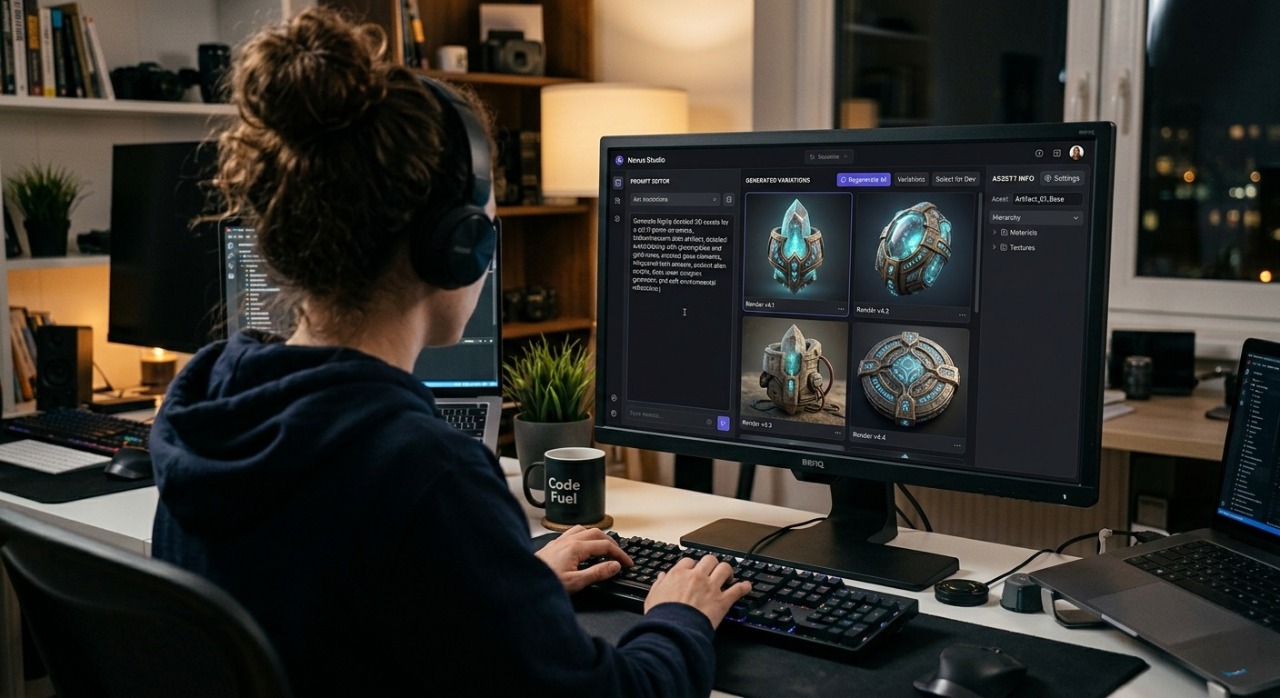
To extract elite, professional grade visuals from an AI engine, you must move past basic, single word inputs and master Prompt Engineering. Follow this tactical pipeline to construct your generations:
Step 1: Establish Your Core Subject
Begin by clearly defining the central focus of your image. Avoid abstract philosophy; focus entirely on concrete nouns.
Example: A vintage sports car.
Step 2: Layer Environmental Context
Describe the physical space, background elements, and atmospheric conditions surrounding your subject.
Example: A vintage sports car driving down a rain-slicked neon highway at midnight.
Step 3: Inject Specific Lighting and Stylistic Directives
Define the artistic medium, camera angle, and lighting conditions. This is what separates low-tier images from high end production assets.
Example: A vintage sports car driving down a rain-slicked neon highway at midnight. Cyberpunk aesthetic, cinematic low-angle shot, hyper-realistic reflections, soft purple and orange anamorphic lens flare.
Step 4: Define Technical Render Parameters
Conclude your prompt with explicit resolution, engine specific parameters, or render quality commands to ensure maximum fidelity.
Example: A vintage sports car driving down a rain-slicked neon highway at midnight. Cyberpunk aesthetic, cinematic low-angle shot, hyper-realistic reflections, soft purple and orange anamorphic lens flare, photorealistic, 8k resolution, aspect ratio 16:9.
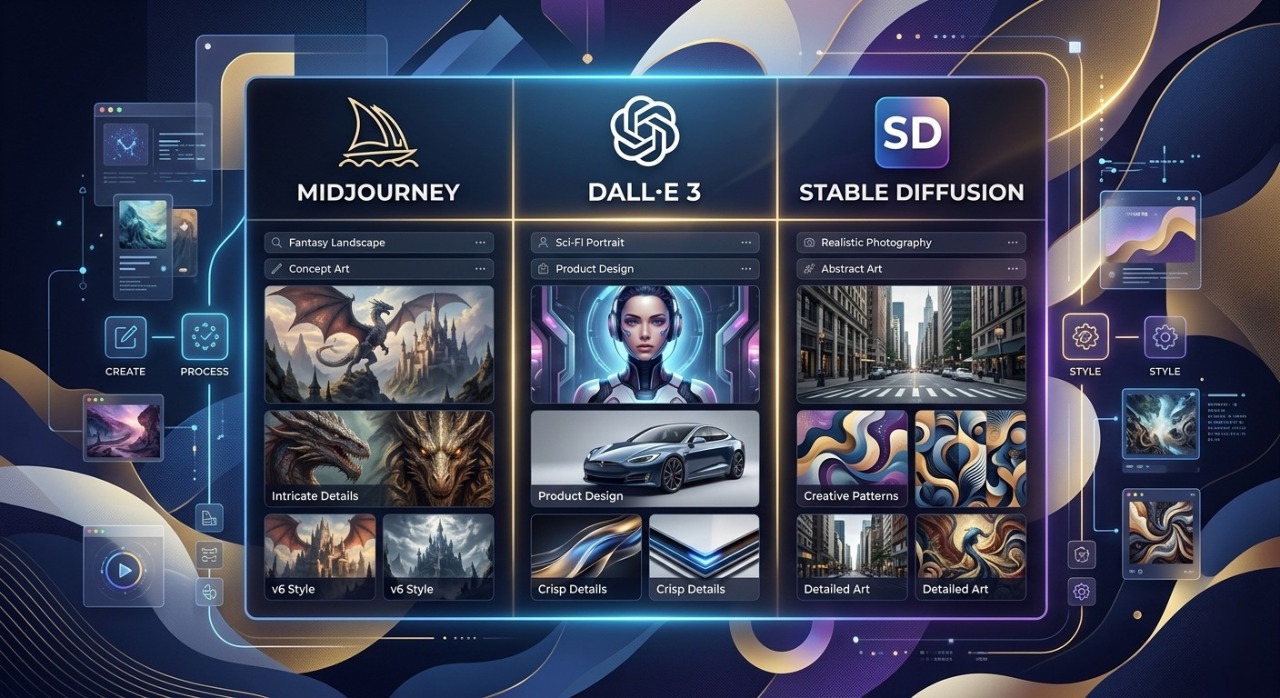
5. Comprehensive Analysis of Industry-Leading AI Image Engines
Navigating the current landscape of generative applications requires selecting tools optimized for your specific project constraints, budget, and desired stylistic output.
Midjourney
Midjourney stands as the undisputed champion for generating raw artistic depth, complex cinematic lighting, and breathtaking photorealism. It operates primarily through a specialized interface hosted on Discord, which can present a slight learning curve for users unfamiliar with command line interactions. Because of its incredible ability to blend complex textures and render organic details seamlessly, it is the premier choice for concept artists, creative directors, and digital marketers who require premium, portfolio grade visual assets. However, it requires a paid monthly commitment to unlock its full performance potential.
DALL-E 3 (By OpenAI)
DALL-E 3 represents the pinnacle of semantic understanding and prompt adherence. Built natively into the ChatGPT Plus ecosystem and accessible via Microsoft Copilot, this engine excels at interpreting highly complex, multi layered text descriptions without ignoring minor details. If your creative brief requires precise text rendering inside the image such as a specific phrase written cleanly across a storefront sign DALL-E 3 handles it with far greater accuracy than its competitors. It provides an exceptionally smooth, conversational user interface, making it perfect for rapid brainstorming and highly structured asset creation.
Stable Diffusion (By Stability AI)
Stable Diffusion is the absolute gold standard for developers, technical artists, and enterprise teams who demand total, granular control over their generation pipelines. Unlike closed platforms, Stable Diffusion is open-source and can be run locally on powerful graphic hardware or hosted on specialized cloud servers. It provides access to advanced parameters, structural masking tools (Inpainting and Outpainting), and custom control networks (ControlNet) that let you lock down precise composition lines or poses. While its initial setup requires technical expertise and solid hardware specifications, it offers unparalleled freedom and zero per-image generation costs.
Adobe Firefly
Adobe Firefly is built from the ground up to address the complex compliance demands of professional graphic design agencies and corporate marketing teams. Deeply integrated into the native Adobe Creative Cloud ecosystem (including Photoshop and Illustrator), Firefly allows users to seamlessly edit, extend, or generate vector patterns directly inside their active design artboards. Most importantly, Adobe trains its models strictly on openly licensed content and public-domain imagery. This ensures that every visual asset generated through Firefly is completely safe for global commercial use, eliminating the underlying legal liabilities that often shadow open-source models.
Conclusion: The Paradigm Shift in Modern Workflows
AI image generation technology is not a replacement for human creativity; it is an amplifier. The future of digital design does not belong to machines alone, nor does it belong to artists who reject automation. It belongs to the professionals who learn to orchestrate these systems to out pace, out iterate, and out deliver traditional production limitations.
By treating prompts as code and outputs as raw material to be refined, modern developers and designers can eliminate the friction of manual asset creation freeing up critical cognitive energy to focus on superior architecture, flawless user experiences, and high level strategic scaling.