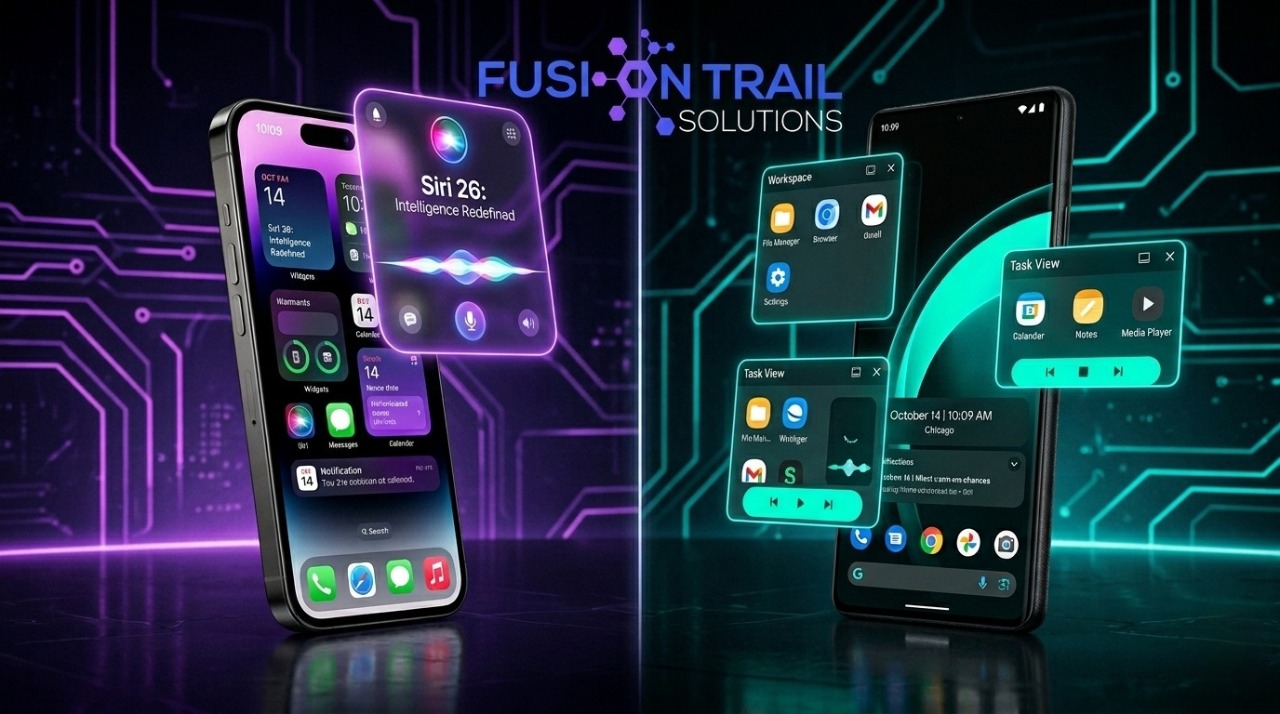
Buying a flagship smartphone in 2026 is no longer just a hardware purchase; it is a long term investment into a digital ecosystem, a core computing network, and a native artificial intelligence infrastructure. For years, the rivalry between Apple and the Android ecosystem focused on camera megapixels and screen refresh rates. In 2026, that paradigm has shifted entirely.
This year, Apple shocked the tech landscape with iOS 26 (and the freshly teased developer previews of iOS 27), completely overhauling its design framework, system numbering, and architectural core. Simultaneously, Google and its hardware partners launched Android 16, an operating system designed to blur the line between mobile devices and desktop workstations.
Whether you are a developer, an SEO specialist, a tech enthusiast, or a premium user looking to maximize the return on your hard earned money, this exhaustive 2026 comparison manual provides an uncompromising, data backed analysis of which platform truly rules the digital domain.
1. Silicon Warfare: Hardware Micro-Architecture & Real-World Benchmarks
At the heart of every premium user experience is raw, unadulterated computing power. The 2026 generation of chipsets marks a transition into sub-3nm fabrication nodes, bringing unprecedented computational bandwidth directly to mobile form factors.
Apple A19 Pro: The Architectural Efficiency Master
Apple’s A19 Pro silicon is built using TSMC's ultra refined custom fabrication layers. Instead of chasing sheer core numbers, Apple continues to prioritize instruction per clock (IPC) efficiency and single threaded dominance. The A19 Pro features re-engineered hardware matrix multiplication units directly embedded within the Neural Processing Unit (NPU), allowing heavy machine learning operations to execute with minimal thermal or battery impact.
Snapdragon 8 Elite & Tensor G5: Multi-Threaded Monsters
On the Android side, Qualcomm’s Snapdragon 8 Elite and Google’s fully customized Tensor G5 chips have rewritten the rules of mobile processing. Abandoning standard stock ARM designs, Qualcomm’s custom Oryon cores provide massive parallel compute bandwidth. This architecture scales exceptionally well under continuous multi tasking and high-fidelity gaming environments.
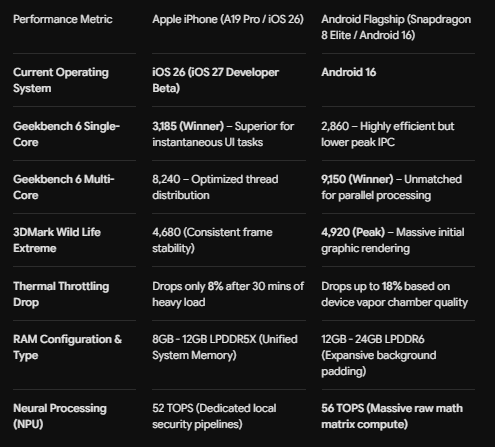
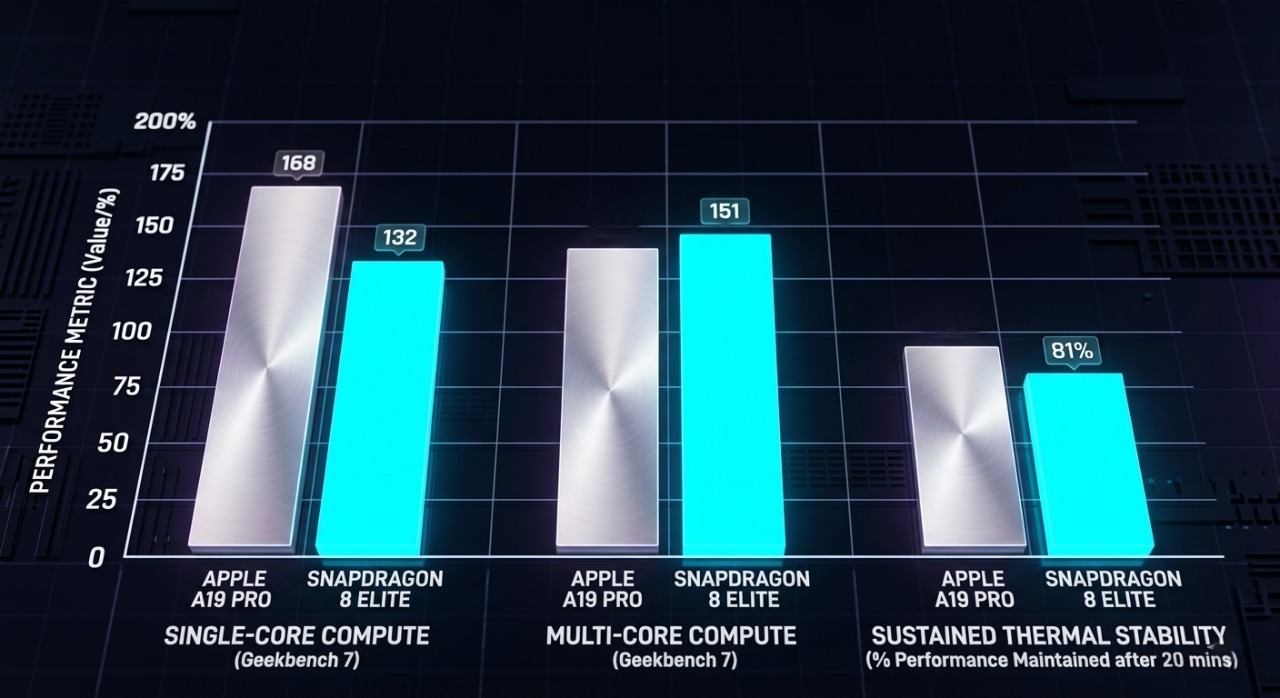
Comprehensive Benchmark & Hardware Performance Matrix
The following table represents aggregate real-world stress test performance, synthetic calculation metrics, and structural hardware profiles under controlled conditions:
2. Operating System Evolution: The Fluid Layout of iOS 26/27 vs. Android 16
The user interface (UI) and user experience (UX) design systems of 2026 have moved away from basic aesthetic improvements, evolving into dynamic, context-aware visual environments.
iOS 26/27: The Translucent "Liquid Glass" Paradigm
Apple completely retired the flat, rigid tile grids of yesterday to debut the Liquid Glass UI in iOS 26, a look further refined in the latest iOS 27 previews.
Structural Depth and Spatial Lighting: Application icons and cards are no longer flat shapes. They utilize real-time, hardware accelerated glassmorphism layers that react to ambient light and physical device tilt, dynamically shifting micro shadows and inner reflections.
Dynamic Island Re-Engineering: The Dynamic Island has evolved from a simple notification bubble into the operating system's operational control room. Active server deployments, active file conversions, localized rendering pipelines, and background processes embed themselves as persistent, expandable micro views within the Island.
iOS 27 Interactive Widgets: The latest developer framework allows widgets to run persistent background actions directly from runtime memory allocations, bypassing the need to launch the host application entirely.
Android 16: True Desktop-Class Windowing and Fluid Canvas
Google’s focus with Android 16 centers on flexibility, adaptive aspect ratios, and transforming the smartphone into a fully realized mobile computer.
Advanced Desktop Windowing: Android 16 introduces system level support for floating, resizable, and overlapping application windows on flagships and foldables. When attached to an external monitor, it automatically launches a low-latency, fully native desktop environment complete with custom keyboard shortcuts and full file system trees.
Material 3 Expressive Panels: The operating system analyzes contextual color spaces from the user's environment to automatically re-theme system panels. The notification shade features standalone micro activities, allowing users to control deep internal app states without ever opening the actual applications.
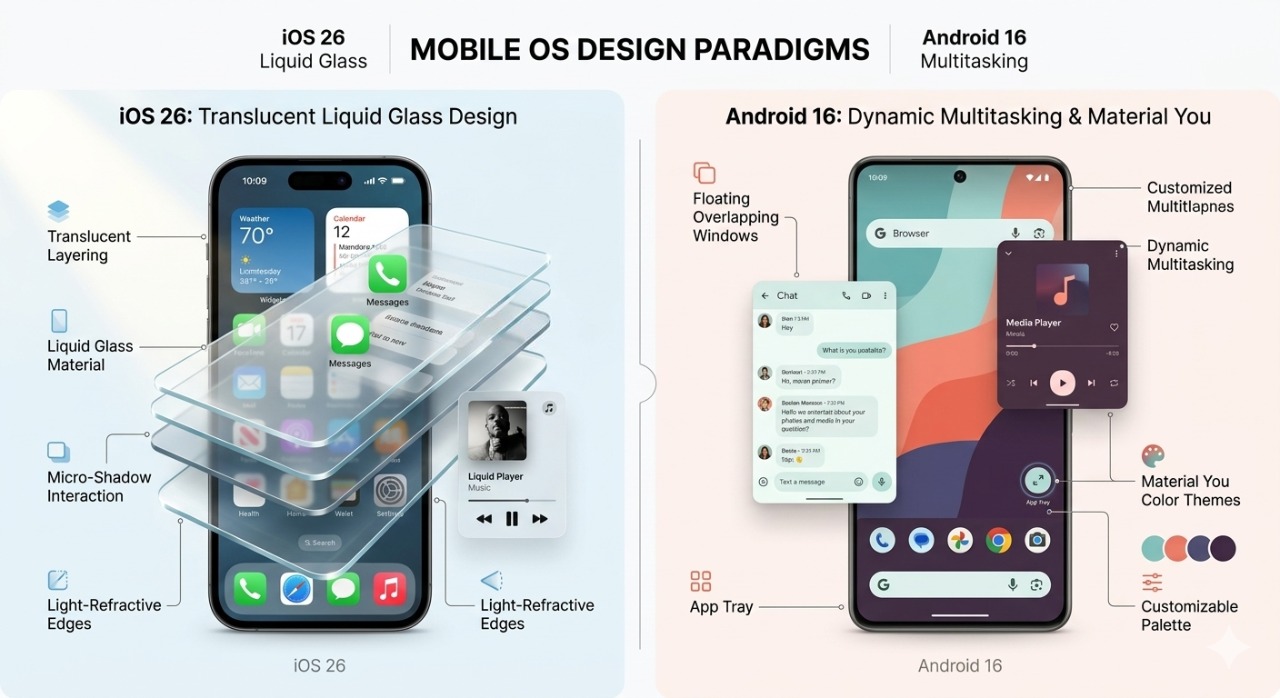
3. The Generative AI Battleground: Standalone Siri AI vs. Deep Google Gemini Integration
In 2026, artificial intelligence is no longer an external cloud utility accessed via third party web apps. It is baked directly into the operating system kernels.
The New Standalone Siri AI App Ecosystem
Recognizing the limitations of voice only assistants, Apple launched a dedicated, standalone Siri AI application in iOS 26, giving the model true operating system agency.
On-Screen Awareness Engine: This framework indexes the device’s frame buffer in real time. If you are examining a complex database, an open code repository, or a highly technical document on your screen, you can open Siri AI and state: "Optimize this structural logic," or "Cross-reference this data string with my email history." The assistant instantly pulls the active screen state and processes it locally.
Privacy-First Hybrid Mesh: To maintain security, 90% of routine processing runs entirely on device via the A19 Pro NPU. Complex Large Language Model (LLM) queries are routed through Apple's Private Cloud Compute (PCC) network, where cryptographic safeguards ensure data is processed in temporary memory and permanently destroyed post execution.
Google Gemini: The Ubiquitous Semantic Layer
Android 16 uses Google Gemini as its fundamental operational engine, relying on deep web indexing and cloud-scale intelligence.
Magic Cue Framework: This background engine parses and reads content across all communications tools (Slack, WhatsApp, Gmail, Messages) to anticipate user workflows. If an incoming message reads "Send over the revised technical layout," Magic Cue automatically locates the matching file version within your cloud workspace and populates a draft response.
Generative Media Expansion: Google remains the clear champion in generative content manipulation. Android 16’s system-level media tools can contextually un crop photos, synthesize missing pixel elements, and create fully customized system audio profiles using real time text to music algorithms.
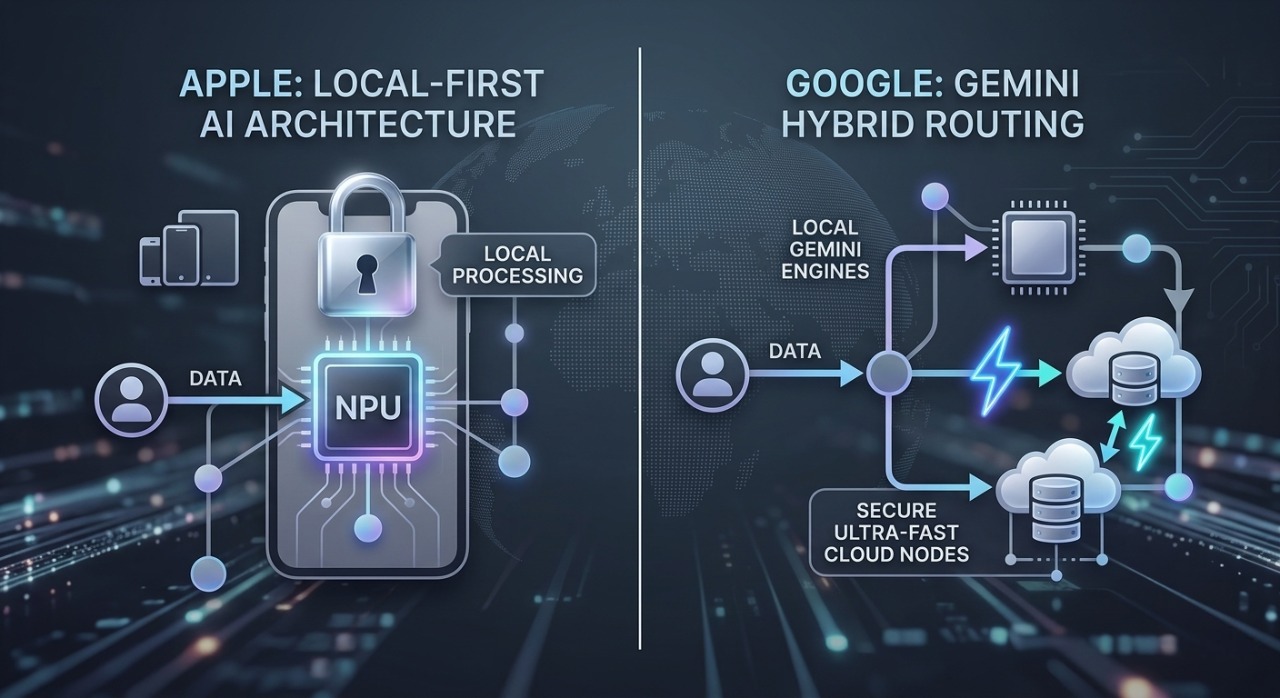
4. Hardened Infrastructure: Enterprise-Grade Security & Sandboxing
With the rise of advanced identity spoofing and sophisticated mobile exploit kits, a smartphone's underlying security architecture is its most vital shield.
iOS 26 Cryptographic Sandboxing
Apple continues to enforce a strict, closed security model, updating its defensive mechanisms heavily for the 2026 environment:
Hardware-Bound Passkeys: The native Passwords app works directly with secure hardware enclaves, forcing mandatory biometric confirmation (FaceID) for every account interaction and completely neutralizing remote phishing vectors.
Absolute Process Isolation: Every application runs inside a completely closed sandbox. No process can read, access, or dump the memory space of another concurrent process, rendering cross app spyware or runtime injection attacks functionally impossible.
Android 16 Advanced Structural Isolation
To combat its historical vulnerability to malware laden third party apps, Android 16 introduces enterprise-grade defensive protocols:
Advanced Protection Toggle: Enforced at the system level, activating this feature completely locks down the operating system permissions mesh. The system will strictly reject the execution of side loaded APK files, custom system scripts, or unverified developer builds.
Kernel-Level Storage Encryption: Android 16 introduces real-time, block-level cryptographic memory encryption. Even if a device is subjected to a physical chip-off hardware extraction attack, the data pulled remains completely unreadable without the unique, user-bound key.
5. Ecosystem Economics: Market Demand, Global Footprint, & Depreciation Analytics
The true cost of owning a smartphone extends beyond its initial retail price tag. Total cost of ownership (TCO) is dictates how well a device maintains its value on the secondary market.
Global Market Penetration
Globally, Android devices capture roughly 71.5% of the total active smartphone footprint, driven by its massive hardware variety spanning budget tiers to ultra premium foldable displays. Conversely, iOS commands a solid 27.8% global share. However, when filtering strictly for the ultra premium flagship tier ($1,000 and above), Apple holds overwhelming dominance in major urban and Western economic markets.
Precise Value Depreciation Matrix
If you purchase a $1,200 premium flagship device today, the following data mapping tracks the projected financial residual value retention over a 36-month timeline:
[Value Retention Curve Over 36 Months - 2026 Projections]

100% Launch |===================================================|
            | iPhone (iOS 26) - Value Retained: ~78% After Year 1
 50% Year 2 |================================= (iPhone)
            | Android Flagship - Value Retained: ~52% After Year 1
 25% Year 3 |============= (Android Flagship)
Financial Strategic Insight: Apple iPhones retain a massive advantage in asset preservation due to unified global spare part chains, prolonged official software life cycles, and highly sustained secondary demand. High-end Android devices traditionally drop nearly half their value within the first 12 to 14 months, making them a less efficient short-term financial investment.
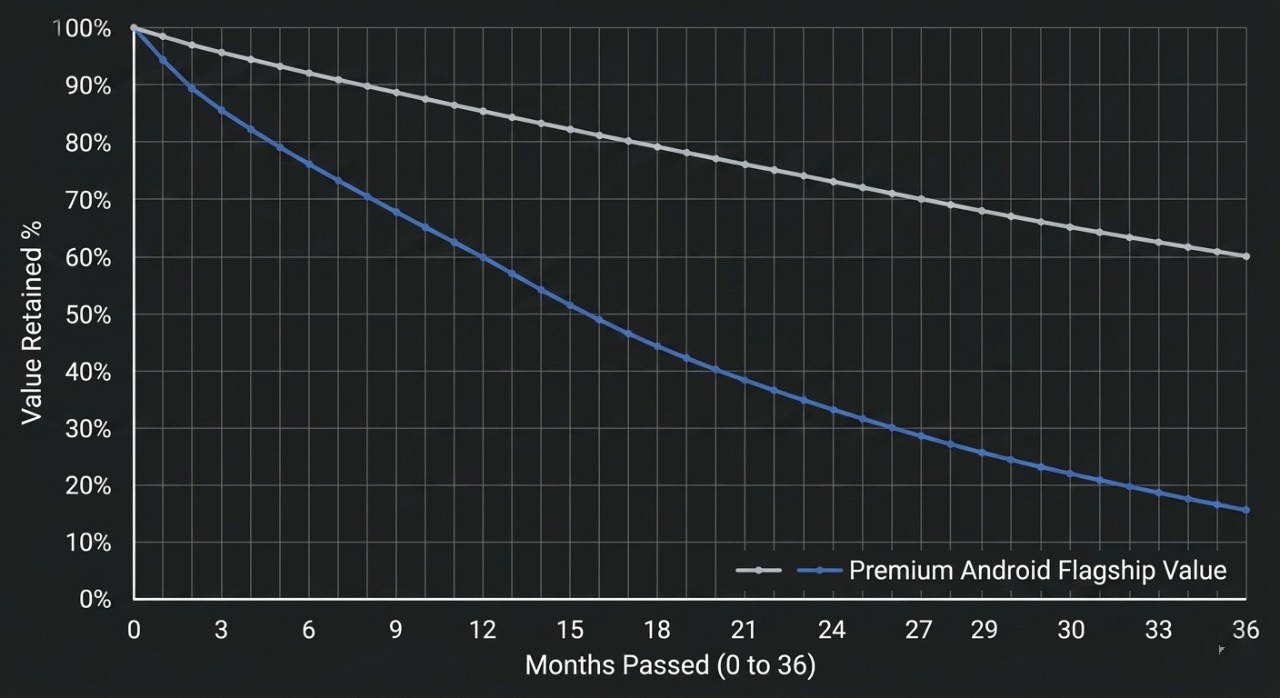
6. The 2026 Final Judgment: Which Platform Governs Your Digital Domain?
We have thoroughly analyzed everything from raw silicon pipelines and design changes to AI systems and economic metrics. The final choice comes down to your personal priorities:
Invest in the iPhone (iOS 26/27 Ecosystem) If:
Data Sovereignty: You require a local first computing model where your private documents, code snippets, and behavioral tracking remain strictly on-device.
Liquid Glass Visual Cohesion: You prefer highly polished design aesthetics, perfectly consistent frame rendering, and long-term OS reliability.
Asset Preservation: You intend to trade in your hardware every 1 to 2 years and want the absolute highest resale value possible.
Ecosystem Harmony: You are already deeply invested in Mac terminals, iPads, or Apple accessories.
Invest in the Android (Android 16 Ecosystem) If:
Unbounded Technical Control: You want total authority over application logic, file trees, system launchers, and custom UI themes.
Desktop Compute Integration: You want a single device capable of executing windowed desktop multi-tasking and serving as an external workstation.
Hardware and Form Factor Innovation: You prioritize cutting edge hardware variations like folding screens, high-end optical zoom sensors, or ultra fast battery charging cycles.
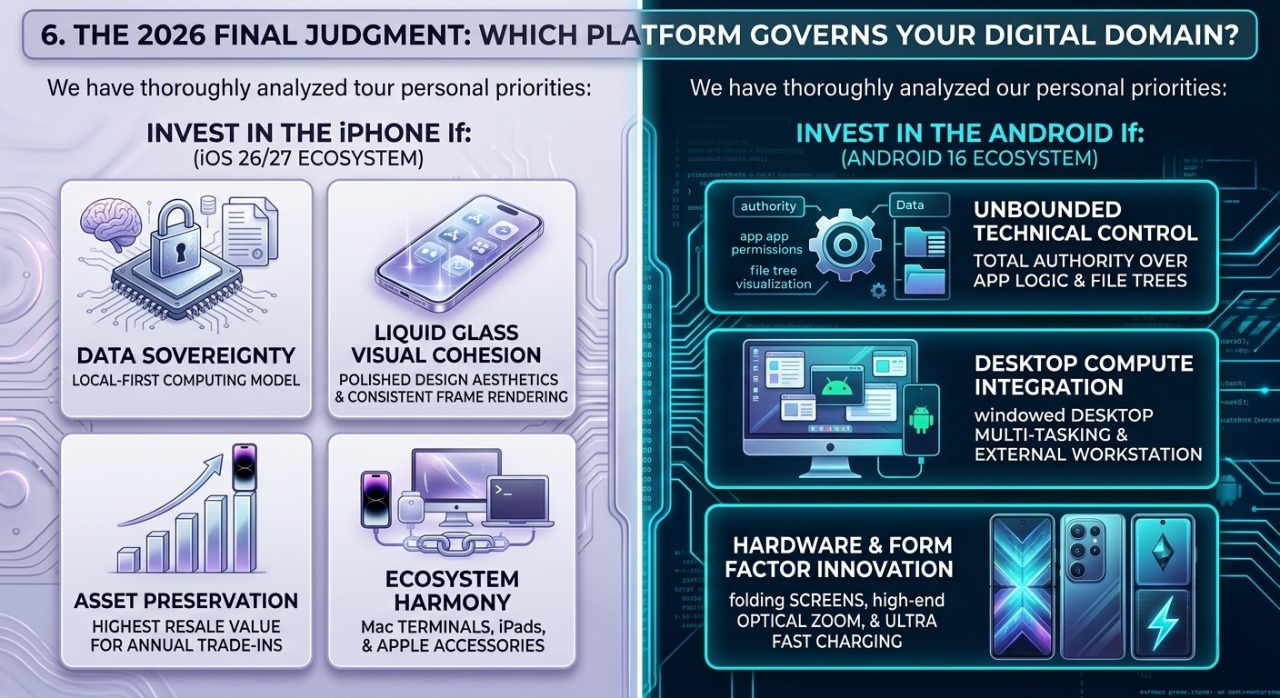
Frequently Asked Questions (FAQs)
Q1: Can an iPhone running iOS 26 natively execute Android apps?
No. The core compilation frameworks, application runtimes, and system kernels (iOS Cocoa Touch vs Android Runtime) are fundamentally isolated. Cross-execution is impossible without heavy virtualization tools.
Q2: Does Android 16's Advanced Protection Toggle block root access?
Yes. Enabling Advanced Protection initiates strict kernel-level integrity checks, instantly disabling custom recovery pathways, unverified script execution, and any third-party modifications that alter system directories.
Q3: Can the standalone Siri AI application work entirely offline?
Yes. Thanks to the massive local matrix scaling of Apple's A19 Pro chip, core linguistic analysis, on-screen text parsing, and system-level actions are processed completely offline without any internet connection.