
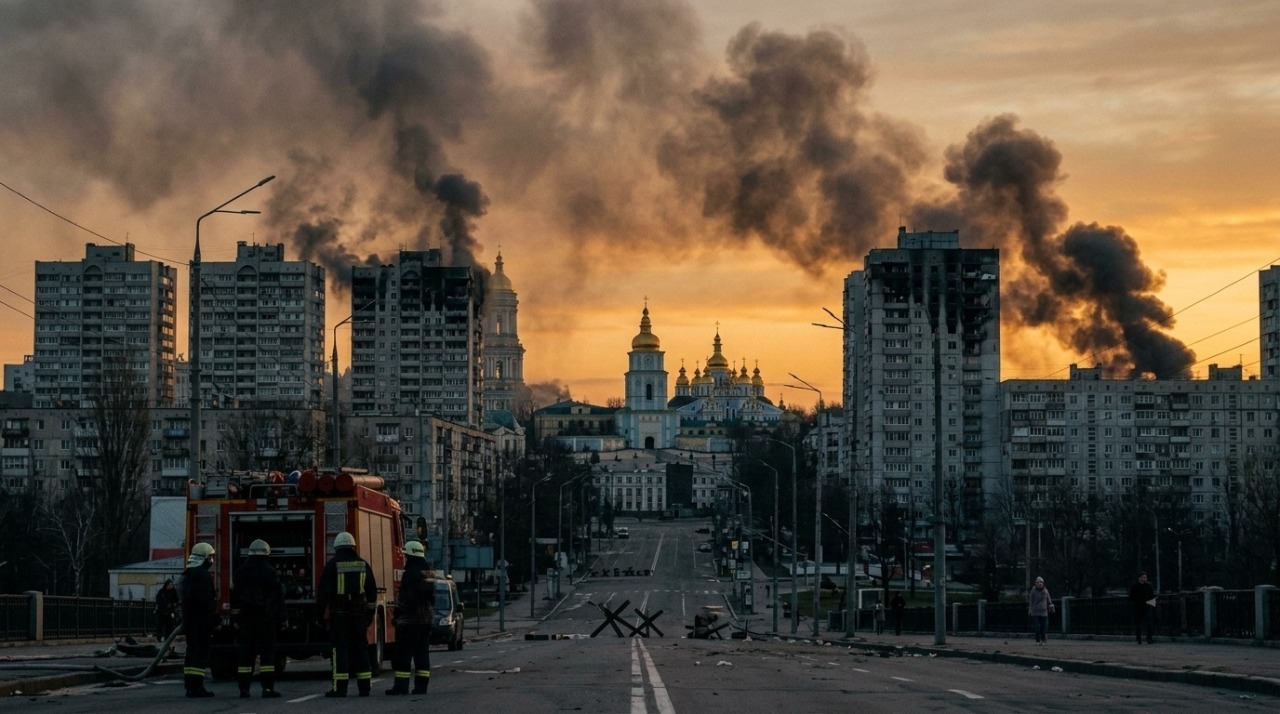
The war in Eastern Europe has once again shattered all illusions of a stalemate, erupting into a night of unprecedented violence that has left the world in shock. In what is being described as one of the most coordinated, aggressive, and destructive aerial campaigns since the onset of the conflict, Russian forces unleashed a massive wave of ballistic missiles and kamikaze drones directly into the heart of Ukraine’s capital, Kyiv.
The morning after has revealed a grim reality: at least 10 innocent lives have been cut short, dozens of civilians—including young children are fighting for survival in hospitals, and iconic urban landscapes have been reduced to smoldering ruins.
This was not just another routine strike; it was a calculated escalation that marks a terrifying new chapter in this ongoing geopolitical catastrophe.
The Prelude: A Nation Warned, A Capital on Edge
The horror of the attack did not catch the Ukrainian leadership entirely by surprise, but the sheer scale of the onslaught was terrifying. Hours before the first sirens pierced the night air, Ukrainian President Volodymyr Zelenskyy cut short an official state visit to Dublin, rushing back to manage an impending crisis. Ukrainian intelligence had flagged highly unusual Russian strategic bomber movements and drone staging setups, prompting Zelenskyy to issue an urgent, solemn warning to the public: A massive, multi vector assault is imminent.
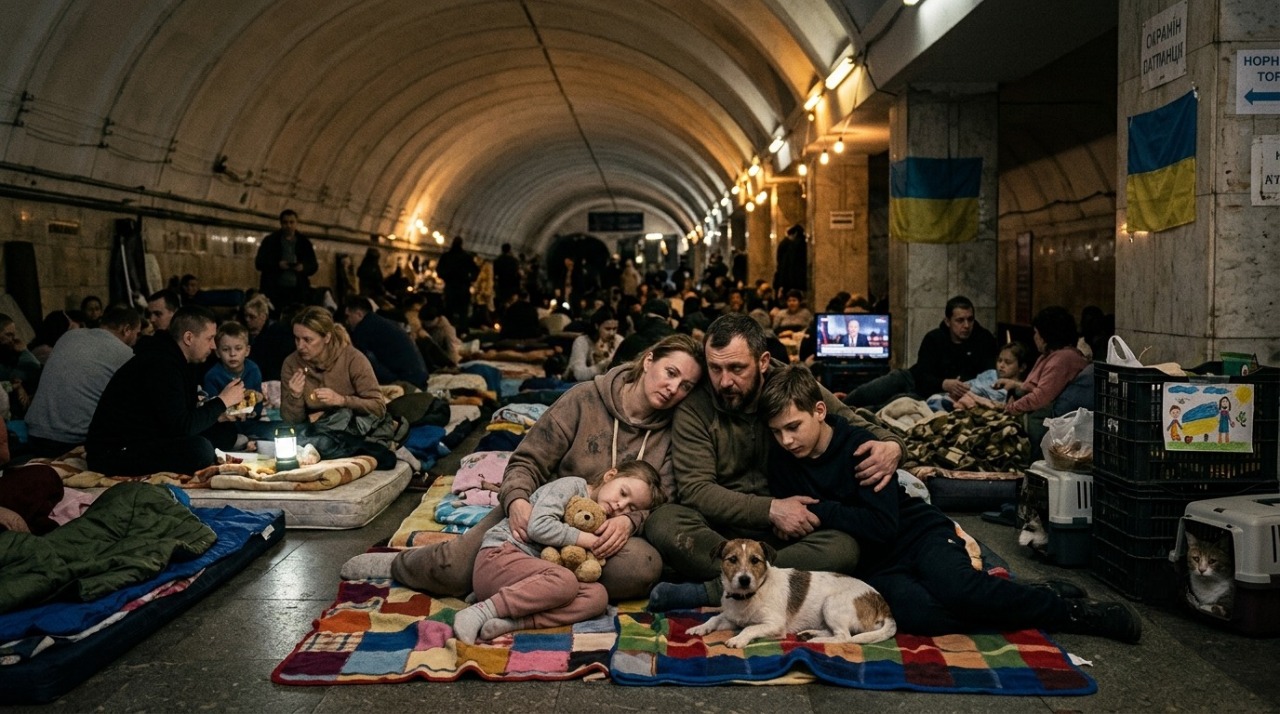
As darkness fell, those warnings became a reality. Air raid sirens wailed across Kyiv, triggering a mass exodus into the earth. Thousands of families, gripping the hands of their terrified children and carrying whatever pets and essentials they could scramble to grab, descended into the city's deep, Soviet-era underground metro stations.
For hours, the concrete platforms became makeshift bedrooms. People huddled under blankets, listening to the muffled, deep thuds of explosions vibrating through the ground above them. While these subterranean sanctuaries undoubtedly saved thousands of lives, they stood as a heartbreaking reminder of a population forced to live like refugees under their own streets.
Mapping the Destruction: Civilian Infrastructure in the Crosshairs
By the time the sun rose through a thick blanket of black smoke, the true extent of the devastation became terrifyingly clear. Despite repetitive statements from Moscow’s Ministry of Defence claiming that their high-precision weapons exclusively target "military infrastructure and Western-supplied energy facilities," the evidence on the streets of Kyiv told a completely different, undeniable story.
The barrage did not hit hidden military bases; it tore through the fabric of daily civilian life:
1. Residential High-Rises Turned into Infernos
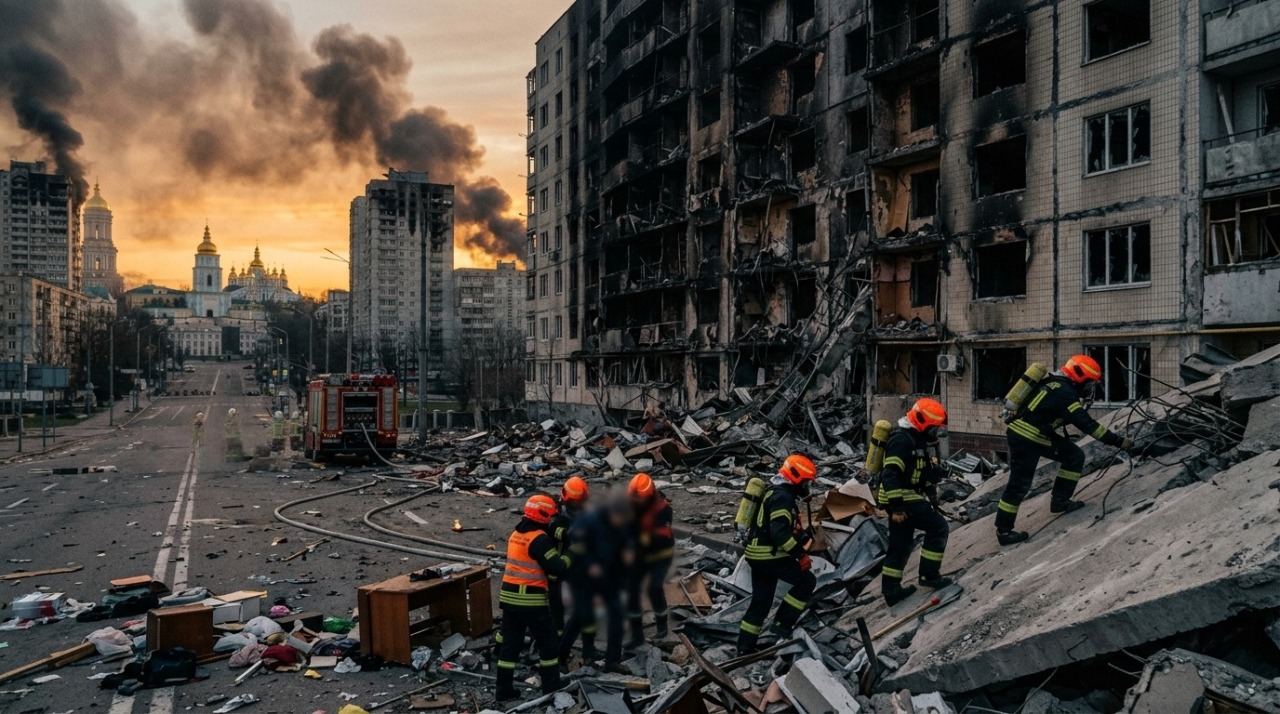
Multi-story apartment complexes in densely populated residential districts took direct hits or were severely compromised by falling missile debris. Entire sections of buildings collapsed, trapping residents beneath tons of concrete. Firefighters battled raging infernos for hours, pulling survivors from blackened windows while forensic teams began the grim task of recovering the dead.
2. Infrastructure of Mercy Targeted
In a particularly horrific blow, a major ambulance garage and fleet station were struck, destroying vital emergency vehicles meant to save lives during the raid. Furthermore, a prominent hotel in the central district, frequented by international journalists and aid workers, was left heavily damaged, its facade blown apart by supersonic blast waves.
3. A Nationwide Terror Campaign
While Kyiv bore the brunt of the onslaught, this was a nationwide offensive. Strategic bombers and ground-based launchers synchronized their attacks to overwhelm Ukraine’s air defense grid, triggering alarms and causing damage in several other major hubs, including Kharkiv, Zaporizhzhia, and Sumy.
The Strategic Shift: Why Now?
Military analysts suggest that this massive escalation is a calculated move by the Kremlin to achieve multiple strategic objectives as the conflict drags on into another grueling phase:
Retaliation and Deterrence: Russia explicitly framed this attack as a direct retaliation for recent Ukrainian drone strikes that targeted oil refineries and logistics hubs deep inside Russian territory. By striking Kyiv with such ferocity, Moscow is attempting to signal that the cost of striking inside Russia will be the absolute destruction of Ukrainian cities.
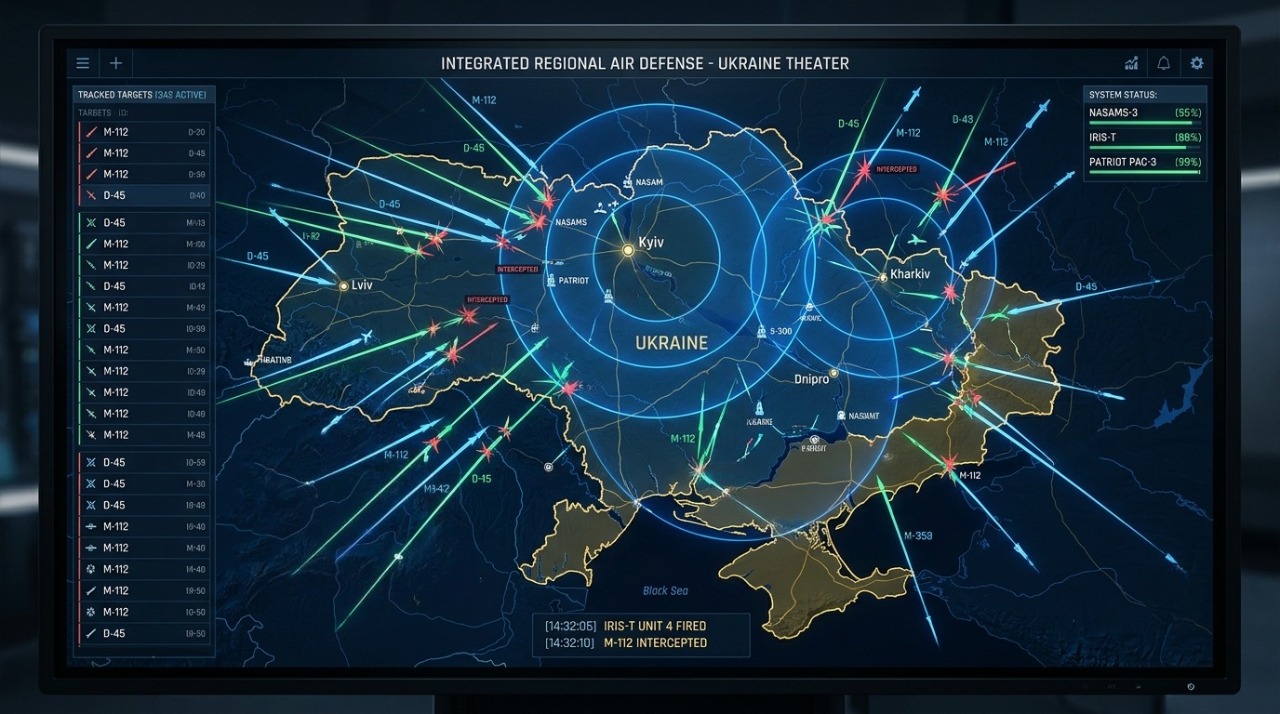
Overwhelming Air Defenses: By launching a mixed cocktail of slow-moving Shahed kamikaze drones alongside ultra-fast, unpredictable ballistic and cruise missiles, Russia is actively trying to deplete Ukraine’s expensive and limited supply of Western air defense ammunition.
Breaking Civilian Morale: With the winter months lingering in memory and the energy grid constantly under threat, these attacks are designed to wear down the psychological resilience of the Ukrainian populace, pressure the government, and create a sense of perpetual terror.
"A Night of Horror": The Urgent Global Outcry
Describing the assault as a literal "night of horror," Ukrainian Foreign Minister and other top officials have used the immediate aftermath of this tragedy to send a desperate, unyielding message to Western allies in Washington, London, and Brussels.
Ukraine’s message to the world is simple: Condemnations and thoughts and prayers do not stop missiles.
The capital's defense forces managed to intercept a significant portion of the incoming threats, but the ones that slipped through proved fatal. Ukrainian leadership is capitalizing on this moment of global attention to demand an immediate acceleration in the delivery of advanced air defense hardware, such as the American-made Patriot systems and European equivalents, arguing that every day of political delay translates directly into civilian lives lost.

Final Thoughts: The Human Cost of Geopolitics
As the smoke slowly clears over the battered streets of Kyiv, the world is left to contemplate the true, agonizing cost of modern warfare. Behind the geopolitical chess moves, the military strategies, and the international statements are real human lives families destroyed in their sleep, children traumatized by the sounds of war, and a historic city forced to constantly rebuild from the ashes.
The resilience of the Ukrainian people has proven to be incredibly durable, but as the scale of these aerial assaults grows larger and more destructive, the international community faces a critical question: How much longer can a civilian population endure such terror before the breaking point is reached?