

Trading has become one of the most popular ways for people to participate in financial markets. With a smartphone, an internet connection, and access to online trading platforms, almost anyone can buy and sell financial assets today.
But there is one important question: Is trading really an easy way to make money?
The answer is simple: No. Trading is a skill, not a shortcut to getting rich.
What Is Trading?
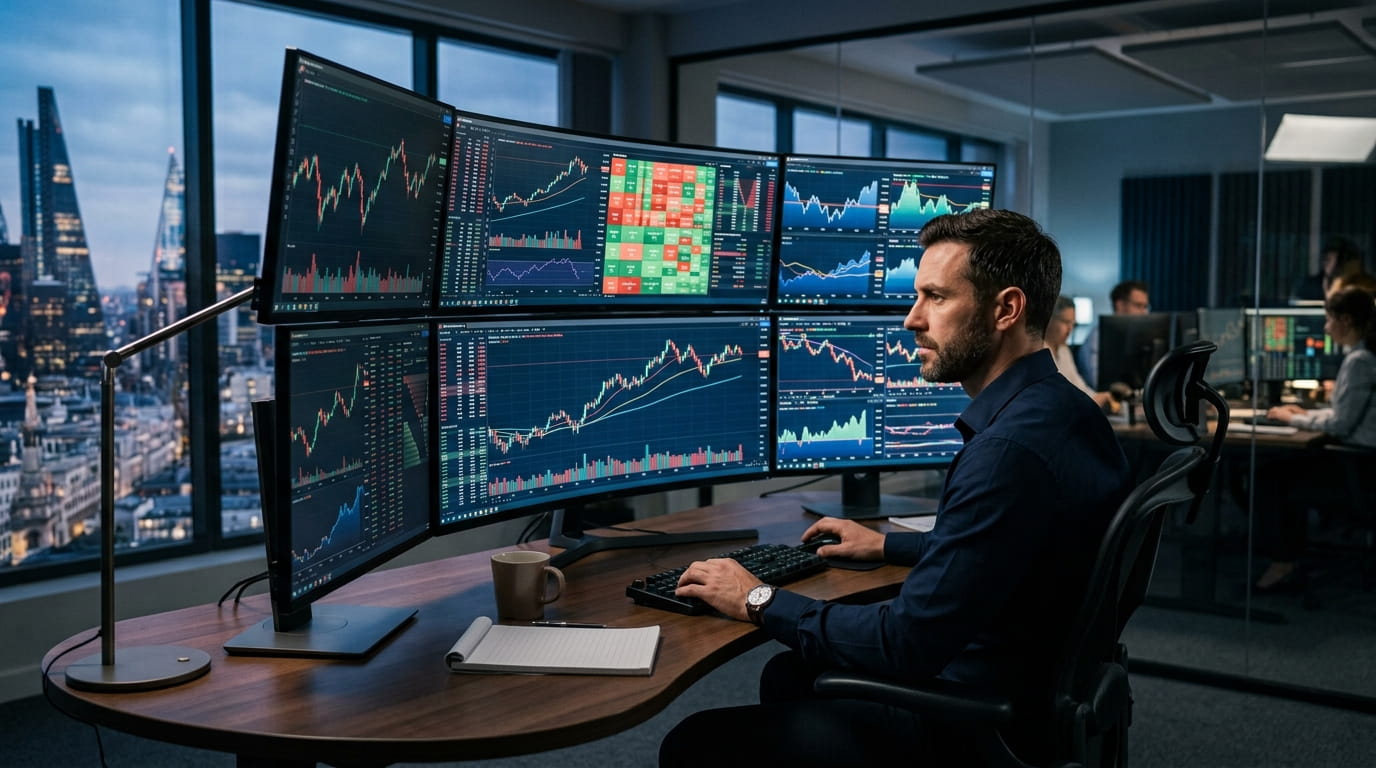
Trading is the process of buying and selling financial assets with the goal of benefiting from price movements.
Depending on the market, traders can trade stocks, currencies, cryptocurrencies, commodities, and other financial instruments.
Some of the most common types of trading include:
Stock Trading – Buying and selling shares of publicly listed companies.
Forex Trading – Trading currency pairs such as EUR/USD or GBP/USD.
Crypto Trading – Buying and selling digital assets such as Bitcoin and Ethereum.
Commodity Trading – Trading assets such as gold, silver, oil, and other commodities.
Day Trading – Opening and closing trades within the same trading day.
Why Is Trading So Popular?
Technology has completely changed the way people access financial markets. In the past, trading was mostly associated with professional investors and financial institutions. Today, online platforms have made markets much more accessible.
Social media has also played a major role in the growing popularity of trading. You can find thousands of videos showing profitable trades, market predictions, and impressive returns.
However, there is a problem.
You usually see the profits, but you don't see all the losses.
This is why beginners should never start trading simply because someone online claims to have made easy money.
Risk Management Is More Important Than Profit
One of the biggest mistakes beginners make is focusing only on how much money they can make.
Experienced traders think differently.
Instead of asking:
"How much can I make?"
They often ask:
"How much can I afford to lose?"
This mindset is the foundation of risk management.
Tools such as stop-loss orders, proper position sizing, and disciplined capital management can help traders control potential losses. No strategy can eliminate risk completely, but good risk management can prevent a single bad trade from destroying an entire trading account.
Emotions Can Destroy a Trading Strategy
Trading is not only about charts and numbers. It is also about psychology.
Fear, greed, FOMO, and overconfidence can influence trading decisions and cause people to abandon their strategies.
For example, after losing money, a trader might enter another trade immediately in an attempt to recover the loss. This is often called revenge trading.
Similarly, after making a large profit, a trader may become overconfident and take unnecessary risks.
Successful traders understand that emotional discipline is just as important as market analysis.

Can Beginners Start Trading?
Yes, but learning should come before risking real money.
Beginners should first understand the basics of financial markets, technical analysis, fundamental analysis, trading psychology, and risk management.
Using a demo account or paper trading can also be a useful way to practice strategies without immediately putting real money at risk.
Most importantly, traders should never risk money that they cannot afford to lose.
Trading Is a Skill, Not a Get-Rich-Quick Scheme
There is no guaranteed strategy that produces profits in every market condition. Markets can move unexpectedly because of economic data, company news, interest rates, geopolitical events, and changes in investor sentiment.
This is why successful trading requires patience and continuous learning.
The goal should not be to win every trade.
The goal is to manage risk, learn from mistakes, and remain consistent over the long term.
Final Thoughts
Trading can be exciting and potentially rewarding, but it is not an easy path to instant wealth. Behind every successful trader is usually a combination of knowledge, discipline, patience, strategy, and risk management.
If you treat trading like gambling, the risks can become extremely high. But if you approach it as a serious skill and take the time to understand how financial markets work, trading can become a valuable learning journey.
In the end, the smartest trader is not necessarily the one who makes the biggest profit.
It is the one who knows how to manage risk and survive in the market for the long term.