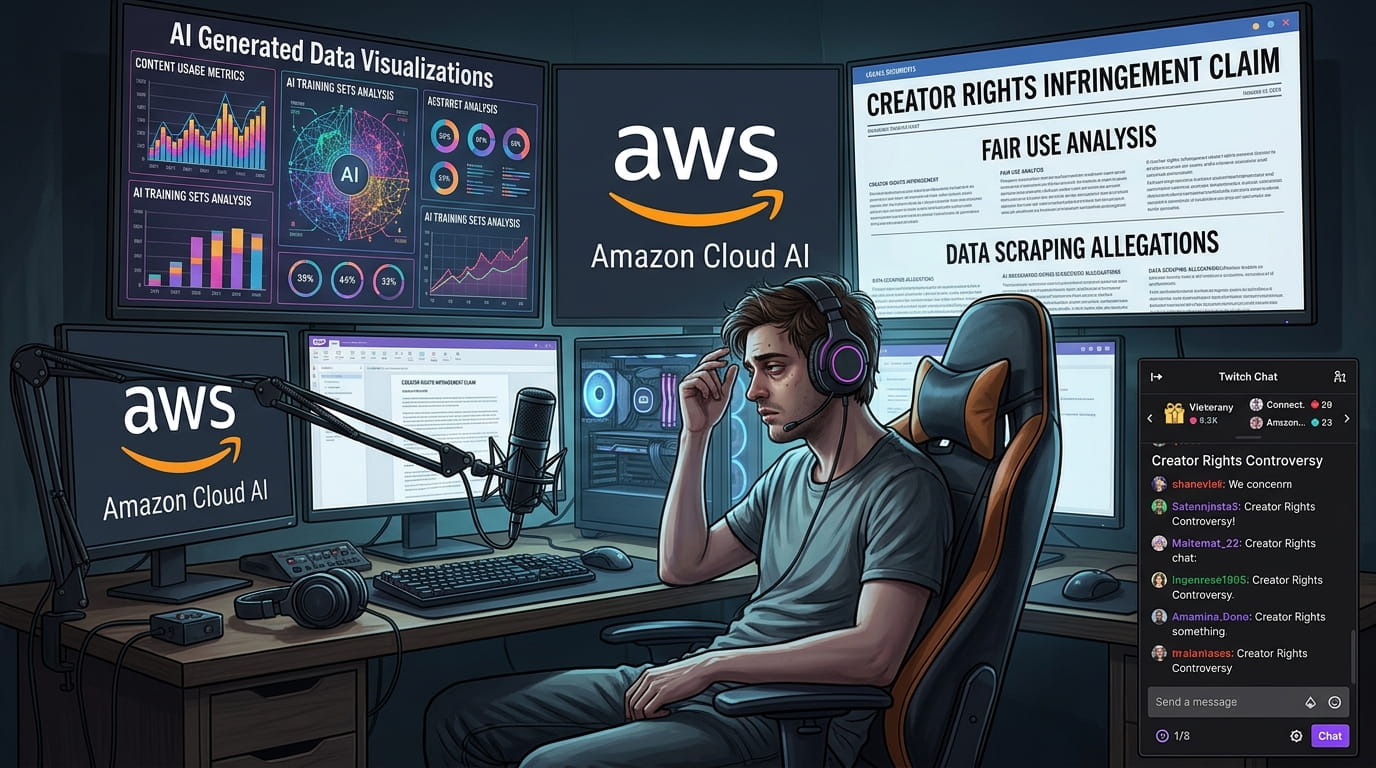
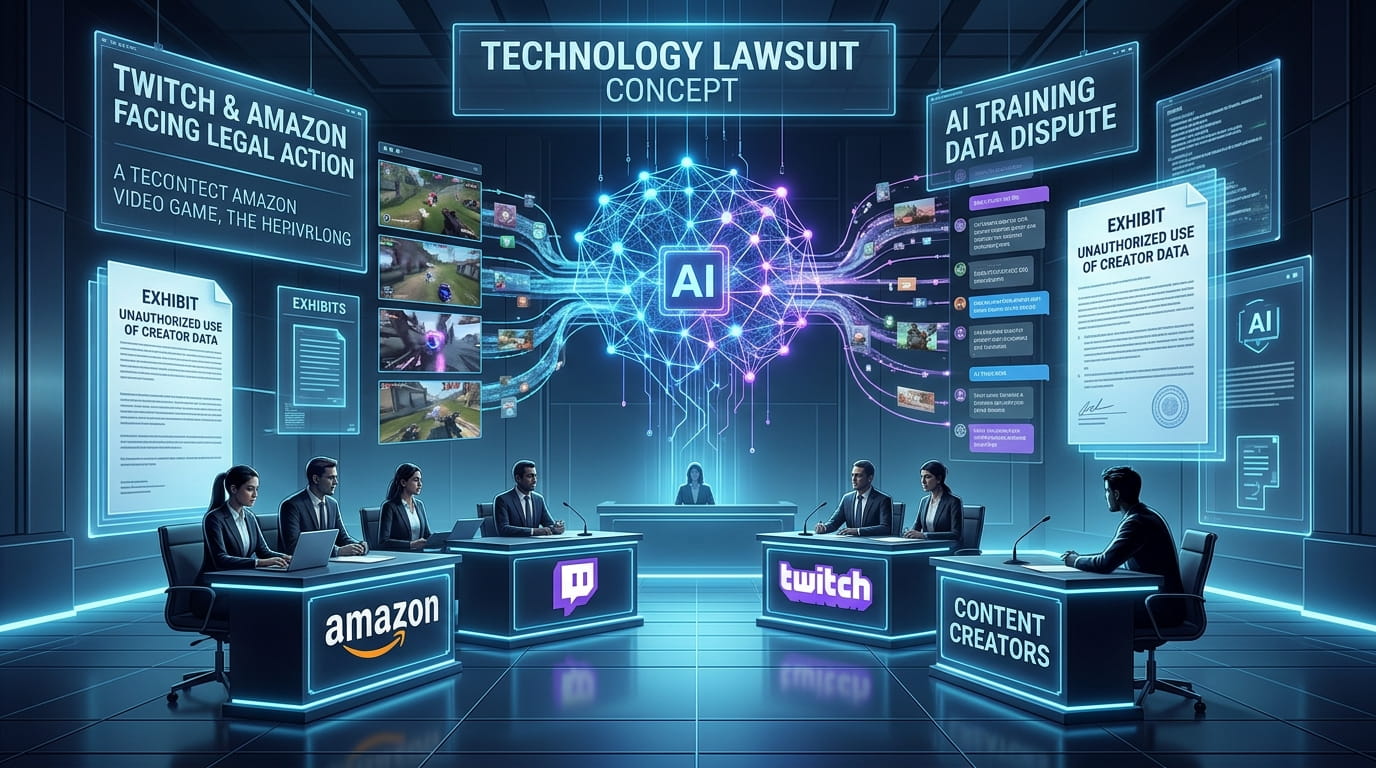
The growing battle over who owns internet content is entering another major chapter. Twitch and its parent company Amazon are facing a proposed class-action lawsuit over allegations that Twitch streamers’ livestreams, videos, images, chats, and other content were used to train generative artificial intelligence models without proper permission or compensation.
The lawsuit was filed in the U.S. District Court for the Northern District of California on August 20, 2026, by Twitch streamer Warren Pandiscia. The complaint alleges that Amazon and Twitch used creators’ content as training data for AI systems and commercially benefited from that content. However, these are allegations in a newly filed case and have not yet been proven in court.
What Happened Between Twitch and Its Creators?
The controversy intensified earlier in August when Twitch introduced a new setting allowing creators to opt out of having their channel content used to train Amazon’s generative AI models.
The setting covers a broad range of creator content, including livestreams, past broadcasts, clips, highlights, images, text, and chat messages. The major criticism was that the AI-training option was enabled by default, meaning creators had to manually opt out rather than actively giving permission first.
This decision quickly created backlash among Twitch users. Many creators argued that their content represents years of work, personal identity, voices, gameplay, commentary, and communities and that using this material for commercial AI development should require clear consent.
Why Is Amazon Facing Legal Action?
According to the lawsuit, the plaintiffs argue that Twitch and Amazon benefited from creators’ content without obtaining appropriate authorization or compensation.
The complaint raises issues involving contracts, alleged unfair business practices, and the use of creator content for AI development. It seeks to represent a larger class of Twitch creators who may have been affected by the alleged practices.
One particularly important issue is whether publicly available content can automatically be treated as freely usable AI-training material.
Being publicly accessible does not necessarily settle questions about ownership, licensing, contracts, privacy, or commercial use. That distinction is becoming increasingly important as technology companies look for massive datasets to train increasingly powerful AI systems.
The Bigger AI Copyright Problem
The Twitch dispute is part of a much larger debate happening across the technology industry.
AI companies need enormous quantities of data to develop models capable of generating text, images, audio, and video. Public websites, books, photographs, videos, and social media posts can contain valuable information for this process.
But creators are increasingly asking a simple question:
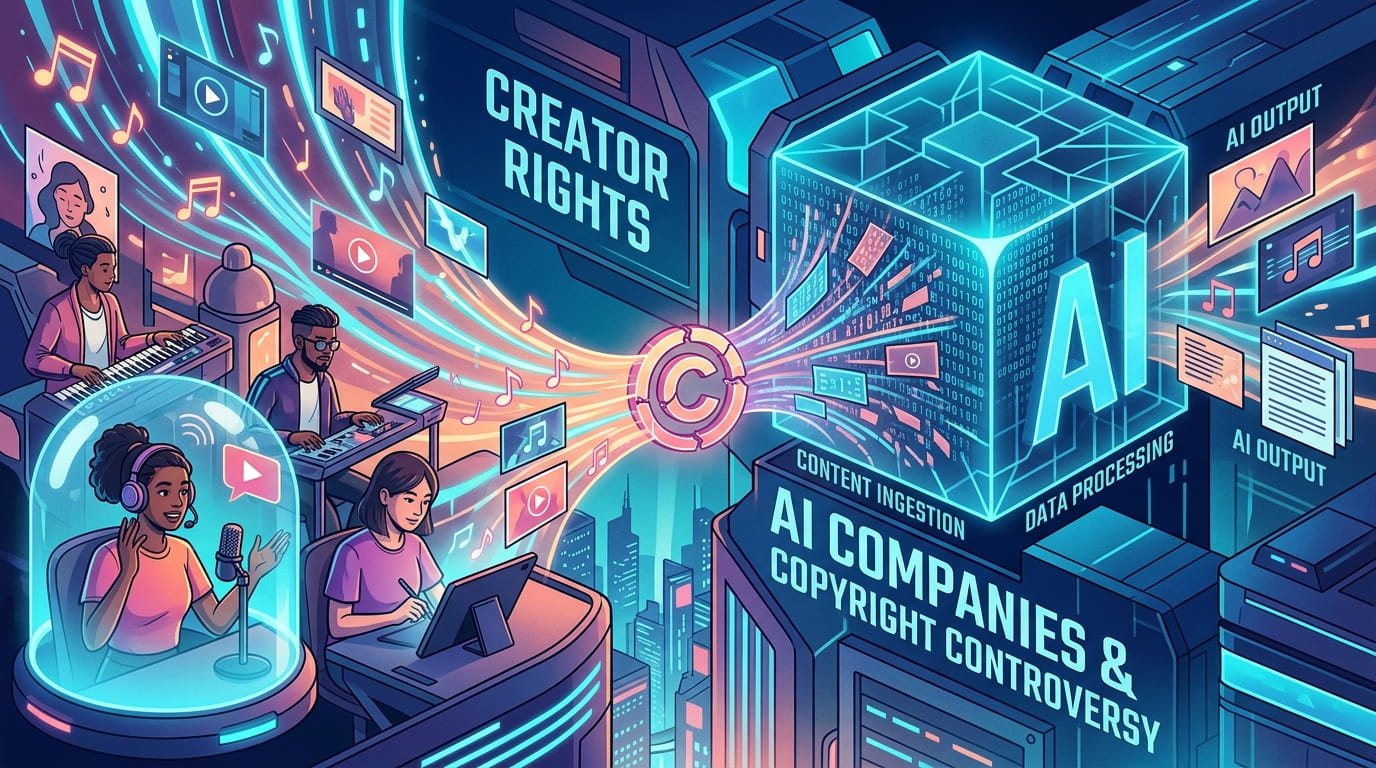
If AI companies can make money from our content, should creators have the right to decide whether their work is used for AI training — and should they be paid for it?
This question has already resulted in lawsuits and regulatory debates involving technology companies, publishers, artists, authors, musicians, and video creators.
The Twitch case adds livestreamers to that growing legal conversation.
What Makes Twitch Different?
Livestreaming creates an especially interesting situation because creators can produce hundreds or even thousands of hours of content over time.
A Twitch stream can contain a creator's voice, appearance, gameplay, reactions, conversations, jokes, opinions, and interactions with viewers. This makes livestreams potentially valuable training material for AI systems designed to understand or generate multimedia content.
Recent reports have also highlighted the enormous volume of content produced on Twitch. That scale could make livestreaming platforms particularly attractive sources of training data for companies developing generative AI.
What Happens Next?
The lawsuit is still at an early stage, so there is no final ruling determining whether Twitch or Amazon violated the law.
The court will have to consider the claims made by the plaintiff, the companies' responses, the relevant Twitch agreements and policies, and whether the proposed class-action can move forward.
Meanwhile, Twitch creators can use the platform's AI-training setting to opt out of future use of their channel content for certain Amazon generative AI training. However, the opt-out does not necessarily prevent every type of AI or machine-learning use associated with Twitch's services.
A Turning Point for AI and Creator Rights
The Twitch and Amazon lawsuit could become an important case in the ongoing debate over AI training data.
Artificial intelligence is developing at incredible speed, but the legal and ethical rules surrounding training data are still catching up. Creators want control over their work, while AI companies need huge datasets to build increasingly capable systems.
The outcome of this case could help answer an important question for the future of the internet:
Does public content automatically mean AI companies can use it for commercial training, or should creators have a meaningful choice?
For Twitch streamers and creators across the internet, the answer could have major consequences. As AI becomes more dependent on human-generated content, the battle over consent, ownership, compensation, and control is likely to become even bigger.