
Netflix has become synonymous with modern entertainment. Today, "Netflix and Chill" is not just a casual phrase but an established global cultural phenomenon. However, have you ever wondered how a small DVD rental company managed to transition into the world's largest streaming platform network? In this highly detailed guide, we will break down the complete history of Netflix, the core secrets behind its massive success, its current subscription tiers, global plan details, and hidden features that most standard users do not know about.
1. The Evolution of Netflix (History & Milestones)
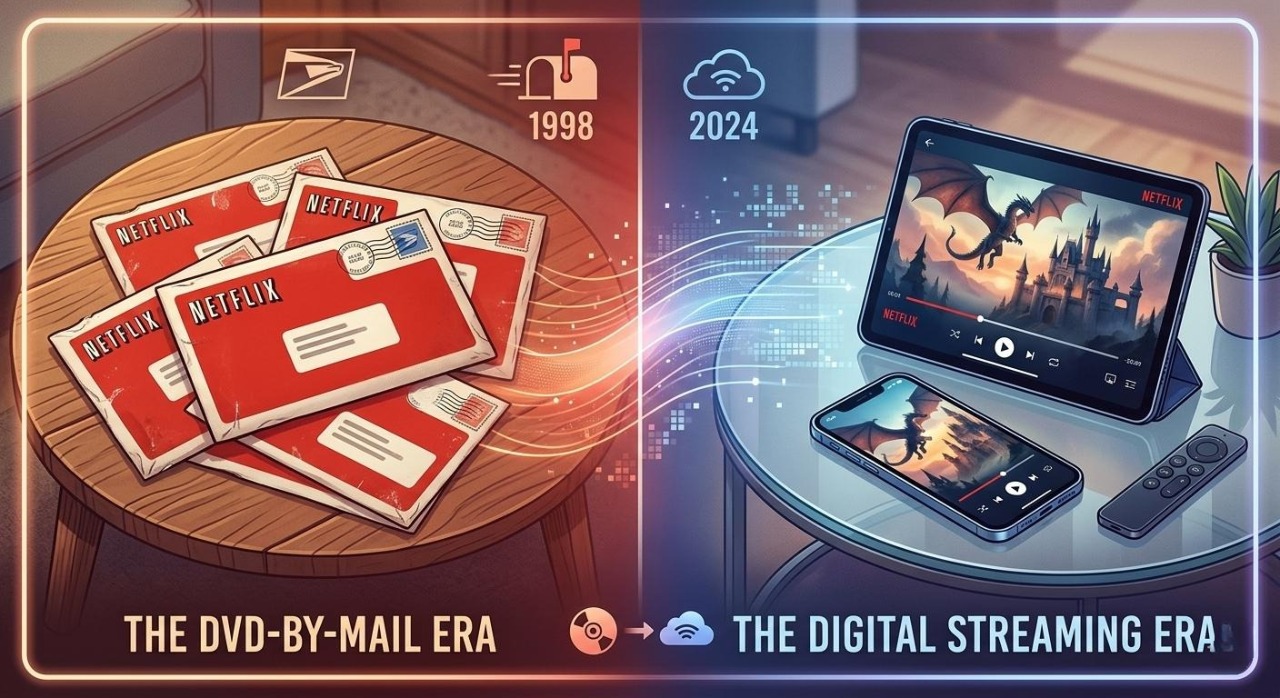
Netflix was initially founded in 1997 by Reed Hastings and Marc Randolph in Scotts Valley, California. In its earliest days, the platform did not offer any form of online digital streaming. Instead, it operated strictly as a DVD rental by mail service. During that era, consumers had to physically visit video rental brick and mortar stores like Blockbuster to rent films, where they were frequently penalized with heavy late fees. Netflix disrupted this entire legacy market by removing late fees completely and introducing a flat monthly subscription model.
Key Reasons Behind Netflix's Historical Growth:
Capitalizing on the Dot-Com Boom: Netflix leveraged the early expansion of the consumer internet, allowing users to browse a massive catalog online and order physical DVDs directly to their homes.
The Strategic Pivot to Streaming (2007): This marked the single most important turning point in the company's timeline. As residential broadband internet speeds grew faster and more stable, Netflix launched its breakthrough "Watch Instantly" digital streaming feature.
Investing in Original Content (2013): Instead of relying solely on licensing properties from traditional Hollywood studios, Netflix began producing its own content. The massive success of political dramas like House of Cards and sci-fi series like Stranger Things established Netflix as an independent industry powerhouse.
2. Business Model and the Secrets of Success
The foundational driver behind Netflix’s sustained global expansion is its technology framework and monetization strategy. The platform operates primarily on a Subscription Video on Demand (SVOD) model. This implies that users pay a recurring monthly fee to gain unrestricted access to a massive archive of content entirely free of commercial advertisements.
The Advanced Recommendation Algorithm
Netflix’s most powerful operational tool is its highly sophisticated hyper-personalized recommendation engine. Every piece of content a user interacts with is meticulously logged and analyzed. If a user demonstrates a clear preference for action films or psychological thrillers, their personalized homepage algorithmically adapts to showcase similar genres. Furthermore, the platform utilizes dynamic artwork selection, meaning the exact poster or thumbnail displayed for a specific movie changes in real time based on an individual's viewing history to increase click-through rates.
3. Subscription Tiers, Pricing, and Plan Details
Netflix structures its global services into distinct subscription tiers designed to fit varying household budgets, connectivity speeds, and screen requirements. The specific breakdown of these configurations includes:
Mobile Plan:
Offers Good overall video quality.
Provides standard definition video streaming capped at a maximum resolution of 480p (SD).
Restricted strictly to personal handheld devices, supported exclusively on smartphones and tablets.
Allows only 1 simultaneous screen to stream actively at any given time.
Basic Plan:
Offers Good standard high-definition video quality.
Provides high-definition video output capped at a maximum resolution of 720p (HD).
Expands device access, allowing streaming across phones, tablets, desktop computers, and smart TVs.
Allows a maximum allocation of 1 active screen streaming simultaneously.
Standard Plan:
Offers Better high-definition visual fidelity and crisp image rendering.
Provides full high-definition video output locked at a maximum resolution of 1080p (Full HD).
Fully compatible across all standard digital screens, including phones, tablets, computers, and smart TVs.
Supports multi-user viewing by allowing up to 2 separate screens to stream content concurrently.
Premium Plan:
Offers the absolute Best cinematic presentation with ultra-high fidelity visual outputs.
Provides top-tier high-resolution streaming maximizing at 4K Ultra HD + HDR (High Dynamic Range).
Unrestricted cross-platform capability operating smoothly on all phones, tablets, computers, and smart TVs.
Perfect for larger households, permitting up to 4 different devices to stream content simultaneously.
Ad-Supported Tiers:
Introduced to capture price-sensitive segments across major international markets.
Enables subscribers to access the core Netflix content library at a significantly reduced monthly price point.
Integrates short commercial advertisements and promotional clips directly into the video playback experience.

4. Advanced Features to Maximize Your Viewing Experience
To optimize value from a subscription, users should actively utilize the platform's advanced internal features:
Smart Downloads: This internal automation tracking system detects when an individual finishes watching a downloaded television episode, automatically deletes that specific file to clear device storage, and downloads the subsequent episode in the background when connected to Wi-Fi.
Multiple Profiles and Granular Parental Controls: Main account holders can configure up to 5 individual, distinct user profiles. Dedicated "Kids Profiles" can be customized with strict maturity rating restrictions, titles blocks, and pin-protected boundaries.
Audio and Subtitle Customization: Users can bypass default styles by altering subtitle typography, resizing text elements, adding drop shadows, or modifying font colors directly within account settings to improve readability.
Spatial Audio Deployment: Premium tier subscribers gain native access to immersive surround sound experiences. This spatial processing technology emulates advanced structural speaker systems even when watching content on basic stereo headphones or standard television speakers.
5. Competitive Landscape and Future Outlook
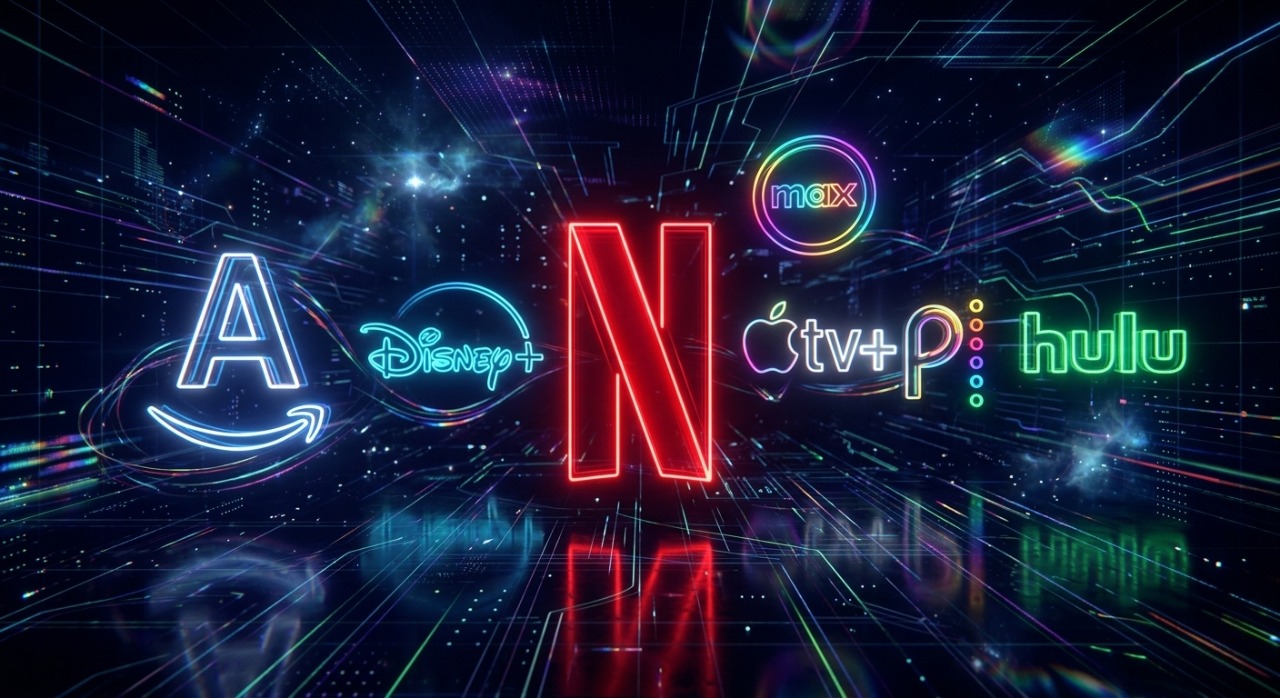
In the current market space, Netflix no longer operates in isolation and faces intense rivalry from well funded global media conglomerates:
Amazon Prime Video: Benefits significantly from its direct integration into the broader Amazon Prime consumer shipping and retail ecosystem.
Disney+: Commands massive consumer leverage due to its exclusive ownership of legacy IPs, including the Marvel Cinematic Universe, Star Wars, Pixar, and National Geographic.
Max (HBO) and Apple TV+: Both platforms have successfully differentiated themselves by heavily focusing on premium, prestige dramas and high budget award winning auteur cinema.
Despite this aggressive multi front competition, Netflix maintains its dominant market position by consistently funding hyper localized regional programming. Global mega hits such as South Korea’s Squid Game and Spain’s Money Heist (La Casa de Papel) demonstrate its unparalleled ability to cross cultural borders. Furthermore, the company is actively future proofing its model by expanding aggressively into Mobile Gaming, granting active subscribers immediate access to a library of mobile games included in their standard plan without additional costs or in app purchases.
Conclusion
The remarkable trajectory of Netflix from a struggling mail order DVD merchant to an undisputed digital entertainment titan highlights the power of corporate adaptability and technical innovation. By pioneering real time data analytics, scaling its proprietary Content Delivery Network (CDN), and restructuring its pricing models to match diverse consumer demographics, Netflix continues to define how modern society consumes media. Choosing the right tier comes down to personal hardware and household size whether it is the mobile only tier for individual use or the 4K Premium tier for the ultimate home theater experience, Netflix remains an essential utility in the modern digital household.