
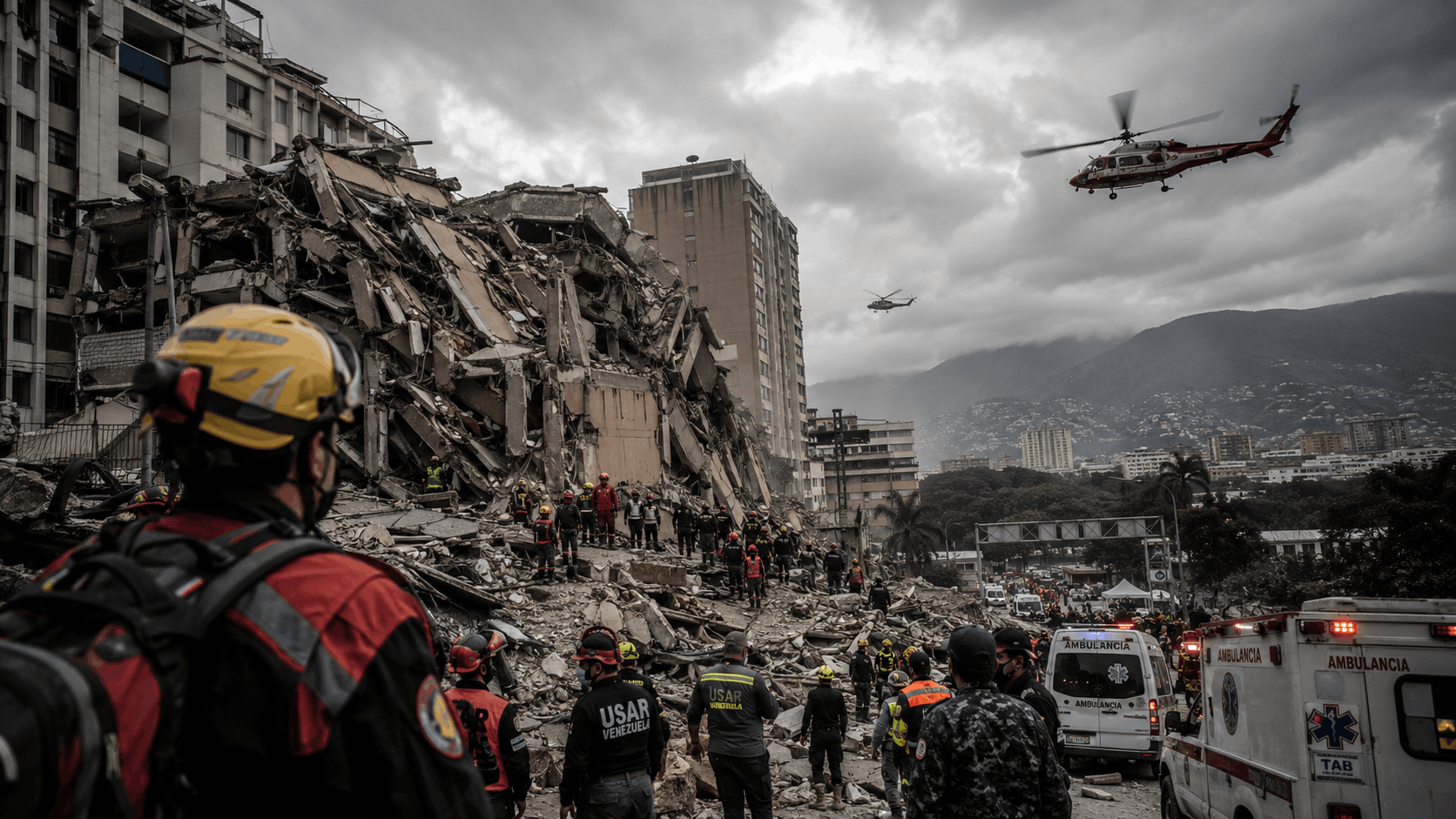
Live Updates: Venezuela Earthquake 2026
Death toll has risen to 164+
More than 970 injured
Major structural collapses reported in Caracas
Emergency rescue teams deployed
Tsunami advisories issued across parts of the Caribbean
Venezuela Rocked by Two Powerful Earthquakes Within Seconds
Venezuela has been hit by devastating 7.5 and 7.2 magnitude twin earthquakes, marking one of the strongest seismic events in the country in decades. At least 164 people are dead and hundreds more injured as massive structural damage continues across Caracas and nearby coastal regions.
Venezuela is facing one of the most devastating natural disasters in its modern history after two powerful earthquakes struck the country's northern region within less than a minute, sending shockwaves across South America and triggering emergency responses throughout the Caribbean.
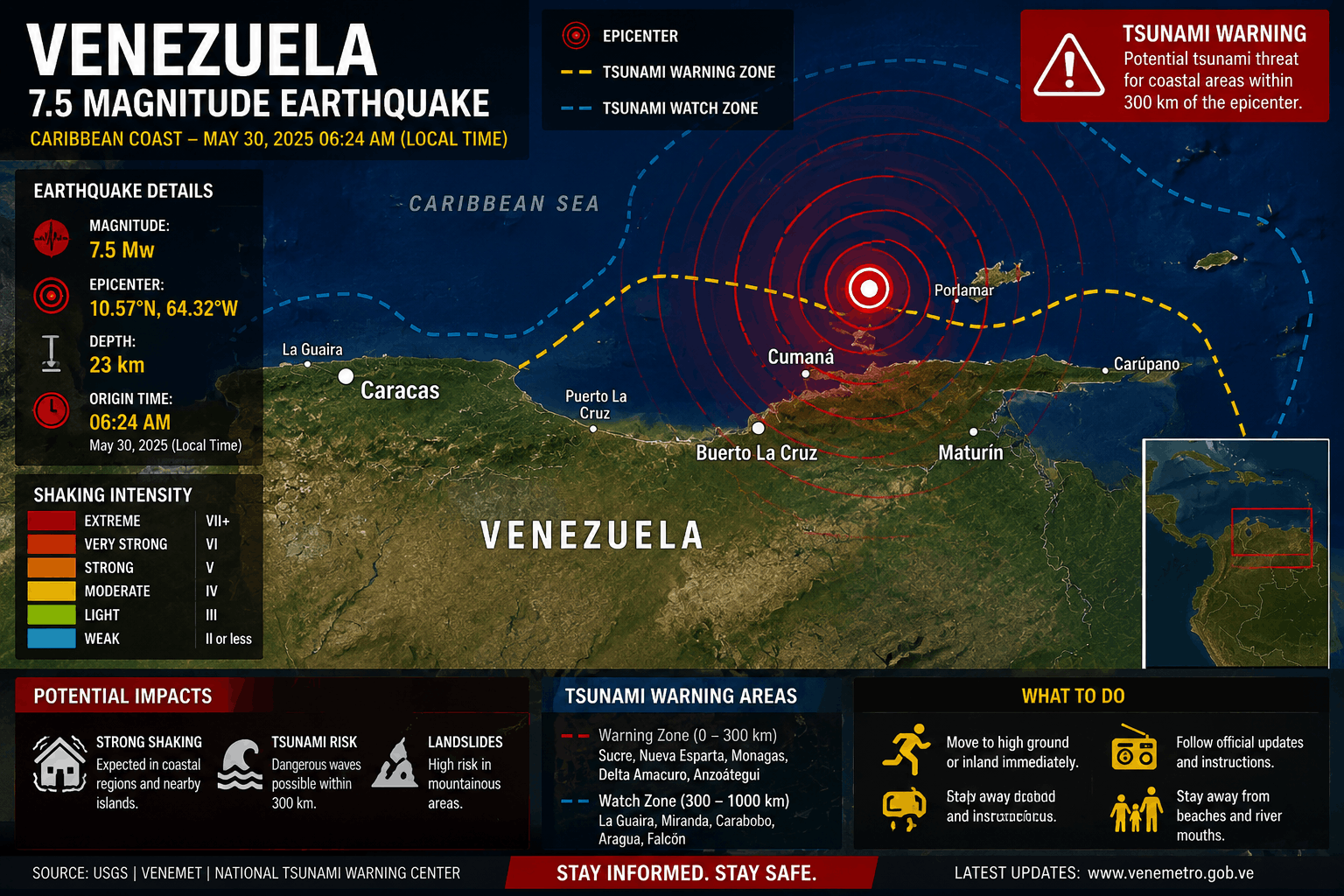
According to seismic monitoring agencies, the first earthquake registered approximately 7.1–7.2 magnitude and was followed just seconds later by an even stronger 7.5 magnitude quake. The epicenters were located near Venezuela's Caribbean coastline west of Caracas, causing violent ground shaking that was felt across large parts of the country and neighboring regions.
Caracas Suffers Major Structural Damage
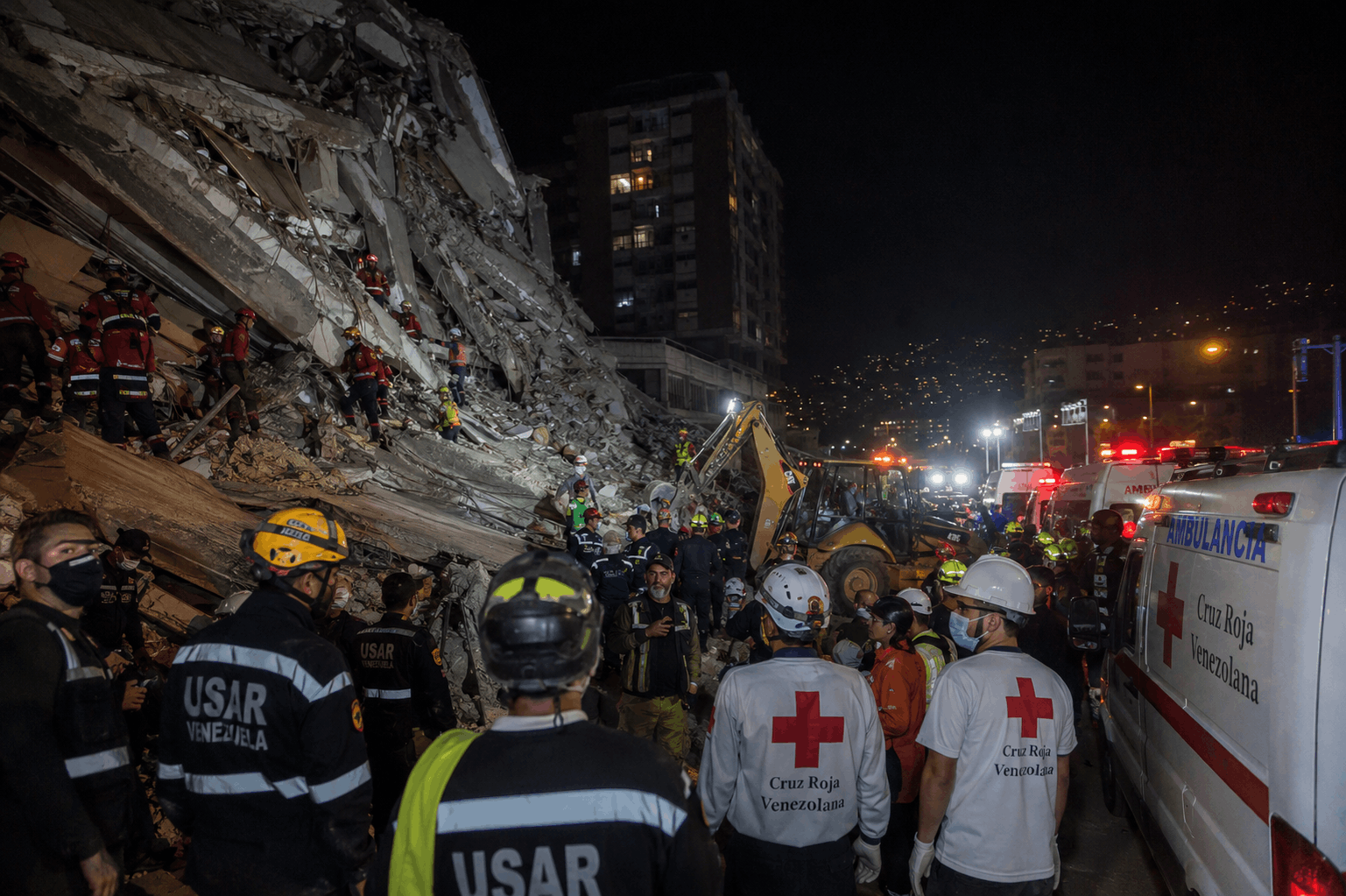
The Venezuelan capital, Caracas, experienced some of the most dramatic scenes following the disaster. Multiple buildings partially collapsed, residential structures suffered severe cracks, and thousands of residents rushed into the streets fearing additional aftershocks.
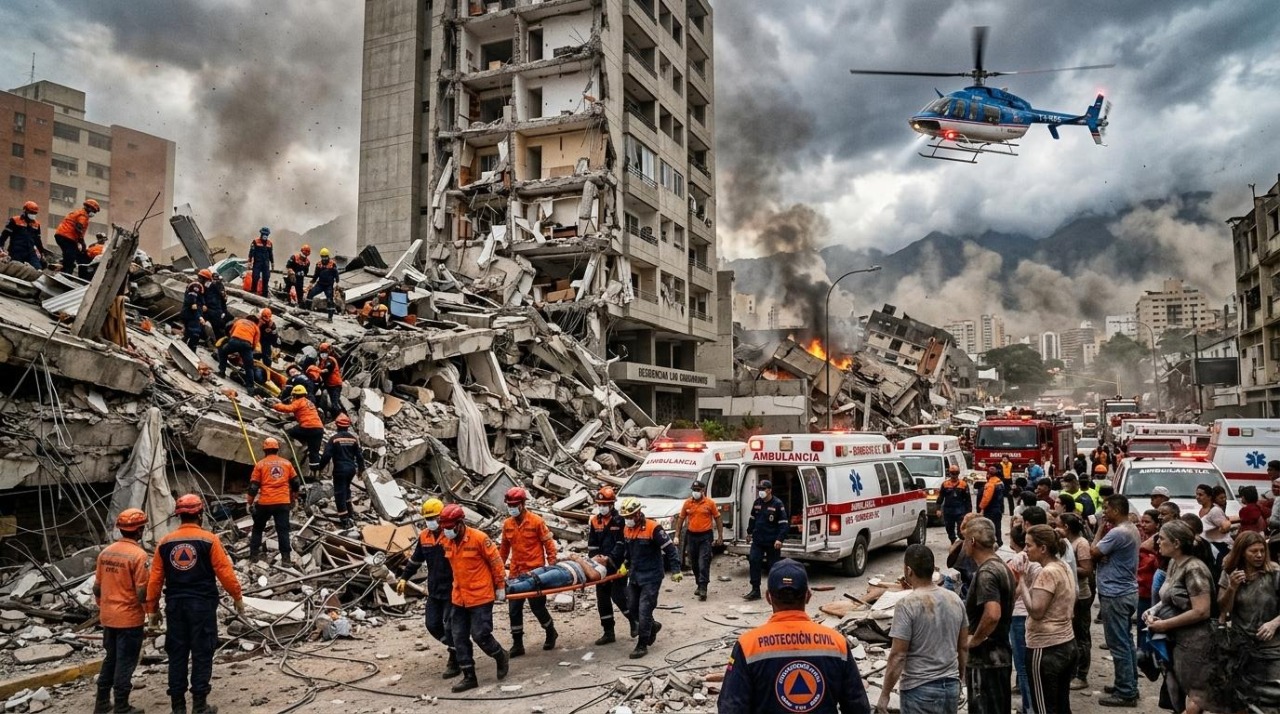
Videos and eyewitness reports showed clouds of dust rising above neighborhoods as rescue teams searched through damaged buildings. Several districts reported extensive structural failures, forcing emergency evacuations and road closures.
The earthquakes caused widespread panic among residents, many of whom remained outdoors throughout the night due to concerns about aftershocks.
Eyewitnesses Describe Chaos in Caracas
Local residents described scenes of panic as buildings shook violently and dust clouds filled the streets.
“I got an earthquake alert on my phone and seconds later the ground started moving violently,” one Caracas resident said.
Another witness said visibility dropped as debris spread across nearby neighborhoods while people rushed into open areas for safety.
Tsunami Warnings Triggered Across the Caribbean
Following the powerful seismic activity, tsunami monitoring agencies issued alerts and advisories for several Caribbean coastal regions. Authorities closely monitored sea-level changes and coastal conditions after the earthquakes raised concerns about potentially hazardous waves.
A tsunami advisory was initially issued for Puerto Rico and nearby areas before later being canceled after detailed assessments indicated reduced risk. However, emergency officials continued urging caution in vulnerable coastal regions.
Rising Casualties and Emergency Response
Government officials confirmed casualties and injuries following the disaster, while warning that the numbers could continue to rise as rescue crews gain access to heavily affected areas.
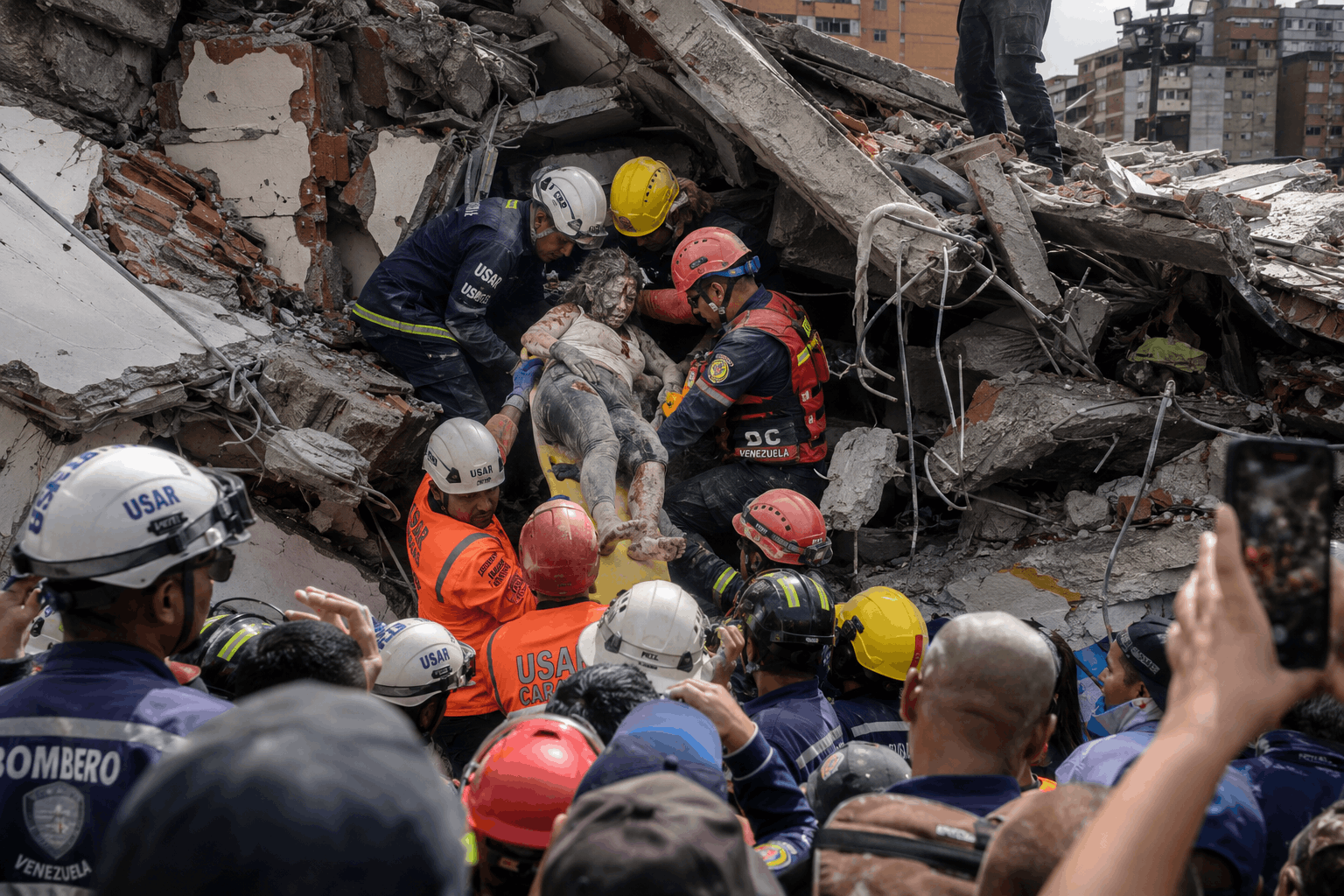
Hospitals across impacted regions activated emergency protocols and treated hundreds of injured residents. Search-and-rescue teams worked through the night using heavy equipment, trained dogs, drones, and emergency response units to locate survivors trapped beneath collapsed structures.
International humanitarian organizations and neighboring countries have also expressed readiness to assist Venezuela's recovery efforts.
Airport Closures and Transportation Disruptions
Critical infrastructure was affected by the earthquakes, including damage reported at Venezuela's main international airport. Authorities temporarily suspended operations while engineers assessed runway conditions, terminal safety, and structural integrity.
Schools, transportation services, and public institutions in several regions also faced temporary closures as authorities prioritized public safety and disaster response.
Why These Earthquakes Were So Dangerous
Seismologists explain that the unique nature of the event significantly increased its destructive potential. Instead of a single earthquake, Venezuela experienced a rare "doublet earthquake" sequence in which two major seismic events occurred within seconds of each other.
This phenomenon can dramatically amplify structural stress on buildings, increasing collapse risks and complicating emergency response efforts. The shallow depth of the second earthquake further intensified ground shaking in populated areas.
Economic Impact on Venezuela
Beyond the immediate humanitarian crisis, economists expect significant financial consequences from the disaster.
Potential impacts include:
Damage to residential and commercial property
Transportation network disruptions
Temporary business closures
Infrastructure repair costs
Reduced economic activity in affected regions
Increased pressure on emergency and healthcare systems
Analysts suggest that reconstruction efforts may require substantial domestic and international support over the coming months.
Rescue Operations Continue Amid Aftershock Concerns
As emergency responders continue searching for survivors, authorities remain concerned about aftershocks that could further weaken already damaged structures.
Residents have been urged to follow official safety instructions, avoid unstable buildings, prepare emergency supplies, and remain informed through trusted government and disaster management channels.
The coming days will be critical as rescue teams work tirelessly to save lives, restore essential services, and assess the full scale of the disaster.
Global Reactions and International Support
Leaders and humanitarian organizations worldwide have expressed solidarity with Venezuela following the earthquakes. International rescue teams, disaster specialists, and relief organizations are preparing assistance packages aimed at supporting emergency operations and long-term recovery.
The disaster has once again highlighted the importance of earthquake preparedness, resilient infrastructure, and rapid emergency response systems in seismically active regions.
Final Thoughts
The Venezuela Earthquake 2026 will likely be remembered as one of the most significant seismic disasters to impact the country in recent decades. With powerful twin earthquakes measuring over 7 magnitude, widespread structural damage, casualties, and large-scale rescue efforts underway, Venezuela faces a challenging road to recovery.
As emergency crews continue their work and authorities release updated information, the world watches closely and hopes for the safety of those still affected by this devastating event.