
Introduction: The Inflection Point of Modern Computing
In the annual annals of technological history, certain decisions possess seismic gravity, permanently altering the competitive landscape of global markets. None, however, match the tectonic shift that occurred between 2004 and 2007 within the mobile operating system landscape. Today, Google's Android commands over 71% of the global mobile operating system market share, powering more than 3 billion active devices worldwide.
Yet, this undisputed monopoly was never a historical certainty. There was a critical window where Microsoft the dominant software hegemon of the era could have acquired, integrated, or preempted Android entirely. Instead, Microsoft watched from the sidelines as Google executed what is now widely considered the most lucrative tech acquisition in history: buying Android for a mere $50 million in 2005.
Years later, Microsoft co-founder Bill Gates openly reflected on this strategic paralysis, stating that losing the standard non-Apple phone platform format to Android was "the biggest mistake I made." Gates estimated the financial value of this misstep at a staggering $400 billion a asset value that transitioned directly from Redmond to Mountain View.
This long-form investigative analysis dissects the multi-layered structural, cultural, and economic factors that blinded Microsoft to the Android opportunity, explaining how a desktop software titan lost the defining computing race of the 21st century.
1. The Pre-Acquisition Era: Andy Rubin’s Pitch and Tech's Fatal Blindspot
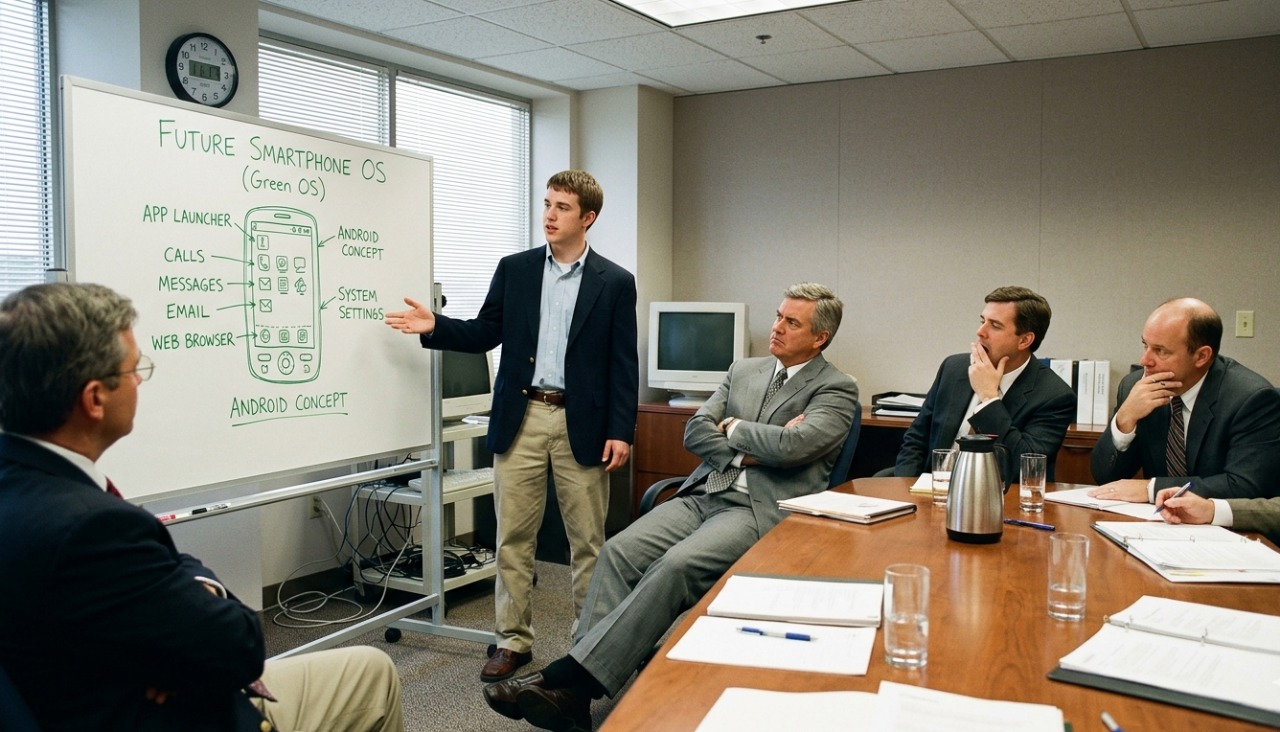
To understand why Microsoft did not buy Android, one must journey back to 2004, when Android Inc. was a struggling startup consisting of just eight engineers led by Andy Rubin, Rich Miner, Nick Sears, and Chris White. Originally conceived as an operating system for advanced digital cameras, the team quickly pivoted toward mobile phones upon realizing the digital camera market was stagnating. Android’s core architectural thesis was revolutionary yet unproven: a highly flexible, Linux-based open platform capable of standardizing application development across wildly varying phone hardware types. Before Google entered the frame, the Android team sought venture financing and potential acquisition from major industry incumbents. The historical narrative highlights two profound blind spots:
The Infamous Samsung Dismissal: In early 2005, Andy Rubin and his team flew to Seoul, South Korea, to pitch Android to Samsung’s top engineering and executive staff. As Rubin later recounted, the meeting was met with dead silence, followed by vocal mockery. Samsung executives openly ridiculed the tiny startup, asking: "You and what army are going to create this? You have eight people. Are you high?" Within weeks, Google bought Android, and Samsung would later be forced to become Android's largest hardware client.
Microsoft’s Enterprise Hubris: Simultaneously, Microsoft was entirely insular. They were actively developing and licensing Windows Mobile, a platform designed in the image of desktop Windows. To Microsoft, a mobile operating system was not a distinct, paradigm shifting product category; it was merely a micro satellite meant to extend the footprint of the Windows desktop ecosystem. Andy Rubin's open source, Linux derived architecture was antithetical to everything Microsoft stood for. Microsoft viewed Linux as an existential threat to its intellectual property regime, famously labeled by former CEO Steve Ballmer as "a cancer." Consequently, a meeting between Android’s founders and Microsoft never even materialized; Microsoft simply did not view an unmonetized Linux kernel project as worthy of attention.
In July 2005, Google’s leadership, driven by co-founders Larry Page and Sergey Brin along with executive David C. Drummond, recognized that a mobile-optimized software stack could safeguard Google’s search advertising revenue from being locked out by hardware providers. Google quietly acquired Android Inc. for an estimated $50 million a rounding error in corporate finance that yielded astronomical historical returns.
2. The Cultural Trap: The "Windows-Centric" Monoculture
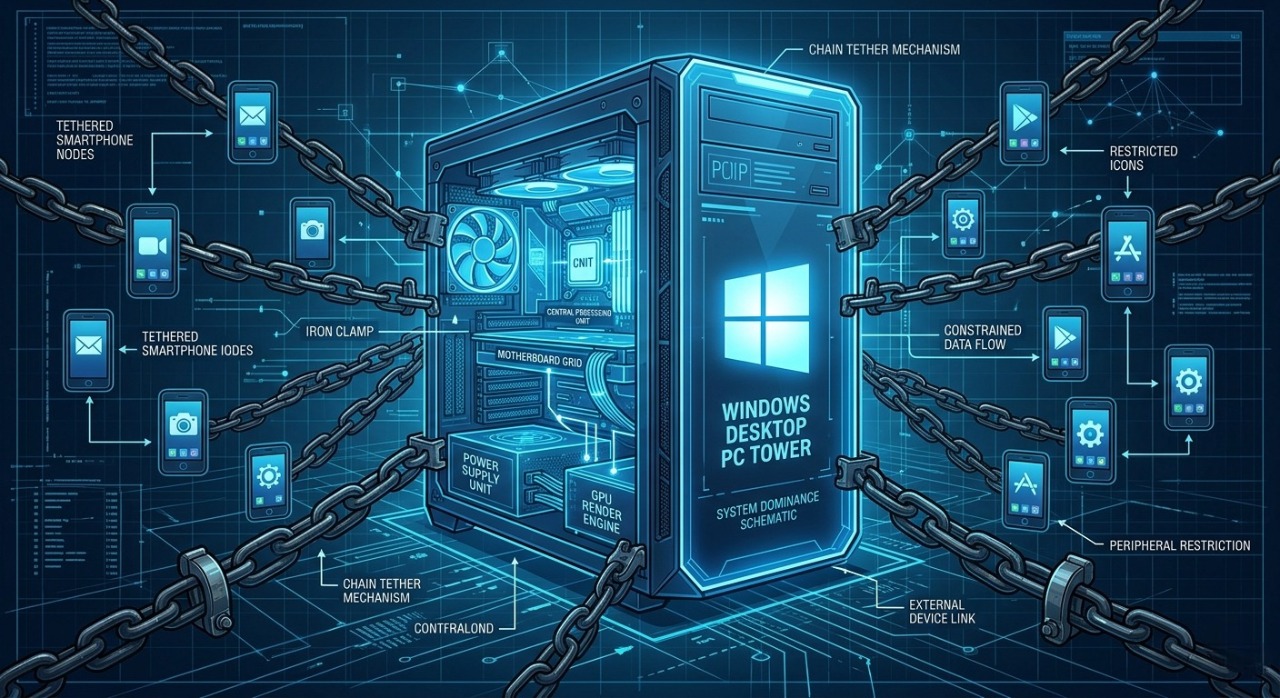
Why did Microsoft fail to build a competitive alternative or clone Android's trajectory immediately following the 2005 acquisition? The answer lies buried within Microsoft's internal corporate sociology, often termed the Windows Centric Monoculture. During the late 1990s and 2000s, Microsoft was a victim of its own unprecedented financial success. The Windows operating system and the Microsoft Office suite were massive cash cows, generating tens of billions of dollars in pure high margin profit annually. This economic reality created an internal power structure where any product or division that did not actively serve, protect, or expand the Windows desktop franchise was systematically deprioritized, underfunded, or re-engineered to fit the desktop mold. Windows Mobile was engineered precisely under this flawed philosophy. It featured:
A miniature version of the classic Windows Start Menu.
A file directory system that required meticulous desktop-style management.
An absolute dependency on a stylus for precise, pixel-level input on tiny resistive screens.
Microsoft’s leadership fundamentally miscalculated how humans would interact with handheld computers. They believed that because users wanted Windows on their office desks, they inherently wanted a shrunken, identical version of Windows in their pockets. When Google acquired Android, they abandoned the early BlackBerry style physical keyboard design blueprints almost overnight following the unveiling of Apple’s capacitive, multi touch iPhone in January 2007. Google rapidly pivoted Android into a finger friendly, touch native interface. Microsoft, heavily bound by its legacy codebases and the structural demands of preserving desktop like backward compatibility, lacked the agility to execute a clean sheet redesign.
3. Executive Blindspots: The Steve Ballmer Era Analysis
No discussion regarding Microsoft's mobile abdication is complete without analyzing the strategic leadership of Steve Ballmer, who served as Microsoft’s Chief Executive Officer from 2000 to 2014. While Ballmer was an exceptional financial custodian tripling Microsoft's sales and doubling profits during his tenure his product vision suffered from acute blind spots regarding disruptive, non desktop hardware paradigms. The most iconic manifestation of this blind spot occurred in a 2007 television interview immediately following Apple’s iPhone announcement. When asked about Apple's entry into the market, Ballmer laughed out loud and remarked:
"Five hundred dollars? Fully subsidized? With a plan? I say that is the most expensive phone in the world. And it doesn't appeal to business customers because it doesn't have a keyboard. Which makes it not a very good email machine."
This quote exposes three fundamental misjudgments that allowed Android to sweep the globe while Microsoft remained stagnant:
Underestimating the Consumerization of IT: Ballmer believed that the smartphone market would remain driven by corporate IT managers who prioritized physical QWERTY keyboards (like BlackBerry) and rigid security policies. He failed to see that everyday consumers would dictate the market, demanding beautiful interfaces, mobile web browsing, and rich media apps.
Misunderstanding Subsidies and Carrier Dynamics: Ballmer assumed the $500 price point would permanently alienate the mass market, ignoring the creative financing structures, device leasing, and multi year carrier subsidies that quickly made smartphones affordable to the global middle class.
Ignoring Google's Silent Engineering Progress: While Ballmer focused his public criticism entirely on Apple's premium price tag, he completely overlooked what Google was doing quietly in the background. Google was setting up Android to be the exact opposite of Apple: an operating system that was accessible, highly modular, and completely free for any hardware manufacturer to adopt.
4. The Business Model Clashing: Paid Licenses vs. Open Source Disruption
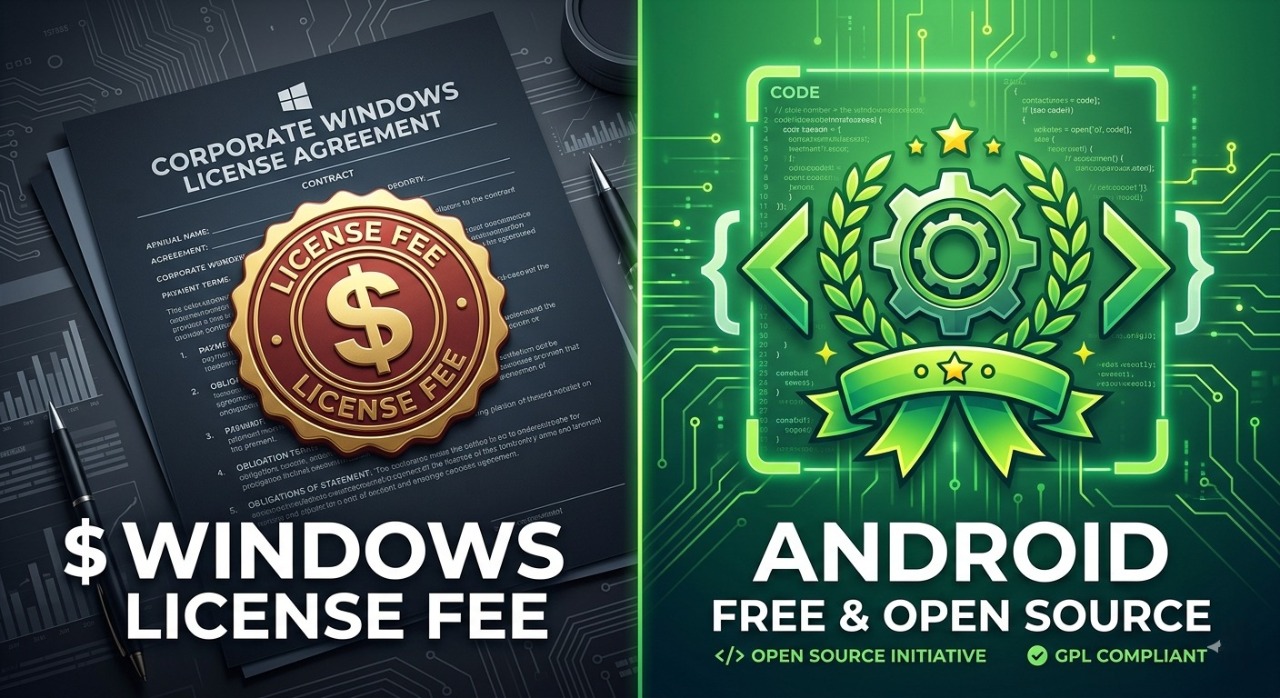
Beyond cultural myopia and executive miscalculations, the ultimate structural reason Microsoft could never compete with Android was a fundamental conflict between their core business models. Microsoft was, at its heart, a software licensing engine. Google, conversely, was a data driven advertising engine.
The Microsoft Economics: Software as a Direct Product
Microsoft’s traditional monetization strategy depended entirely on selling licenses. When an Original Equipment Manufacturer (OEM) like Dell or HP manufactured a computer, they paid Microsoft a set fee to pre install Windows. Microsoft applied this identical model to the mobile sector. For every phone Samsung, HTC, or Motorola manufactured running Windows Mobile, the OEM had to pay Microsoft a proprietary licensing fee ranging from $8 to $15 per device. This licensing cost directly squeezed the profit margins of hardware manufacturers.
The Google Economics: Software as a Distribution Vehicle
Google approached the mobile landscape from a completely inverted vector. Google did not care about generating direct revenue from software sales. Their primary strategic threat was that if desktop computing shifted to mobile devices, and those mobile devices were controlled by an aggressive gatekeeper like Microsoft or Apple, Google could lose its direct access to search traffic, mapping queries, and digital advertising real estate.
To neutralize this threat, Google launched the Open Handset Alliance in 2007 and made Android 100% Free and Open Source (FOSS) under the Apache license. For OEMs, the financial decision became an absolute no brainer:
Option A (Microsoft): Pay Microsoft $15 per phone for a rigid, desktop ported Windows Mobile OS that consumers were actively rejecting.
Option B (Google): Take Google’s Android for $0, customize the user interface completely to fit their branding, and sell affordable hardware at maximum profit margins.
By the time Microsoft realized that its premium licensing model was obsolete in the smartphone era, Android had already captured insurmountable network effects, locking down developers, carriers, and hardware manufacturers globally.
5. The Fatal Pivot: The Nokia Acquisition and Sunk Cost Fallacy
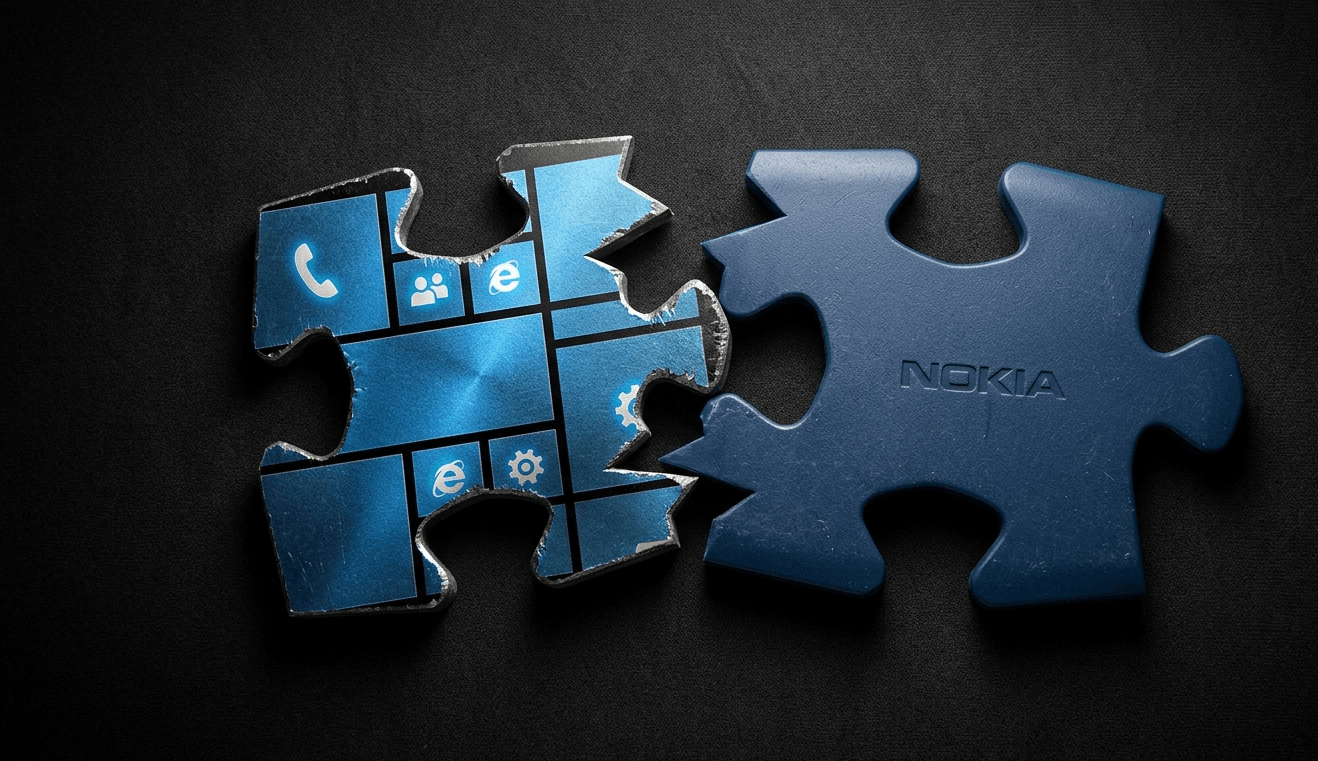
In a desperate, multi billion dollar attempt to reverse its compounding losses, Microsoft launched Windows Phone 7 in 2010, followed by Windows Phone 8 in 2012. This new platform abandoned the old Windows Mobile start menu style entirely, introducing a clean, highly fluid, typography driven Metro UI featuring live tiles. It was a beautiful, critically acclaimed operating system, but it arrived far too late to the market. The smartphone landscape had already calcified into a rigid iOS-Android duopoly. This structural reality trapped Microsoft inside the devastating App Ecosystem Death Spiral:
Because Windows Phone had low single digit market share, app developers (such as Instagram, Snapchat, Google, and independent bank utilities) refused to invest capital into building or maintaining apps for the Windows Store.
Because the platform lacked essential apps, everyday consumers refused to buy the hardware, ensuring the market share remained permanently depressed.
Driven by the desperate need to guarantee dedicated hardware support for its platform, Microsoft executed its final, fatal mobile maneuver in September 2013: acquiring Nokia’s mobile hardware division for $7.2 Billion.
The acquisition was a catastrophic failure of the Sunk Cost Fallacy:
Cultural Incompatibility: Merging a massive software engineering firm based in Redmond with a legacy European hardware manufacturing titan based in Finland created immense operational friction.
Alienating Remaining Partners: By buying Nokia, Microsoft became a direct hardware competitor to its few remaining third-party OEMs (like HTC and Samsung), causing them to completely abandon Windows Phone development and shift 100% of their engineering capacity to Android.
The Write-Down: Just two years later, in 2015, Microsoft’s new CEO Satya Nadella fundamentally accepted defeat. Microsoft wrote down a staggering $7.6 billion asset loss effectively admitting that the Nokia acquisition was worth less than zero and laid off tens of thousands of mobile hardware employees.
6. Financial Paradox: The Billions Microsoft Collects from Android Today
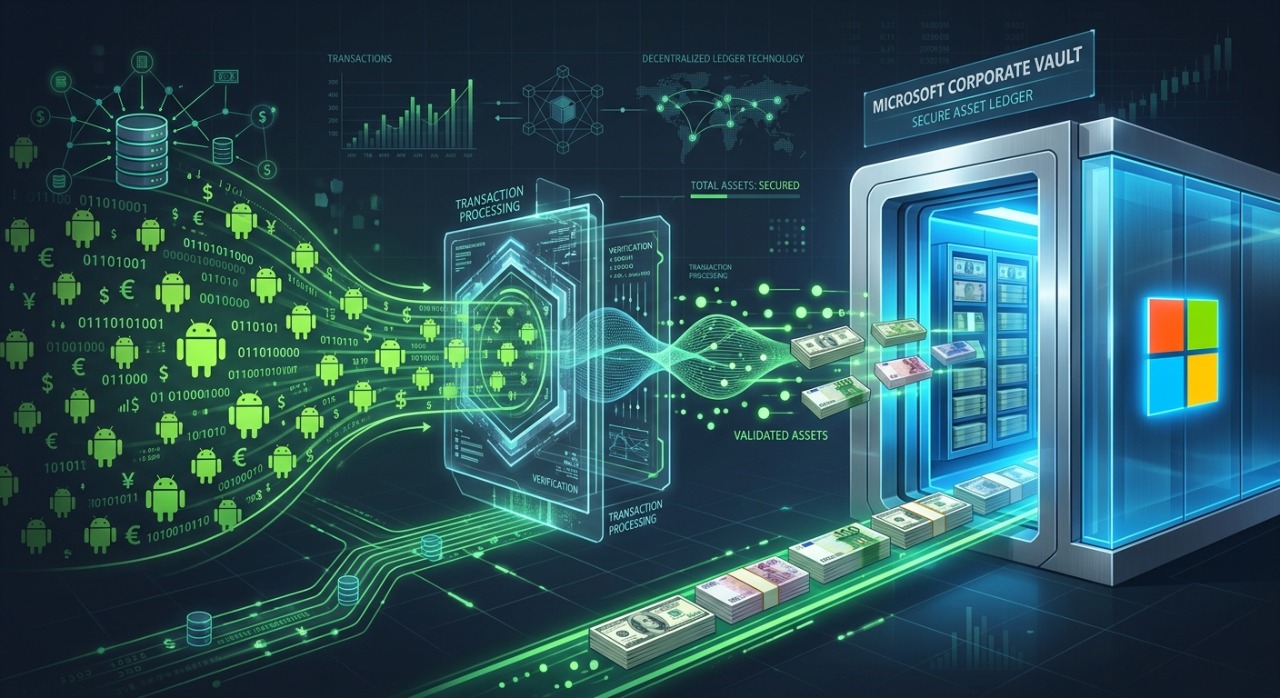
Despite completely losing the smartphone operating system war and shuttering its mobile hardware operations, Microsoft’s historical intellectual property portfolio has generated an astonishing economic paradox: Microsoft makes billions of dollars directly from the global success of Android. Because Android is built on top of the Linux kernel and incorporates structural concepts related to file systems, data synchronization, and mobile communications, it relies heavily on core software patents held by Microsoft. Rather than engaging in endless, destructive litigation cycles, Microsoft approached global Android hardware manufacturers and offered comprehensive patent licensing frameworks.
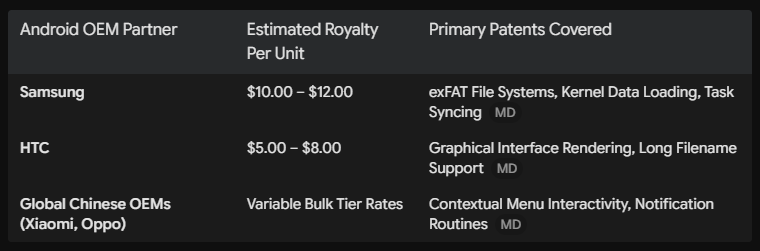
Through these confidential patent licensing agreements, Microsoft receives a direct financial royalty for almost every single Android device sold globally. Financial analysts have estimated that Microsoft has pulled in anywhere from $1.5 Billion to $3 Billion in pure, high margin annual revenue directly from Android sales.
Conclusion: Strategic Takeaways for the AI Era
The saga of why Microsoft did not buy Android remains one of the premier business case studies taught in modern business schools. It highlights that in high velocity tech industries, historical dominance can easily mutate into a structural anchor. Microsoft failed not because they lacked brilliant software engineers or financial capital; they failed because they were paralyzed by their own historical business success, unable to envision a computing paradigm that did not place the desktop PC at the absolute center of the universe.
Under the contemporary leadership of Satya Nadella, Microsoft has fully internalized this painful lesson. Nadella shifted Microsoft’s operational paradigm away from forcing Windows onto every platform, adopting a hyper-pragmatic Cross-Platform Cloud & AI First approach.
Today, Microsoft’s premier software assets including Office 365, OneDrive, Xbox Cloud Gaming, and their cutting edge Microsoft Copilot AI systems are developed natively, optimized perfectly, and deployed aggressively onto Google’s Android and Apple’s iOS. By relinquishing the base mobile operating system layer, Microsoft successfully repurposed itself to conquer the cloud and enterprise AI layer.
Frequently Asked Questions
Did Bill Gates own Android?
No, Bill Gates never owned Android. Android was founded by Andy Rubin in 2003 and subsequently acquired by Google in 2005 for $50 million. Bill Gates has publicly stated that missing out on the Android acquisition and allowing Google to establish the standard non Apple mobile platform was his single greatest professional mistake.
How much did Google pay to buy Android?
Google acquired Android Inc. in July 2005 for an estimated $50 million. This is widely considered by economists to be the most financially successful acquisition in the history of the global technology sector.
Why did Windows Phone fail against Android?
Windows Phone failed primarily due to entering the market too late (2010) when Android and iOS had already achieved dominant scale. This late entry triggered an App Ecosystem Death Spiral, where developers refused to build critical apps (like WhatsApp or Instagram) for a low share OS, and consumers refused to buy phones that lacked those critical apps.
Does Microsoft make money from every Android phone sold?
Yes. Microsoft owns an extensive portfolio of structural software patents covering file system management (like exFAT), data processing, and wireless communications. Through worldwide cross licensing patent agreements, Microsoft earns an estimated $2 to $12 in royalties for almost every Android device manufactured globally.