Artificial intelligence is evolving faster than ever. AI assistants are no longer limited to answering questions or generating paragraphs. They can help developers build applications, analyze complex information, automate repetitive tasks, conduct research, and turn ideas into working projects.
Two names attracting attention in this competition are GLM, developed by Z.ai, and ChatGPT, developed by OpenAI.
Both platforms offer powerful AI capabilities, but they approach the market differently. GLM has gained attention for its open-weight model development, coding capabilities, and long-context engineering. ChatGPT offers a broad assistant experience that combines language models with tools for research, writing, data analysis, image generation, and other everyday tasks.
OpenAI's GPT-6 family includes models designed for different levels of reasoning, coding, and professional work, while Z.ai's GLM-5.3 focuses particularly on complex coding and long-horizon tasks. These are not identical products, so a meaningful comparison must consider both the underlying models and the platforms through which people use them.
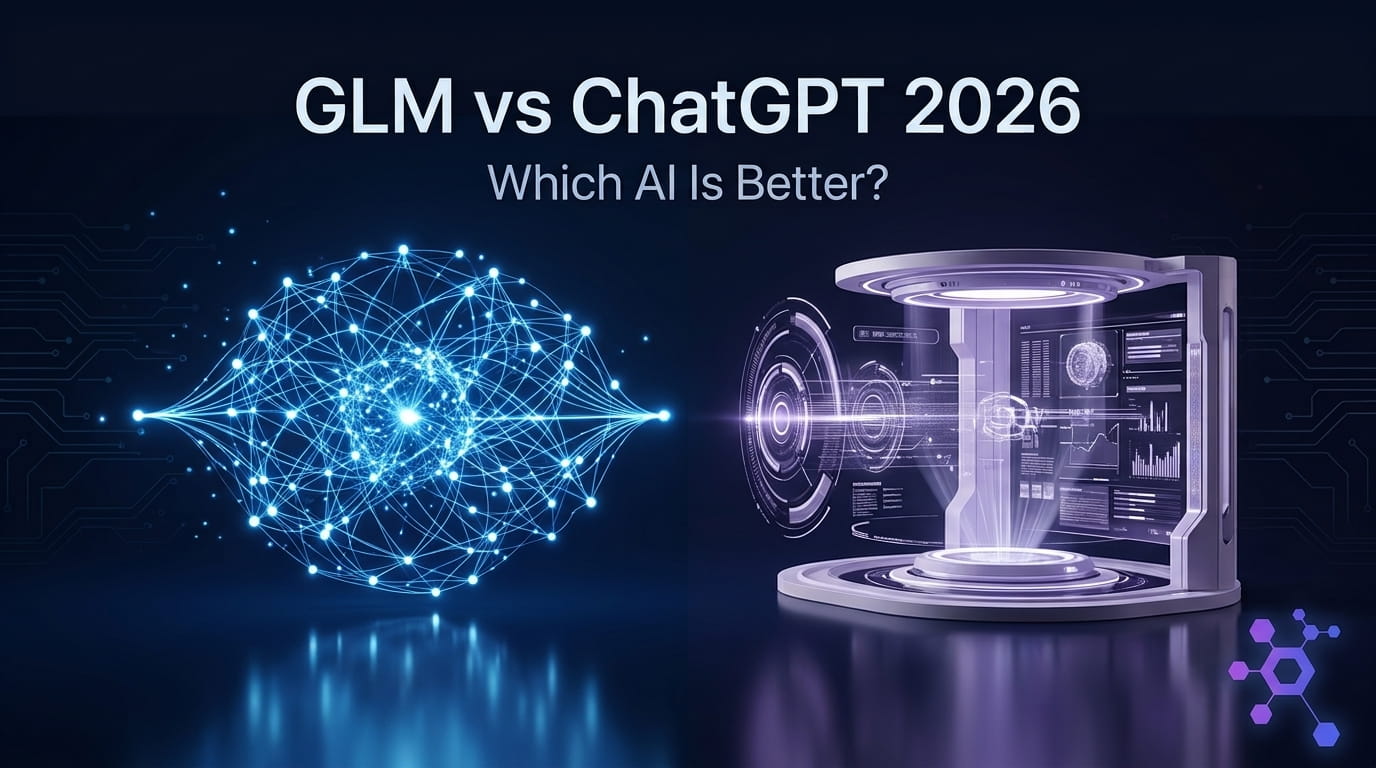
So, which is better: GLM or ChatGPT? The answer depends on what you want to accomplish, how much you want to spend, whether you need an integrated assistant or a model you can deploy yourself, and how much control you need over your development environment.
Let's compare them in detail.
What Is GLM AI?
GLM is a family of large language models developed by Z.ai, a Chinese AI company. The models are designed for tasks such as text generation, reasoning, programming, instruction following, and AI-agent workflows.
GLM has become particularly interesting to developers because Z.ai has released open-weight models under permissive licensing. Its GLM-5.2 release emphasized long-horizon engineering and a one-million-token context window, while GLM-5.3 introduced further improvements focused on complex coding and extended tasks.
A major distinction is that GLM is not just a chatbot. Depending on the model, license, and deployment method, developers can use GLM through a hosted interface or API, integrate it with compatible coding agents, or run supported model weights on their own infrastructure.
Key features of GLM AI
Coding and debugging: Helps generate code, investigate errors, and work through complex software tasks.
Long-context processing: Certain GLM models support very large context windows for working with extensive codebases or documents.
AI-agent workflows: Compatible tools can use GLM to perform multistep tasks rather than only producing individual answers.
Open-weight options: Selected models can be downloaded and deployed independently, subject to their actual license terms and hardware requirements.
Developer integration: APIs and compatible coding environments make GLM useful in software development workflows.
Flexible deployment: Developers can choose between hosted access and supported self-hosted setups.
GLM's strongest appeal is its combination of developer-focused capabilities, model flexibility, and the possibility of greater control over deployment.
However, open weights do not automatically make a model free to operate. Hardware, electricity, inference infrastructure, maintenance, and engineering time can all carry costs.
What Is ChatGPT?
ChatGPT is OpenAI's AI assistant for individuals, professionals, students, developers, and organizations. It provides a conversational interface to AI models and a growing collection of integrated capabilities.
In 2026, OpenAI's GPT-6 family includes models designed for different workloads. Availability and access depend on the model, subscription, workspace, and rollout status. GPT-6 Astra, for example, has been positioned for demanding coding, computer-use, research, and professional tasks, with access initially rolling out to eligible users and organizations.
Unlike comparing two standalone models, evaluating ChatGPT also means considering its interface, tools, supported integrations, and subscription features.
Key features of ChatGPT
Writing and content creation: Helps draft articles, marketing content, emails, scripts, and documentation.
Programming support: Can generate code, explain unfamiliar projects, suggest fixes, and assist with software engineering.
Research and analysis: Supports information gathering, document analysis, and structured explanations, depending on the tools available.
Multimodal capabilities: Supported experiences can work with text, images, voice, files, and other media.
Data and document workflows: Helps organize information and produce useful outputs such as reports, tables, and presentations.
Integrated assistant experience: Offers a unified interface for many different tasks instead of requiring a separate tool for every workflow.
ChatGPT's major strength is convenience. A user can move from brainstorming an idea to researching it, writing a plan, analyzing data, and developing an implementation without necessarily switching between multiple applications.
The precise features and usage limits still depend on the account and the capabilities available at the time.
GLM vs ChatGPT for Coding and Software Development
Coding is one of the most important areas in the GLM-versus-ChatGPT debate.
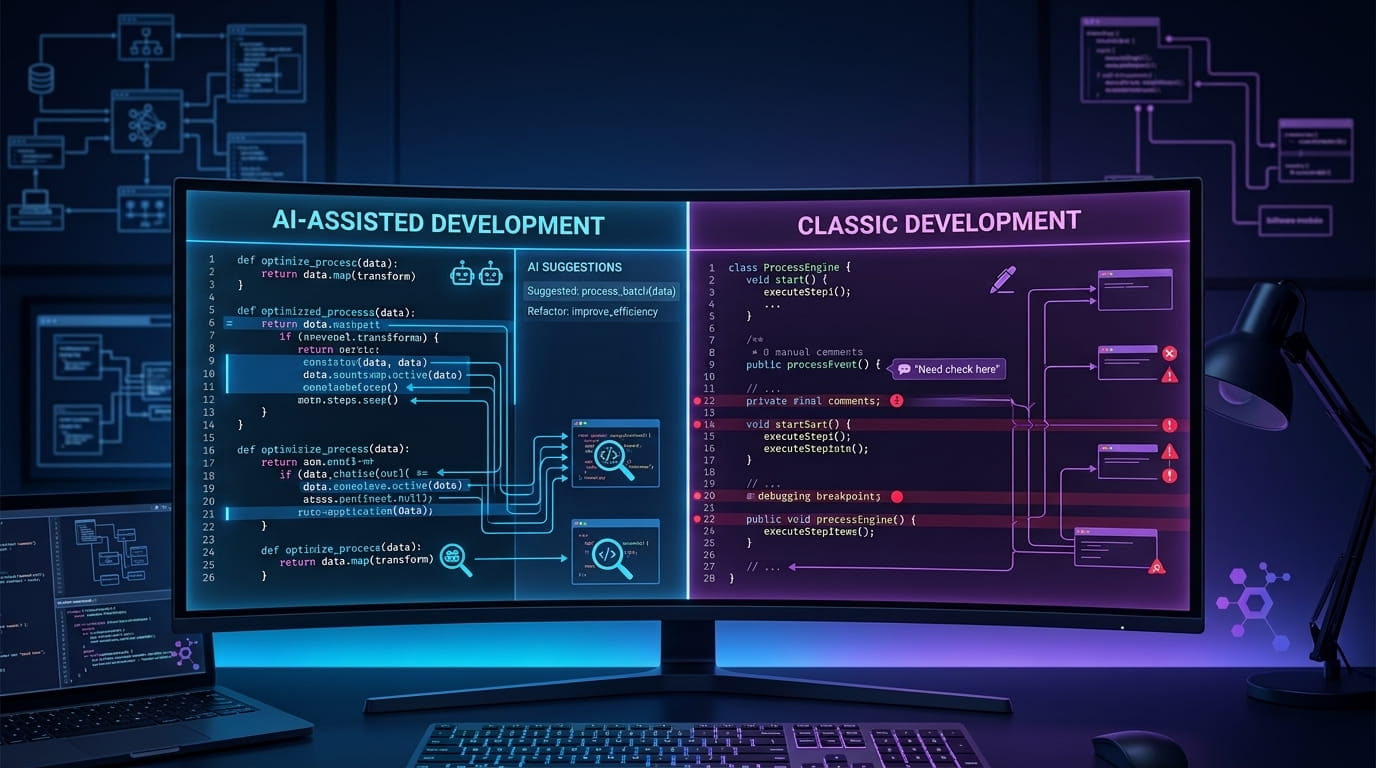
Modern AI coding tools are expected to do more than complete a function. Developers want assistance with understanding an existing codebase, planning changes, fixing bugs, writing tests, reviewing security risks, and completing tasks that involve multiple files.
Where GLM can be a strong choice
Z.ai designed its recent GLM models with coding and long-horizon engineering in mind. GLM-5.2 introduced a one-million-token context window, and GLM-5.3 focused on improving complex coding and extended tasks.
These capabilities can be useful when a developer needs to:
Analyze a large project with many interconnected files.
Generate or refactor code across multiple components.
Investigate a difficult bug.
Work with compatible AI coding agents.
Experiment with self-hosted models or customized inference infrastructure.
A large context window can help a model consider more project information at once, but it does not guarantee that every detail will be interpreted correctly. Retrieval, context management, test quality, and task complexity still matter.
Where ChatGPT can be a strong choice
ChatGPT is useful for developers who want coding help alongside explanations, planning, research, documentation, and other work.
For example, a developer can ask ChatGPT to explain an unfamiliar API, propose a database schema, review a React component, create test cases, and help document the final implementation. Depending on the selected model and available tools, it can also assist with more involved software engineering workflows.
Which AI is better for coding?
GLM deserves serious consideration for coding-heavy workflows, particularly when long-context work, compatible coding agents, or deployment flexibility matters.
ChatGPT is a strong choice when coding is one part of a broader workflow involving research, communication, documentation, and other integrated tools.
For production software, neither should be trusted blindly. Run the code, test edge cases, inspect dependencies, review security-sensitive changes, and verify the output before deployment.
GLM vs ChatGPT for Reasoning and Complex Problem-Solving
Reasoning is not one single skill. Mathematical problems, software debugging, business decisions, scientific research, and everyday planning all require different kinds of reasoning.
GLM's recent models include capabilities aimed at difficult coding and multistep tasks. ChatGPT provides different model and reasoning options designed to accommodate a range of workloads.
The result can change depending on whether the task requires:
Following detailed instructions.
Maintaining consistency across many steps.
Comparing conflicting evidence.
Solving a mathematical problem.
Planning a software implementation.
Using tools and checking the results.
For a fair test, both platforms should receive the same prompt, source material, constraints, and evaluation criteria. Their outputs should be judged for accuracy, completeness, and reproducibility rather than confidence or length.
A model that writes a convincing explanation is not necessarily the model that reaches the correct answer most reliably.
GLM vs ChatGPT for Writing, Blogging, and SEO
Content creators need more than grammatically correct text. They need original ideas, useful structure, appropriate tone, search intent alignment, factual accuracy, and content that genuinely helps readers.
Both GLM and ChatGPT can assist with these tasks.
GLM for content creation
GLM can help brainstorm blog topics, create outlines, rewrite paragraphs, draft technical articles, and generate structured content. It can be particularly useful when writing is part of a developer-oriented or automated content pipeline.
ChatGPT for content creation
ChatGPT can help develop a topic into a complete editorial workflow, including keyword research plans, outlines, article drafts, metadata, social captions, and content revisions. Depending on available tools, it can also assist with research and analysis before writing.
Which is better for SEO?
There is no universal winner. Search performance depends on the usefulness and originality of the content, its accuracy, search intent, website authority, competition, technical SEO, and user experience.
Neither AI guarantees rankings or organic traffic.
A practical workflow is to use AI for research assistance, outlining, drafting, and editing while independently verifying factual claims, checking search intent, and adding original expertise.
Important: Do not publish large quantities of unreviewed AI content simply because a model can generate it quickly. Quality, accuracy, and genuine reader value matter more than output volume.
GLM vs ChatGPT for Research and Learning
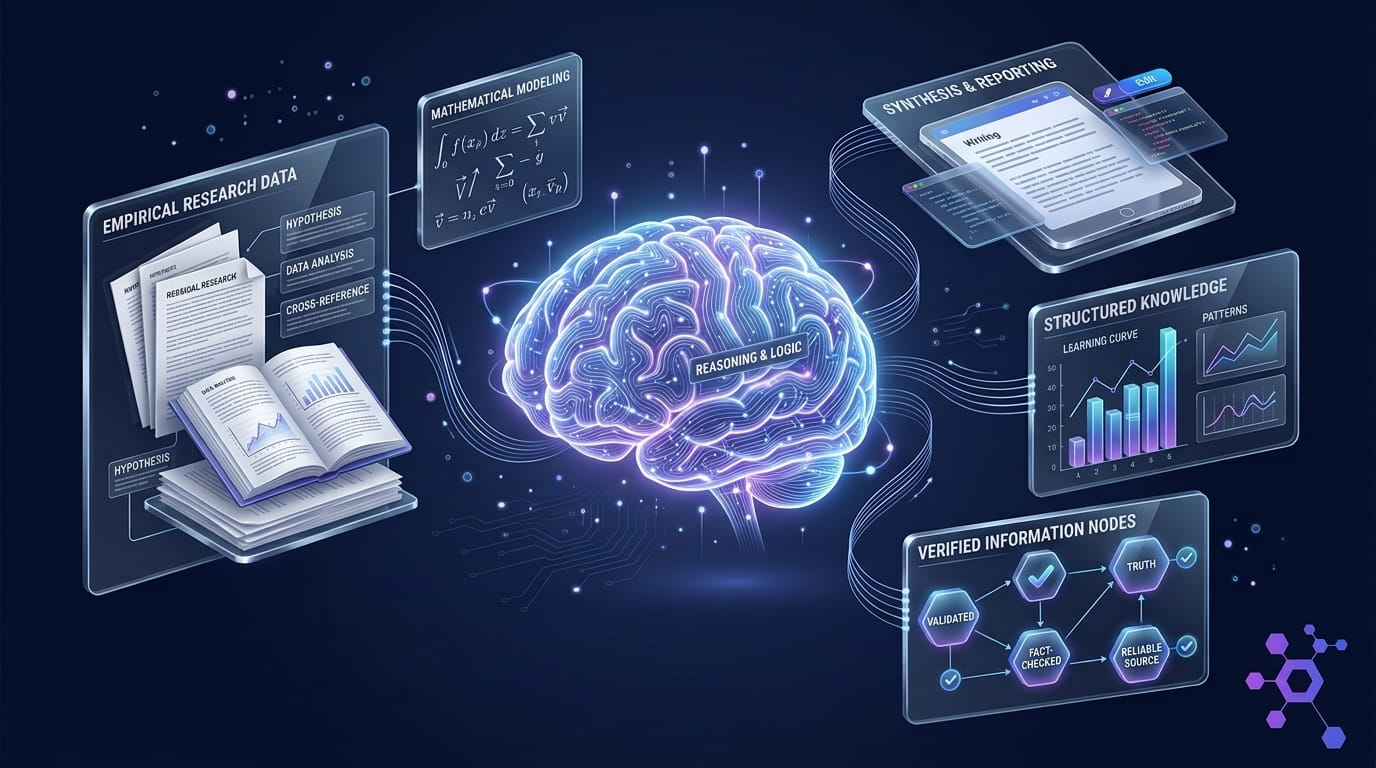
Students, researchers, and self-learners often need an AI assistant that can explain difficult ideas, summarize materials, organize notes, and help them explore unfamiliar subjects.
ChatGPT can be especially convenient when research, document handling, explanations, and other supported tools are available in one interface.
GLM can also be valuable for technical learning, code analysis, document-based tasks, and custom research workflows, depending on the model and interface.
For either platform, provide the relevant source material when accuracy matters. Ask for evidence, verify citations against the original sources, and distinguish established facts from interpretations.
For academic work, use AI to understand concepts and improve your own reasoning rather than submitting unverified generated material as original research.
GLM vs ChatGPT for Business and Productivity
Businesses can use AI to reduce repetitive work, improve documentation, assist with customer communications, analyze information, and support internal software development.
ChatGPT is often convenient for teams that need a general-purpose assistant with multiple supported productivity capabilities.
GLM may appeal to organizations that want to integrate a model into their own systems, experiment with compatible deployment options, or develop specialized engineering workflows.
The right choice depends on more than model intelligence. Businesses should evaluate:
Data-handling and retention policies.
Access controls and administrative features.
API reliability and usage limits.
Integration and maintenance costs.
Output quality on real business tasks.
Regulatory and contractual requirements.
Neither a self-hosted model nor a commercial AI subscription automatically guarantees compliance. Organizations should review the exact deployment, security controls, and contractual terms before handling sensitive data.
GLM vs ChatGPT: Pricing, Free Access, and Value for Money
Pricing changes over time, and a simple claim that one platform is cheaper can be misleading.
The total cost depends on how you use the AI.
GLM costs can include:
Free or paid access through an available hosted interface.
API charges based on the applicable pricing model.
Subscription costs for compatible coding plans.
Hardware, electricity, hosting, and maintenance for self-hosted deployment.
ChatGPT costs can include:
Free access with applicable feature and usage limits.
Paid subscriptions for additional capabilities and limits.
Separate API charges when building applications with OpenAI models.
Additional development or integration costs for specialized workflows.
A subscription to ChatGPT does not automatically include API usage, and self-hosting a GLM model is not automatically cheaper once infrastructure and engineering time are included.
To compare value, test both platforms on the same set of tasks. Measure the cost per successful result, the amount of manual correction required, response speed, and the time saved.
Always check the official pricing pages before making a purchasing decision.
GLM vs ChatGPT: Privacy, Security, and Deployment
Privacy is a critical consideration when AI tools are used for source code, customer information, business documents, or confidential research.
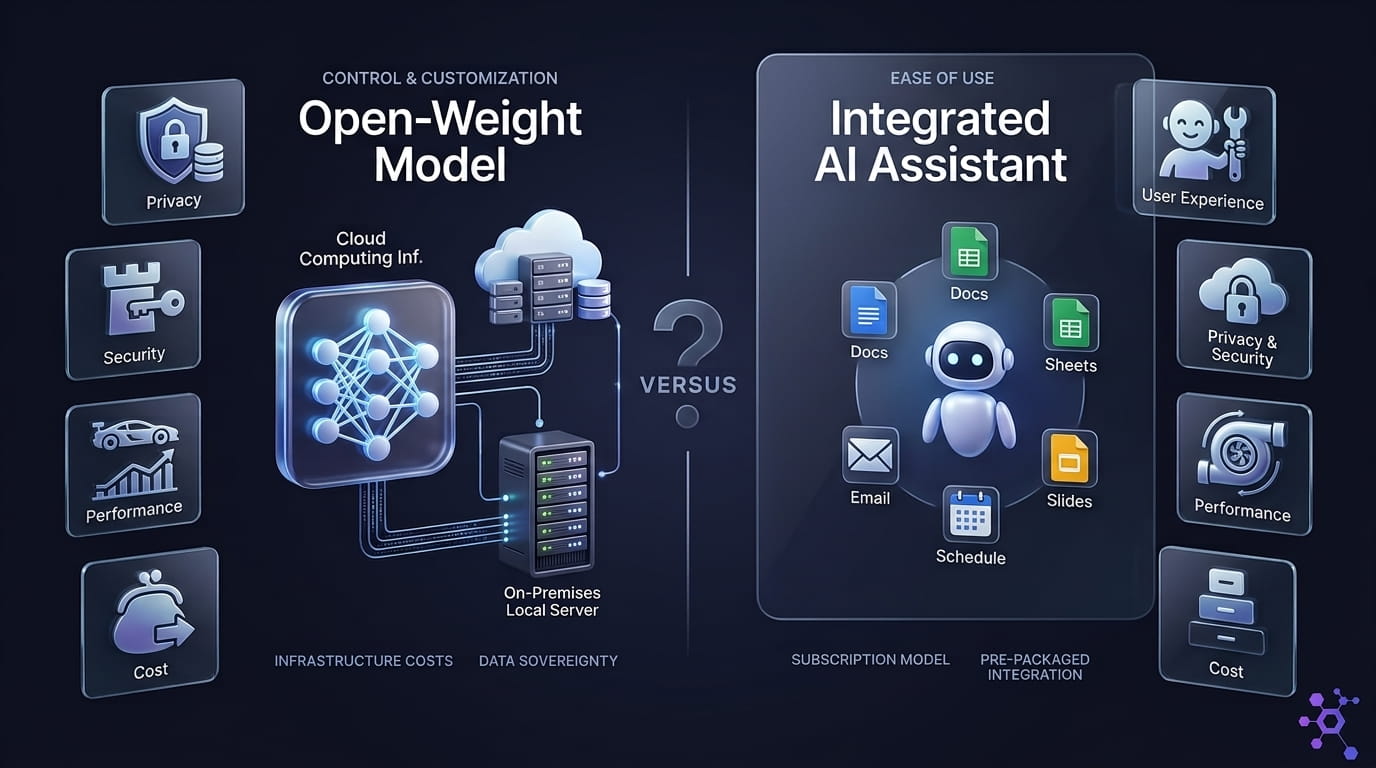
GLM's open-weight options can give technically capable organizations more control over where inference takes place. However, that benefit depends on actually running the model in a suitably controlled environment and securing the surrounding infrastructure.
ChatGPT offers hosted services with privacy and data controls that vary by plan and workspace. Organizations should review the policies and settings applicable to their particular account.
Before using either platform with sensitive information, check:
Whether prompts and uploaded files may be stored or used for training.
Data retention and deletion settings.
Access permissions and account security.
The location of processing and storage.
The security of APIs, integrations, and self-hosted infrastructure.
Open weights are not the same thing as a complete privacy solution. Similarly, a commercial service is not automatically unsuitable for sensitive work. The actual configuration and terms determine the risk.
GLM vs ChatGPT: Limitations You Should Know
No AI platform is perfect.
GLM limitations
Performance varies considerably between model versions.
Self-hosting can require substantial computing resources.
Hosted access, API quotas, and subscription features can change.
Long context does not eliminate missed details or incorrect conclusions.
Some integrations may require additional configuration or technical knowledge.
ChatGPT limitations
Access to advanced models and features may depend on the plan.
Usage limits and product availability can change.
Proprietary flagship models do not generally provide the same self-hosting flexibility as open-weight alternatives.
Outputs can contain factual errors, insecure code, or unsupported claims.
Complex tasks still require review, testing, and human judgment.
The best model is the one that reliably meets your requirements, not necessarily the one with the biggest announcement or the most impressive demonstration.
How to Compare GLM and ChatGPT Yourself
Instead of relying entirely on promotional claims, run a small, repeatable evaluation.
Test 1: Coding
Give both platforms the same bug report and a minimal reproducible example. Check whether the proposed fix works and whether the model explains the cause correctly.
Test 2: Reasoning
Use a problem with a verifiable answer. Check the result independently rather than judging only the explanation.
Test 3: Writing
Provide the same brief, audience, tone, and word limit. Compare clarity, factual accuracy, structure, and the amount of editing needed.
Test 4: Long documents
Give each model the same document or codebase within its supported context limits. Ask specific questions whose answers appear in different sections.
Test 5: Cost and speed
Repeat representative tasks and record latency, usage, successful completion, and manual correction time. One unusually good answer is not enough to establish a reliable winner.
Keep a simple scorecard and use the same evaluation criteria for both systems. If you can, repeat each test several times to reduce the effect of random variation.
The Future of GLM vs ChatGPT
Competition between AI developers is increasingly about complete workflows rather than chatbot conversations alone.
Developers want AI systems that can understand large projects, use tools, complete multistep tasks, and operate reliably in real environments. Businesses want systems that save time without introducing unacceptable security, accuracy, or compliance risks.
GLM's open-weight development and engineering-focused direction give it a meaningful place in this competition. ChatGPT's integrated assistant experience and expanding model family make it a strong option for users who need more than programming support.
Neither platform has permanently won. New releases, better tools, changes in pricing, and independent evaluations can alter the balance.
For users, this competition is beneficial: it creates more choices and encourages providers to improve capability, efficiency, accessibility, and reliability.
Final Verdict: GLM vs ChatGPT — Which AI Should You Choose?
Choose GLM if your priorities include coding-focused workflows, compatible agent integrations, experimenting with open-weight models, or greater control over deployment.
Choose ChatGPT if you want an integrated assistant for writing, research, coding, document work, and a wide range of everyday tasks.
Consider using both if you work professionally with AI and can benefit from comparing outputs, using different models for different tasks, or maintaining a backup workflow.
The important distinction is that GLM and ChatGPT are not simply two interchangeable chat windows. They represent different combinations of models, tools, deployment options, and product experiences.
The smartest decision is to test them against your real workload, verify the results, and choose the platform that delivers the best combination of quality, cost, reliability, and control.
Frequently Asked Questions (FAQ)
1. Is GLM better than ChatGPT in 2026?
Not in every category. GLM is worth evaluating for coding-heavy tasks and open-weight deployment, while ChatGPT is useful for a broad range of integrated assistant workflows. The result depends on the specific models and tasks being compared.
2. Is GLM better than ChatGPT for coding?
GLM's recent releases emphasize coding and long-horizon engineering. ChatGPT also offers advanced coding capabilities. Test both on your actual codebase and verify their proposed changes.
3. Is GLM AI free to use?
Access options can include hosted free access, paid services, API usage, and open-weight deployment. Availability, quotas, and infrastructure costs vary, so check the current terms.
4. Can GLM run locally?
Certain GLM models have publicly available weights and can be deployed using compatible inference frameworks. Hardware requirements depend on the model size, quantization, and desired performance.
5. Is ChatGPT better for SEO blogging?
ChatGPT can support research, outlines, drafts, metadata, and editing, but it does not guarantee better rankings. Content quality, originality, search intent, and factual accuracy remain essential.
6. Which AI is better for students?
Either can help explain concepts, summarize materials, and assist with practice. Compare the available features, usage limits, accuracy, and ease of use before choosing.
7. Which AI is more private?
Neither can be declared universally more private without considering the deployment and applicable policies. Self-hosted open-weight models can provide more infrastructure control, while hosted services offer their own privacy settings and contractual protections.
8. Can GLM replace ChatGPT?
For some workflows, yes. For others, the integrated tools, model options, or user experience of ChatGPT may be more suitable. The answer depends on your requirements.
9. Which AI is best for developers on a budget?
Compare the available free access, API pricing, usage limits, and total operating costs. Self-hosting can involve significant hardware expenses, so calculate the cost of successful results rather than comparing subscription prices alone.
10. What is the best way to choose between GLM and ChatGPT?
Run the same coding, reasoning, writing, and research tasks on both. Evaluate correctness, reliability, speed, cost, privacy, and how much human correction each requires.
Join the Conversation
Which AI would you choose in 2026: GLM, ChatGPT, or both?
Have you tested GLM for coding, used ChatGPT for research, or compared their results on a real project? Share your experience and explain which platform performs better for your needs.
Keep exploring AI, software development, and emerging technology to make better-informed decisions in the rapidly changing world of artificial intelligence.