
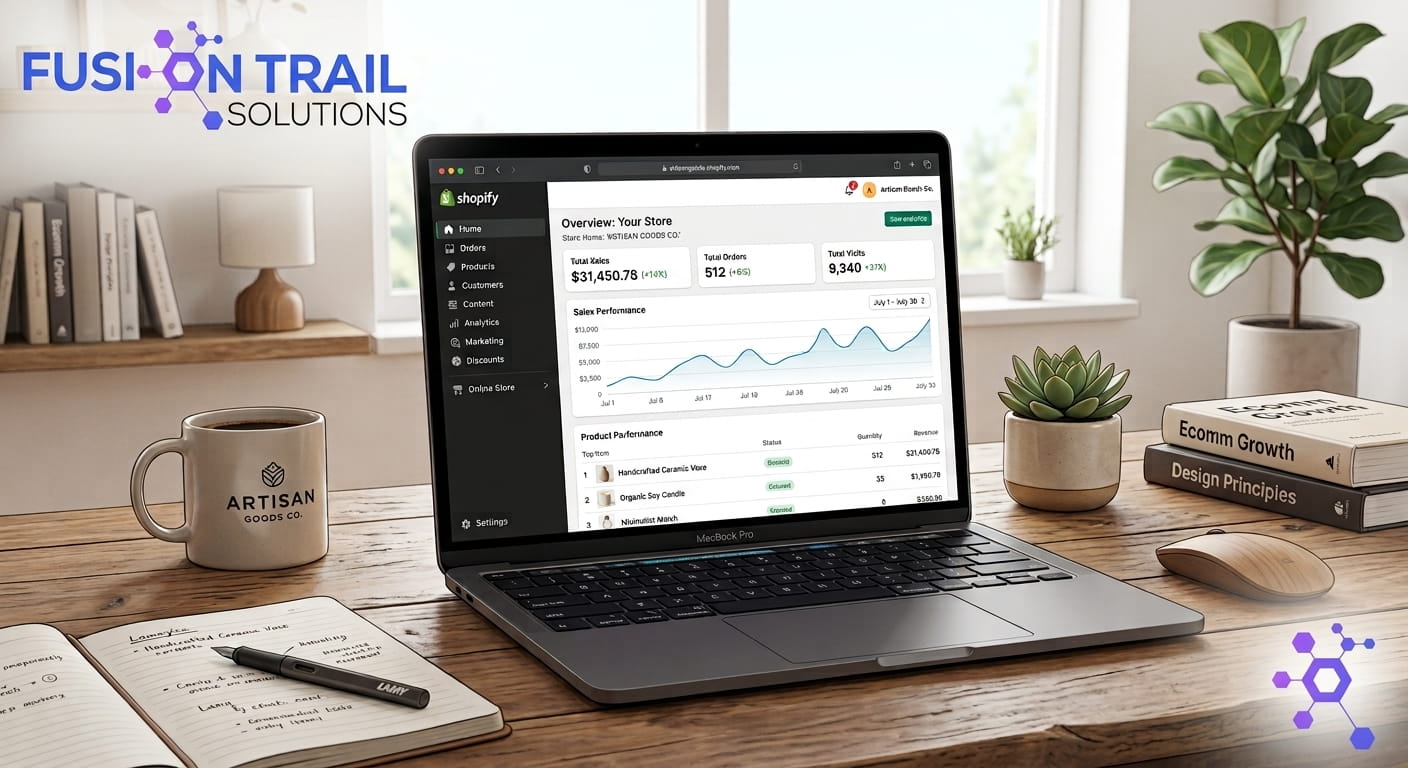
Starting an online business has never been more accessible. Whether you want to sell clothing, electronics, digital products, beauty products, handmade items, or other products, choosing the right eCommerce platform can make a major difference.
Shopify is one of the most popular platforms for creating and managing an online store. It provides businesses with tools for building a professional storefront, managing products and orders, accepting payments, marketing products, and growing an eCommerce business.
But is Shopify the right platform for your business? And how can you use it effectively to generate traffic, increase sales, and build a successful online store?
This complete guide explains how Shopify works, its key features, Shopify SEO strategies, marketing opportunities, common mistakes, and practical ways to grow a Shopify store.
What Is Shopify?
Shopify is an eCommerce platform that allows individuals, entrepreneurs, startups, and established businesses to create and manage an online store.
Instead of building an eCommerce website completely from scratch, Shopify provides many of the essential tools required to launch an online business in one platform.
With Shopify, store owners can:
Create an online store
Add and manage products
Customize store designs
Manage inventory
Process orders
Accept online payments
Track customers
Create discounts and promotions
Install third-party apps
Optimize products for search engines
Sell through multiple sales channels
One of Shopify's biggest advantages is that users do not need to be expert developers to start an online store.
Why Choose Shopify for an Online Store?
There are many eCommerce platforms available, but Shopify has become a popular choice because of its combination of simplicity, flexibility, and scalability.
1. Easy Store Setup
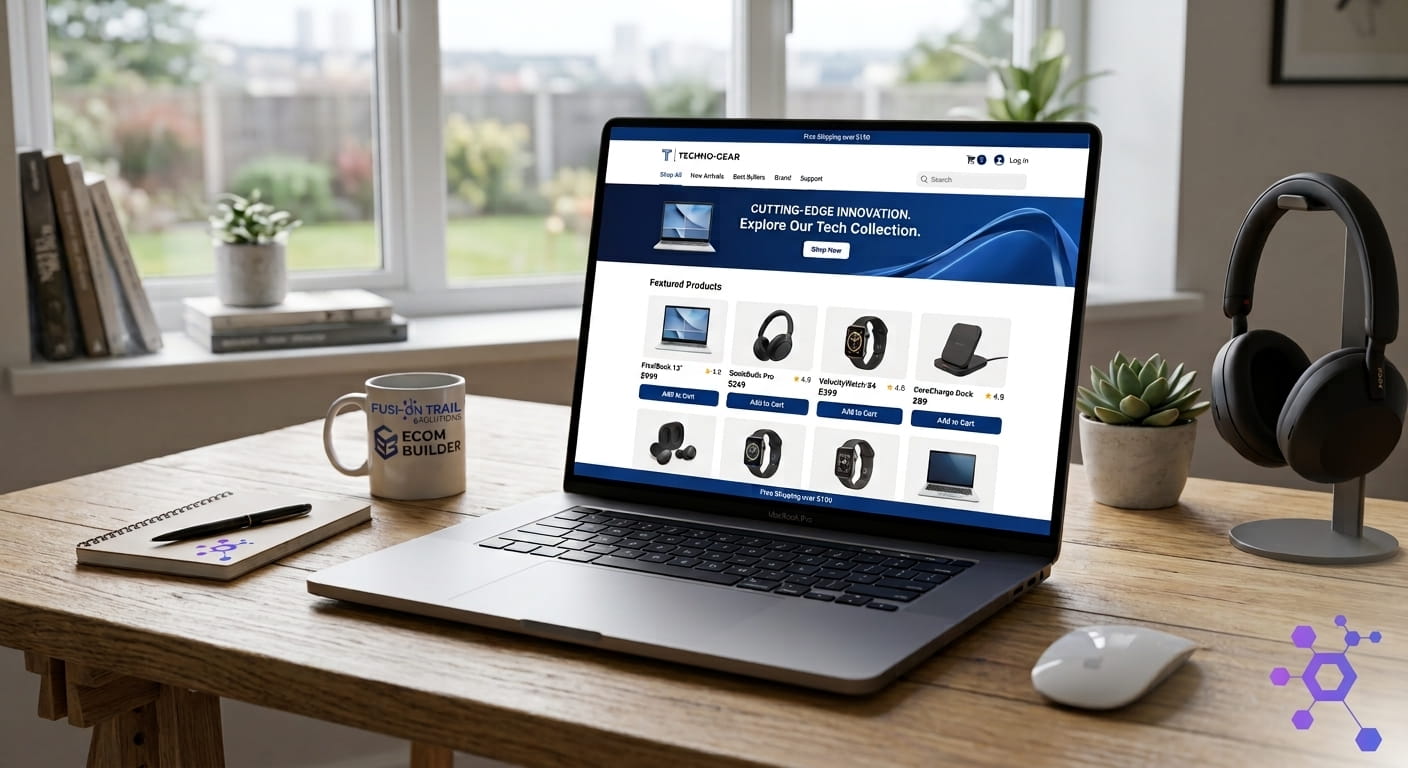
Shopify makes it possible to create an online store without developing every feature manually. Store owners can select a theme, add products, configure payments, and customize important parts of the website.
This makes Shopify particularly useful for beginners and small businesses.
2. Professional Store Themes
The appearance of an online store can influence customer trust and purchasing decisions.
Shopify offers a wide range of themes that can be customized according to a brand's identity. Businesses can modify layouts, colors, typography, images, product sections, navigation, and other storefront elements.
A professional design should not only look attractive but also provide a smooth experience on desktop and mobile devices.
3. Product and Inventory Management
Managing products becomes increasingly important as an online business grows.
Shopify provides tools for organizing products, product variants, pricing, inventory, collections, and orders. This can make everyday store management more efficient.
4. Shopify Apps
The Shopify ecosystem includes apps that can extend the functionality of a store.
Depending on business requirements, store owners can use apps for:
Email marketing
Reviews
SEO
Analytics
Customer support
Inventory management
Product customization
Shipping
Conversion optimization
Marketing automation
However, installing too many apps can negatively affect store performance, so businesses should only use apps that provide genuine value.
How to Create a Shopify Store
Creating a Shopify store involves several important steps.
Step 1: Choose Your Business Model
Before building the website, determine what you are going to sell and who your target customers are.
Possible business models include:
Physical products
Digital products
Print-on-demand
Dropshipping
Subscription products
Private-label products
Handmade products
Understanding the business model helps determine the right products, pricing, marketing strategy, and store structure.
Step 2: Select a Store Name and Domain
Your store name should be memorable, relevant, and easy to spell.
A professional domain can also help establish brand credibility.
Avoid unnecessarily complicated names, numbers, or confusing spellings that customers may struggle to remember.
Step 3: Choose a Shopify Theme
Select a theme that matches your brand and target audience.
Prioritize:
Mobile responsiveness
Fast loading
Clear navigation
Product visibility
Easy checkout experience
Readable typography
Strong visual hierarchy
A beautiful theme is useful, but performance and usability should come first.
Step 4: Add Products
Create detailed product pages containing:
Product title
Product description
High-quality images
Pricing
Product variants
Specifications
Shipping information
Return information
Frequently asked questions
Avoid copying generic descriptions from competitors. Unique, useful product content can provide a better experience for customers and create more opportunities for organic search visibility.
Step 5: Configure Payments and Shipping
Set up the payment methods and shipping options appropriate for your target market.
Make sure customers understand shipping costs, delivery expectations, return policies, and other important purchasing information before completing checkout.
Shopify SEO: How to Get More Organic Traffic
Building a Shopify store is only the beginning.
If potential customers cannot discover your products through search engines, generating consistent organic traffic can be difficult.
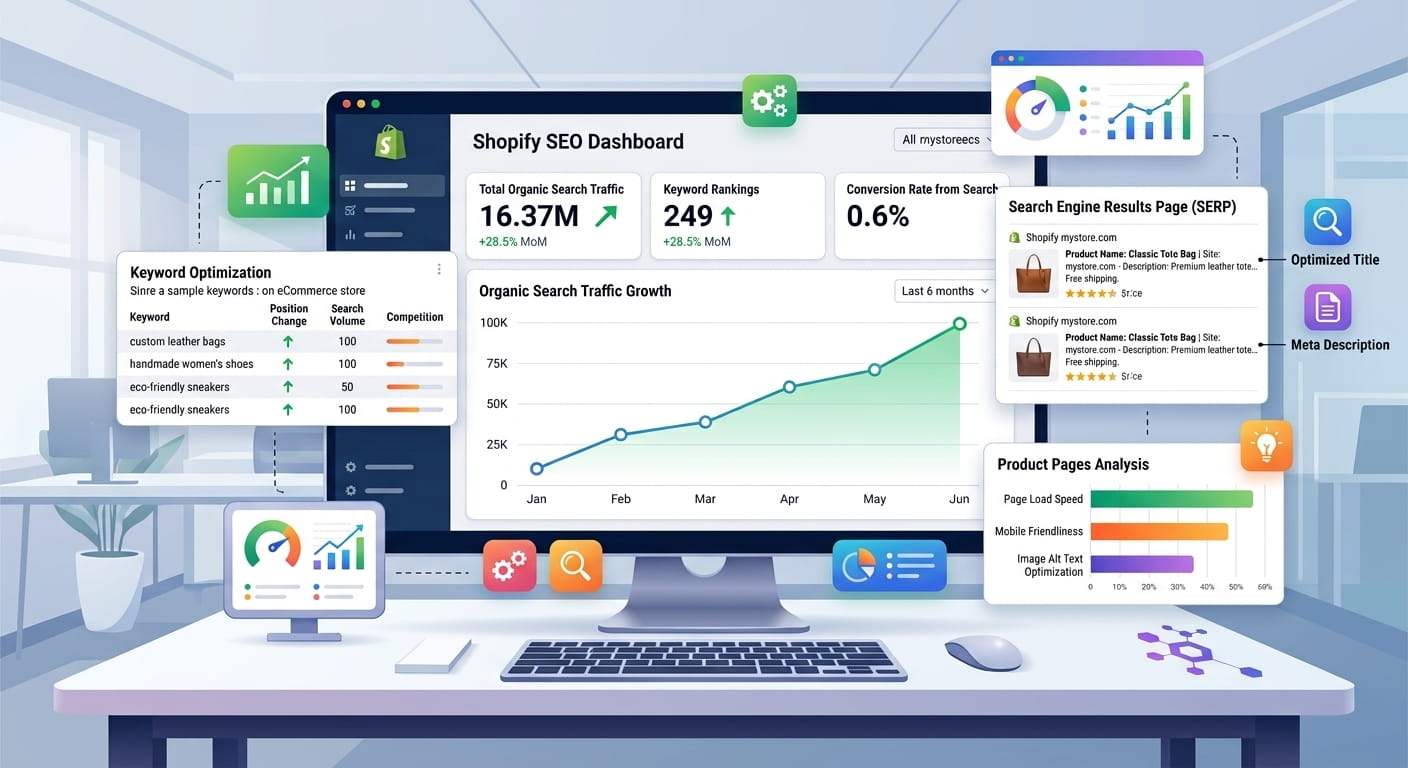
Shopify SEO involves optimizing the technical structure, content, product pages, collections, and overall website experience to improve search visibility.
Optimize Product Titles
Product titles should clearly explain what the product is.
Instead of using a vague title such as:
“Premium Product”
use a descriptive title such as:
“Men's Waterproof Lightweight Hiking Jacket”
The second example gives users and search engines significantly more context.
Write Helpful Product Descriptions
A good product description should answer the questions customers are likely to have.
Explain:
What the product does
Who it is for
Key benefits
Important specifications
Materials or ingredients
Available sizes or variants
How it can be used
Naturally include relevant keywords without repeating them excessively.
Optimize Images
Images are extremely important for eCommerce websites.
Use descriptive image file names and meaningful alt text.
For example:
Poor:IMG12345.jpg
Better:black-leather-travel-backpack.jpg
Alt text should describe the image accurately rather than being filled with keywords.
Improve Shopify Site Speed
Website performance matters because customers do not want to wait for slow pages.
To improve performance:
Compress large images
Avoid unnecessary apps
Minimize excessive animations
Use optimized media
Remove unused code where possible
Choose a well-developed theme
Monitor third-party scripts
A faster store can provide a better user experience and reduce friction during shopping.
Build a Strong Internal Linking Structure
Internal links help users discover related products and content while helping search engines understand the relationship between pages.
For example, a blog post about hiking equipment could link naturally to relevant product collections such as hiking backpacks, jackets, or outdoor accessories.
Shopify Content Marketing
SEO and content marketing work particularly well together.
Instead of publishing only promotional content, create useful articles that answer questions your potential customers are already searching for.
For example, a fashion store could publish:
How to Choose the Right Winter Jacket
Best Clothing Materials for Cold Weather
How to Style a Casual Outfit
What to Look for When Buying Hiking Clothes
These articles can attract users earlier in the buying journey and guide them toward relevant products.
How to Increase Shopify Sales
Getting website traffic is important, but traffic alone does not guarantee revenue.
Your Shopify store should be optimized for conversions.
Use High-Quality Product Photography
Customers cannot physically touch an online product, so images become an important part of the buying decision.
Use multiple product images showing different angles, details, sizes, and real-world usage where appropriate.
Create Clear Calls to Action
Buttons such as Add to Cart, Buy Now, or Shop Collection should be easy to find.
Avoid making customers search through the page to discover how to purchase a product.
Build Customer Trust
Trust signals can reduce hesitation.
Consider displaying:
Customer reviews
Product ratings
Clear return policies
Secure payment information
Shipping details
Frequently asked questions
Contact information
Make the Store Mobile-Friendly
A large portion of online shopping happens on mobile devices.
Your Shopify store should therefore provide a smooth experience across smartphones, tablets, and desktop computers.
Check:
Navigation
Product images
Buttons
Text readability
Product filters
Checkout usability
Shopify Marketing Strategies
A successful Shopify business usually combines several marketing channels rather than relying on one source of traffic.
Search Engine Optimization
SEO can provide long-term organic traffic when your website consistently publishes useful content and provides a strong user experience.
Social Media Marketing
Platforms such as Instagram, Facebook, TikTok, YouTube, and Pinterest can help brands showcase products and build communities.
Short-form videos can be particularly useful for demonstrating products, showing how they work, or presenting customer experiences.
Email Marketing
Email marketing allows businesses to communicate directly with existing customers and subscribers.
Useful campaigns include:
Welcome emails
Product announcements
Abandoned-cart reminders
Promotional campaigns
Seasonal offers
Customer retention emails
Paid Advertising
Paid advertising can provide faster exposure, but campaigns should be carefully tracked.
Monitor metrics such as:
Conversion rate
Cost per acquisition
Return on ad spend
Average order value
Customer lifetime value
Shopify Dropshipping: Is It Worth It?
Shopify is also commonly associated with dropshipping.
In a dropshipping business model, the store owner sells products without necessarily keeping inventory themselves. When an order is received, the supplier fulfills the order.
The model can reduce some inventory-related barriers, but it does not automatically create a profitable business.
Success still depends on:
Product selection
Supplier reliability
Product quality
Pricing
Customer service
Delivery times
Branding
Marketing
Store optimization
The biggest mistake is assuming that simply uploading products and running advertisements will create sustainable sales.
Common Shopify Mistakes to Avoid
Many new store owners focus heavily on launching their website but overlook important details.
Avoid these common mistakes:
1. Using Generic Product Descriptions
Copied or low-quality descriptions provide little value to customers.
2. Installing Too Many Apps
Every additional app can potentially add scripts or functionality that affects performance.
3. Ignoring Mobile Users
A store that looks good on desktop but performs poorly on smartphones can lose potential customers.
4. Focusing Only on Traffic
Thousands of visitors are not useful if the store cannot convert them into customers.
5. Ignoring SEO
Relying entirely on paid advertising can become expensive. Organic search should be part of a long-term growth strategy.
6. Poor Navigation
Customers should be able to find products quickly. Categories, collections, filters, and menus should be organized logically.

Shopify vs Traditional eCommerce Development
One of Shopify's major advantages is convenience.
With custom eCommerce development, businesses can have greater control over the website architecture and functionality, but development usually requires more technical knowledge, time, maintenance, and resources.
Shopify provides a more streamlined approach for businesses that want to launch and manage an online store without handling every technical component themselves.
For businesses requiring highly specialized functionality, custom development may still be the better option.
The Future of Shopify eCommerce
The eCommerce industry continues to evolve as customers increasingly expect fast websites, personalized experiences, convenient payments, useful content, and reliable delivery.
Successful Shopify businesses will need to focus on more than simply having an online store.
The strongest brands will combine:
SEO + Content + UX + Branding + Social Media + Analytics + Customer Experience
Artificial intelligence is also becoming increasingly useful for eCommerce businesses, from generating content ideas and analyzing customer behavior to improving customer support and marketing workflows.
However, technology should support a clear business strategy rather than replace it.
Final Thoughts
Shopify provides businesses with a powerful foundation for launching and growing an online store. Its combination of storefront tools, product management, themes, apps, marketing opportunities, and eCommerce functionality makes it suitable for businesses at different stages.
But creating a Shopify store is not the same as building a successful eCommerce business.
Long-term success depends on choosing the right products, understanding your audience, creating a trustworthy shopping experience, optimizing your store for search engines, producing useful content, and continuously improving conversions.
If you approach Shopify as a complete business ecosystem rather than simply a website builder, you can create a stronger foundation for sustainable online growth.
Frequently Asked Questions About Shopify
Is Shopify good for beginners?
Yes. Shopify is designed to make online store creation accessible to users who may not have extensive technical knowledge.
Is Shopify good for SEO?
Shopify provides many features that support SEO, but achieving strong organic visibility still requires proper keyword research, content optimization, technical SEO, internal linking, and a good user experience.
Can I use Shopify for dropshipping?
Yes. Shopify can be used with dropshipping business models, although profitability depends on product selection, suppliers, marketing, pricing, and customer experience.
How can I increase traffic to my Shopify store?
You can combine Shopify SEO, content marketing, social media, email marketing, influencer marketing, and paid advertising to attract potential customers.
Is Shopify suitable for small businesses?
Yes. Shopify can be suitable for small businesses that want to establish an online presence and gradually expand their eCommerce operations.
How important is Shopify SEO?
Shopify SEO is important for businesses that want to generate sustainable organic traffic instead of depending entirely on paid advertising.